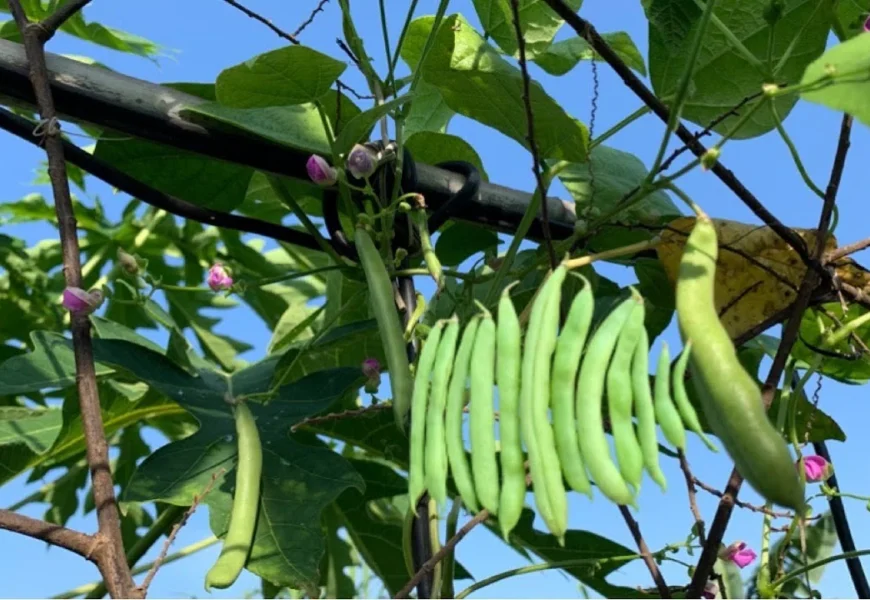
If your bush beans are growing slowly, producing thin pods, or just looking pale and tired — the soil is likely not giving them what they need. It’s a frustrating situation, especially when you’ve put real effort into your garden. Choosing the right fertilizer for bush beans can be the difference between a modest harvest and one that actually fills your kitchen.
Here’s something most gardeners learn after a season or two: bush beans are not heavy feeders. That’s true. But “not heavy feeders” doesn’t mean they can thrive on nothing. Get the nutrient balance even slightly off, and you’ll either end up with stunted plants or a sea of green leaves with barely any pods to show for it. This guide covers exactly what bush beans need, when they need it, and which fertilizer options genuinely deliver results — without the guesswork.
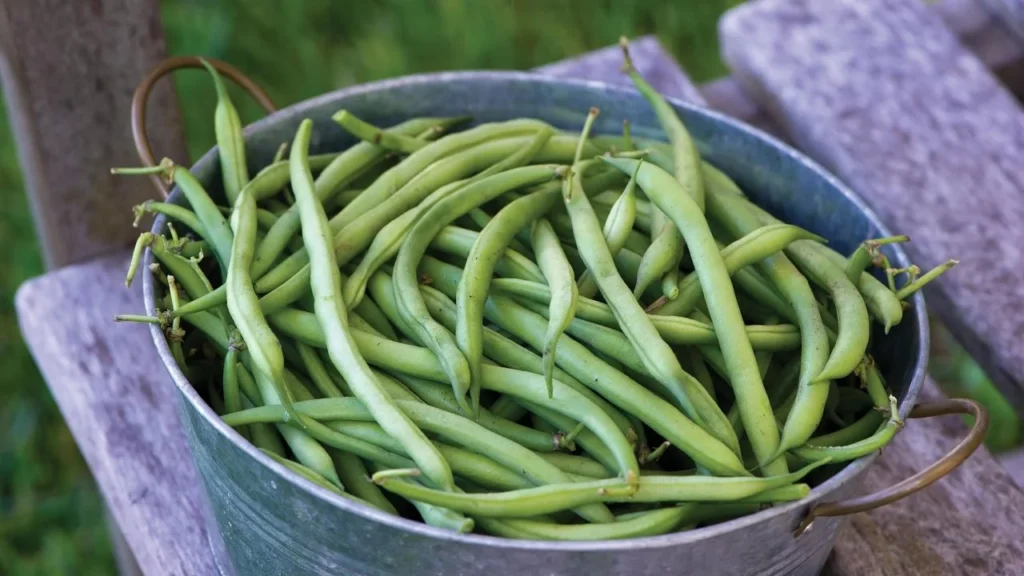
Why Fertilizer Matters More Than Most Gardeners Think
Bush beans (Phaseolus vulgaris) are legumes, and that gives them a special advantage in the garden. Through biological nitrogen fixation, rhizobium bacteria living inside their root nodules pull nitrogen directly from the air and convert it into a form the plant can use.
That sounds like a free pass on fertilizer — but it isn’t quite that simple.
This process only functions well when the soil already has adequate phosphorus, potassium, calcium, and trace minerals. These nutrients support root development and keep the bacterial activity running smoothly. When they’re missing, nitrogen fixation slows, root nodule formation weakens, and the plant ends up struggling despite sitting in soil that looks perfectly fine on the surface.
That’s why the fertilizer for bush beans question goes much deeper than picking a bag off the shelf. The real goal is supporting the whole biological system in the soil — not just pouring nutrients onto it and hoping for the best.
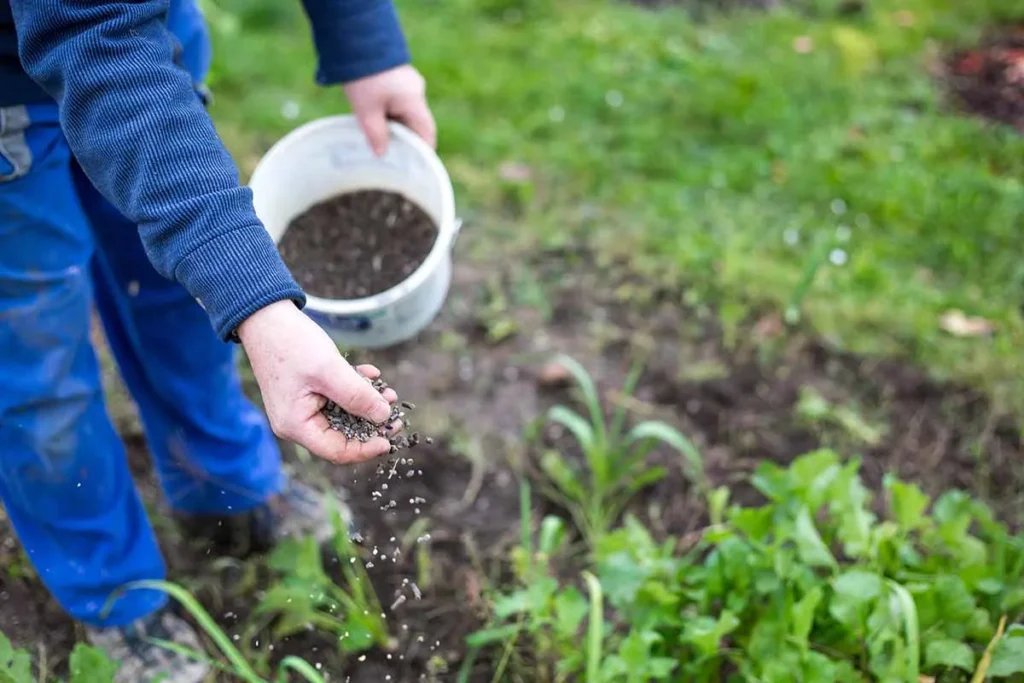
The Best NPK Ratio for Bush Beans
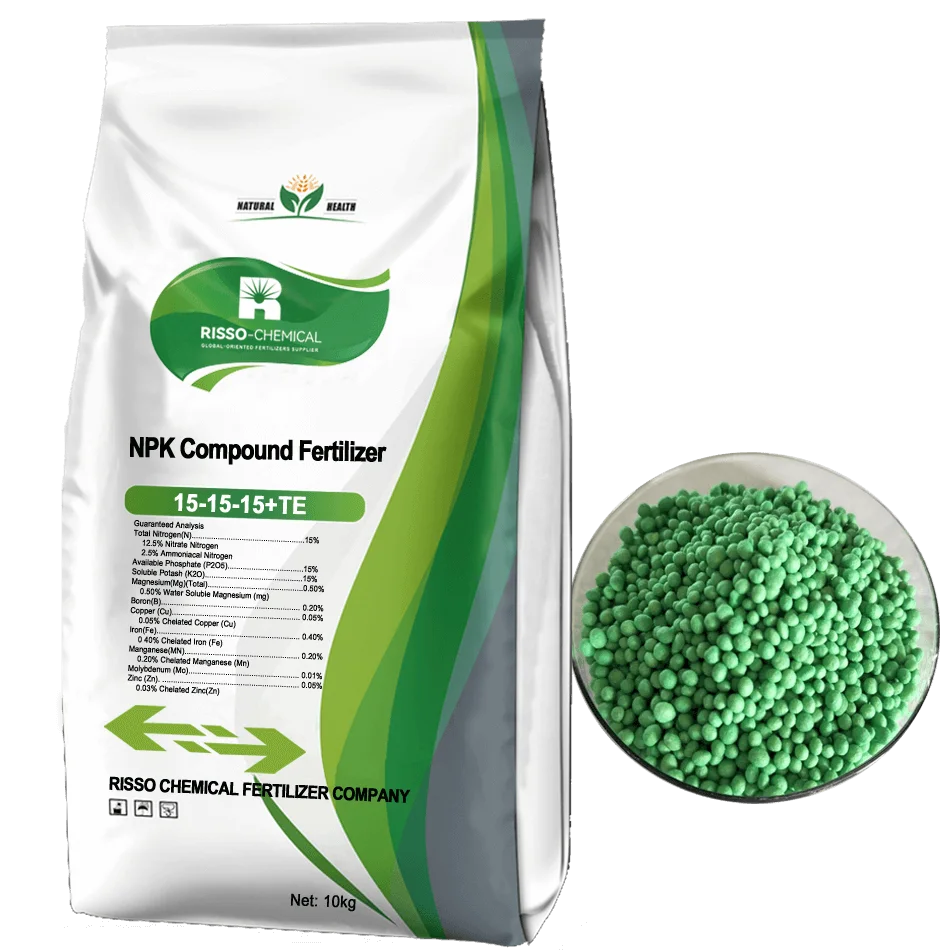
Every fertilizer label shows three numbers — nitrogen (N), phosphorus (P), and potassium (K). These are the primary macronutrients, and when choosing the right fertilizer for bush beans, the ratio between them matters enormously.
For this crop, a low-nitrogen, higher phosphorus and potassium formula is the right approach. Products in the range of 5-10-10 or 4-8-8 tend to hit the right balance. Here’s why each number matters:
- Nitrogen (N): Too much of it pushes plants to produce lush foliage at the expense of pod development. Since beans fix their own nitrogen through root bacteria, adding large amounts externally is often counterproductive.
- Phosphorus (P): This drives root development, flower formation, and pod set. For fruiting legumes, it’s arguably the most important nutrient in the entire formula.
- Potassium (K): It supports water regulation, disease resistance, and overall plant resilience. Beans in potassium-deficient soil tend to be weaker, more prone to stress, and noticeably lower-yielding.
If a soil test reveals your garden already has sufficient nitrogen — which is common in beds regularly amended with compost — you can use a fertilizer with little to no nitrogen and focus entirely on phosphorus and potassium.
One piece of advice worth taking seriously: always test your soil before making fertilizer decisions. A basic test from a local cooperative extension office costs very little and removes the guesswork entirely.
Organic vs. Synthetic Fertilizer for Bush Beans
This debate comes up constantly among gardeners, and the honest answer is that both options can work well. Your choice depends on your goals, your soil condition, and how you prefer to manage your garden.
Organic Fertilizer Options
When using fertilizer for bush beans, organic options do something synthetic products generally don’t — they feed the soil biology alongside the plant. As microorganisms break down organic matter, nutrients are released gradually, which greatly reduces the risk of root burn or a sudden nutrient surge.
Best organic options for bush beans:
- Bone meal — Typically rated around 3-15-0, it’s an excellent phosphorus source for root development and flowering. Work it into the soil a week or two before planting.
- Kelp meal — Rich in potassium and a broad range of trace minerals. A reliable addition for supporting overall plant health throughout the season.
- Compost — Technically not a fertilizer, but aged compost improves soil structure, feeds beneficial microbes, and delivers a balanced, slow-release nutrient profile. A 2–3 inch layer worked into the top 6 inches before planting is one of the most valuable things you can do for any vegetable garden.
- Fish meal or fish emulsion — Moderate nitrogen paired with decent phosphorus content. Useful as a starter at germination, but apply sparingly once plants are well established.
- Worm castings — Gentle, balanced, and full of beneficial microbial life. Particularly effective for container-grown bush beans where the soil biology needs ongoing support.
Synthetic Fertilizer Options
Synthetic fertilizer for bush beans delivers nutrients quickly and in precise ratios, which makes it especially useful when a soil test reveals a specific deficiency that needs correcting before the season slips away.
A granular 5-10-10 applied at planting, followed by a liquid 5-10-10 as a side-dress at early flowering, covers most garden situations effectively. Liquid fertilizers absorb faster and work well when plants show visible signs of stress mid-season and you need a quick response.
A straightforward comparison:
| Factor | Organic | Synthetic |
|---|---|---|
| Nutrient release | Slow, gradual | Fast, precise |
| Soil health impact | Improves long-term | Minimal impact |
| Risk of burn | Very low | Moderate if over-applied |
| Cost | Moderate to high | Generally lower |
| Best use | Soil building, long-term | Quick correction, fast results |
Neither is universally superior. Many experienced gardeners use both — compost and bone meal at planting, with a targeted liquid synthetic application at flowering when the stakes are highest.

Bush Bean Soil Nutrient Requirements: What the Plant Actually Needs
NPK gets most of the attention, but choosing the right fertilizer for bush beans goes beyond those three numbers. A few secondary and trace nutrients deserve equal consideration.
Calcium supports healthy cell wall development and prevents blossom-end issues. When soil pH drops below 6.0, calcium availability falls sharply — and most problems that look like poor nutrition are actually pH-driven calcium problems in disguise.
Magnesium is at the center of chlorophyll production. A deficiency shows up as yellowing between the leaf veins, a condition called interveinal chlorosis. Epsom salt (magnesium sulfate) dissolved at one tablespoon per gallon of water corrects this quickly when applied to the root zone.
Sulfur plays a role in protein synthesis and is frequently overlooked by home gardeners. Gypsum is a gentle organic source that adds both calcium and sulfur without shifting soil pH.
Micronutrients — particularly zinc, boron, and manganese — matter more than most people expect, especially in sandy or heavily leached soils. A broad-spectrum micronutrient supplement, or consistent compost use, handles these gaps well.
The ideal soil pH for bush beans sits between 6.0 and 6.8. Outside that range, nutrient uptake suffers regardless of how carefully you’ve fertilized. pH management isn’t optional — it’s the foundation everything else sits on.
When to Apply Fertilizer to Bean Plants
Timing matters as much as product selection. Applying fertilizer at the wrong growth stage either wastes resources or actively works against the plant.
Before Planting
Work compost, bone meal, or a granular 5-10-10 into the top 6 inches of soil at least one week before sowing. This gives granular products time to begin integrating with the soil before roots arrive.
At Germination (Starter Fertilizer)
Once seedlings emerge and show their first true leaves, a diluted liquid fertilizer — half-strength fish emulsion or a balanced 10-10-10 at half rate — gives young roots a gentle, steady start. Keep the concentration low at this stage. Young plants are sensitive.
Early Vegetative Growth
Once plants reach 4–6 inches tall, ease off on nitrogen. If the soil was properly prepared before planting, bush beans in active vegetative growth need very little external input. Feeding too heavily at this stage sends energy into leaves rather than the developing root system.
At First Flower
This is the window that matters most. When the first flower buds appear, a side-dress application of phosphorus and potassium directly supports pod set. A liquid 0-10-10 or 0-5-5 applied around the base of the plants — not on the foliage — works well here.
After First Harvest
For varieties that produce multiple harvest flushes, a light feeding after the first heavy picking can encourage a second round of production. A diluted balanced liquid fertilizer keeps things moving without overwhelming plants that are already working hard.
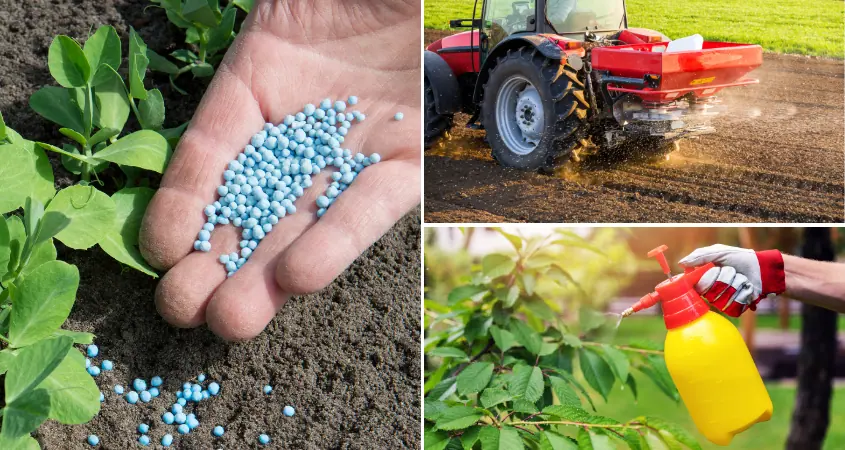
How to Fertilize Bush Beans in Containers
Growing bush beans in containers changes the fertilizer for bush beans equation in important ways. Potting mix doesn’t retain nutrients the way garden soil does — every time you water, soluble nutrients wash out through the drainage holes. Container plants need more frequent feeding to compensate.
Key practices for container-grown bush beans:
- Use a quality potting mix blended with perlite for drainage. Never use straight garden soil in containers — it compacts and suffocates roots.
- Mix a slow-release granular fertilizer (such as Osmocote 14-14-14) into the potting mix at planting time. This provides a steady nutrient baseline over 3–4 months.
- Once plants begin flowering, supplement with a diluted liquid fertilizer every 10–14 days. Liquid kelp or fish emulsion both work well at this stage.
- Watch for yellowing on the lower leaves — even with slow-release products in place, this is a common sign that nitrogen is running low in containers.
- pH drift is more pronounced in containers than in garden beds. Check the pH of your potting mix every few weeks and adjust with lime or sulfur as needed.
- In hot climates, faster evaporation means more frequent watering — which means faster leaching. Container beans in heat may need feeding every 7–10 days rather than every two weeks.
The key with container fertilization is consistency. Small, regular doses of fertilizer for bush beans in pots will always outperform infrequent heavy applications.
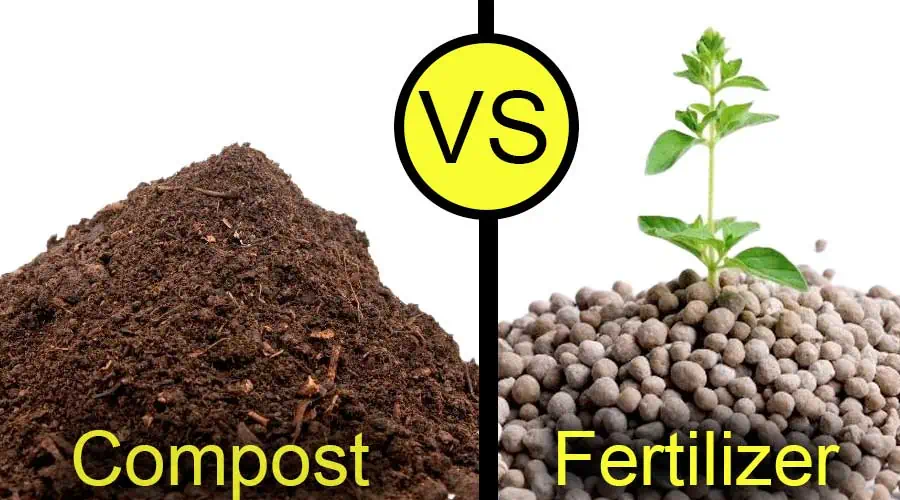
Compost vs. Fertilizer for Bush Beans
It’s one of the most common questions in vegetable gardening: if I add compost, do I still need fertilizer?
The honest answer is that compost alone is often enough for bush beans in well-maintained garden beds — but with an important condition. The compost must be fully aged, and it needs to be applied consistently each season to build up the soil over time.
Partially decomposed or fresh compost can actually work against you in the short term. As soil microbes break it down, they temporarily consume available nitrogen in the process, which can leave young bean plants starved during a critical growth window.
A practical way to think about it:
- New or poor-quality soil: Use both compost and fertilizer. Work in 3–4 inches of compost along with a balanced granular fertilizer. The fertilizer addresses immediate deficiencies; the compost builds the long-term foundation.
- Established, well-amended beds: Compost alone, added each season, typically provides enough nutrients. Bush beans are light feeders, and biologically active soil does most of the work.
- Sandy or depleted soil: Compost helps, but targeted fertilizer is still necessary. Phosphorus in particular moves poorly through sandy profiles — bone meal or superphosphate gets it to where roots can actually reach it.
Treat compost as the foundation of your soil health strategy and fertilizer as a precision instrument you reach for when the foundation alone isn’t quite enough.
Slow-Release Fertilizer for Bush Beans: Is It Worth It?
Slow-release fertilizer for bush beans — whether polymer-coated granules or organic meal products — delivers nutrients gradually over weeks or months rather than all at once. For bush beans, this approach has genuine merit.
Advantages worth considering:
- Reduced risk of over-fertilizing — steady, small doses are far less likely to burn roots or trigger excessive vegetative growth.
- Lower maintenance — a single application at planting can often carry the plant through most of the season.
- Better performance in fast-draining soils — sandy or porous soils that leach water-soluble nutrients quickly benefit the most from slow-release formulas.
The tradeoff is cost — slow-release products carry a higher price — and limited flexibility. If a deficiency develops mid-season, a granular slow-release product won’t respond fast enough to correct it. That’s precisely when a liquid fertilizer becomes a valuable complement.
For most home gardeners, the most reliable strategy combines a slow-release granular at planting with targeted liquid feeding at the flowering stage. It balances convenience with the responsiveness you sometimes need.
Fertilizing Bush Beans for Higher Yield: Practical Tips That Actually Work
The right fertilizer matters, but so do the habits around it. A few practical adjustments can make a noticeable difference in what ends up on your plate.
- Test the soil before doing anything else. Guessing at deficiencies is how gardeners spend money on products they don’t need. A soil test costs very little and tells you exactly what to address.
- Inoculate seeds with rhizobium before planting. Bean inoculant powder — widely available at garden centers — coats seeds with nitrogen-fixing bacteria. In new garden beds especially, this single step can significantly improve plant vigor without adding a drop of nitrogen fertilizer.
- Don’t underestimate phosphorus. Many general-purpose vegetable fertilizers are relatively low in phosphorus. Bush beans need it more than most crops. Bone meal or a dedicated high-phosphorus supplement at planting often delivers the clearest return on investment.
- Water consistently. Fertilizer is only useful when nutrients are dissolved and available. Erratic watering creates uneven uptake regardless of what products you’ve applied.
- Keep nitrogen off the foliage. Foliar nitrogen applications encourage soft, lush growth that tends to attract aphids and increase disease susceptibility. All fertilizer applications should go to the soil, not the leaves.
- Read your plants. Yellowing leaves, purple-tinged stems, and poor pod development are symptoms the plant is using to communicate. Learning to recognize these signs early saves a lot of frustration later in the season.
FAQ: Fertilizer for Bush Beans
Q: Can I use tomato fertilizer on bush beans?
Tomato fertilizers typically carry moderate phosphorus and potassium alongside some nitrogen. They can work in a pinch, but check the label — anything above 8–10% nitrogen is likely too high for beans. A product closer to 4-8-8 or 5-10-10 is more appropriate.
Q: How often should I fertilize bush beans?
In garden beds with good, well-prepared soil, once at planting and once at flowering is generally sufficient. Container plants need more frequent attention — a diluted liquid product every 10–14 days keeps them fed without overloading them.
Q: Is 10-10-10 fertilizer good for bush beans?
It can serve as a starter fertilizer, but the nitrogen level is on the high side for a legume. If you use it, apply at half the recommended rate and don’t reapply once plants are established and growing well.
Q: Do bush beans need fertilizer if I’ve already added compost?
In a garden that’s been consistently amended over multiple seasons, often no. In new or depleted beds, a phosphorus supplement is still worthwhile even when compost is present — compost alone rarely delivers enough available phosphorus in the short term.
Q: What causes yellow leaves on bush beans?
The most common culprits are nitrogen deficiency, magnesium deficiency, overwatering, and pH imbalance. Before assuming a nutrient problem, test soil pH — most yellowing in bean plants traces back to pH-driven availability issues rather than a true shortage of nutrients.
Q: Can I use coffee grounds as fertilizer for bush beans?
Coffee grounds are mildly acidic and contribute a small amount of nitrogen. In small quantities, they’re a fine soil amendment, but they won’t supply the phosphorus and potassium bush beans actually need most. Use them as a supplement, not a primary feeding strategy.
Q: When should I stop fertilizing bush beans?
Wind down all fertilizer applications about 3–4 weeks before your expected first frost. Late-season feeding stimulates soft new growth that won’t reach maturity before cold weather arrives — it’s wasted effort and can actually weaken plants heading into the end of the season.
Conclusion
Growing bush beans well doesn’t require expensive products or complicated feeding schedules. What it does require is understanding what the plant actually needs — and delivering that at the right time.
The fertilizer for bush beans question has a straightforward core answer: keep nitrogen moderate, prioritize phosphorus and potassium, and time your applications around the plant’s growth stages rather than a calendar. Whether you prefer organic amendments, synthetic products, or a combination of both, the principles stay the same.
Start with a soil test. Prepare your beds thoughtfully before planting. Support flowering with a targeted phosphorus-potassium boost. And pay attention to what your plants are telling you throughout the season.
Bush beans are genuinely rewarding to grow. With the right nutrient foundation in place, they tend to take care of themselves — and reward that care with a harvest worth the effort.