Introduction
Step outside on a warm July afternoon, and somewhere beneath your feet, an entire civilisation is at work. Walk across any garden path in summer and you’ll almost certainly cross paths with Lasius niger — the black garden ant. These small, dark insects are among the most widespread ant species in the UK, across Europe, and in parts of North America. Yet despite their familiarity, very few people stop to think about what actually happens beneath the surface — inside the colony, through the changing seasons, and across every phase of ant development.
The black garden ant life cycle is a genuinely remarkable biological process. It spans years, moves through four distinct developmental stages, and depends entirely on a tightly organised social structure to function. Once you understand it, you gain real insight into not just ant behaviour, but how extraordinarily sophisticated small creatures can be.
This guide covers everything from the first egg laid by a newly mated queen to the fully formed worker ant foraging through your flower beds. If you’re a naturalist, a student, a gardener, or simply someone who’s wondered what those busy little insects are actually doing — this is the most thorough breakdown you’ll find.
What Is the Black Garden Ant Life Cycle?
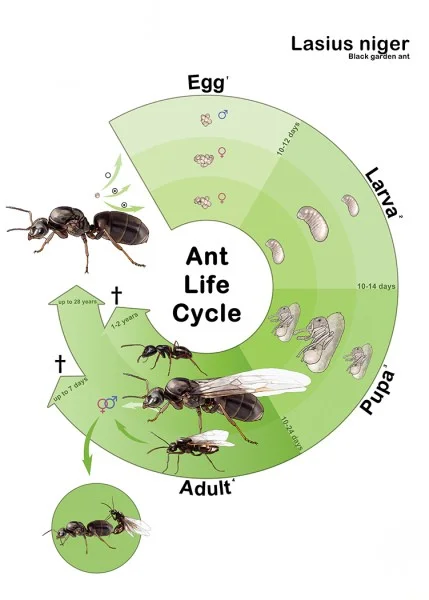
At its core, the black garden ant life cycle follows a process called complete metamorphosis, or holometabolism. The ant passes through four biologically distinct phases before reaching adulthood: egg, larva, pupa, and adult. Each stage serves a specific developmental purpose, and the transition between them is driven by temperature, nutrition, and the colony’s internal needs.
What makes ants different from many other insects is how total this transformation actually is. The ant egg larva pupa adult stages aren’t simply periods of gradual size increase — each one represents a complete shift in body structure, biological function, and role within the colony. A larva bears almost no resemblance to the worker ant it will eventually become.
This separation of development into discrete stages is also what makes ant colonies so resilient. The colony can pause, accelerate, or redirect growth depending on what the environment demands. It’s a flexibility that has made Lasius niger one of the most successful and adaptable ant species on Earth — and one of the reasons you’ll find them in almost every garden on the continent.
Black Garden Ant Stages of Development
The black garden ant stages of development follow a precise biological sequence. Each phase builds on the last, and disrupting any one of them can affect the entire colony. Here’s what actually happens at each step.
Stage 1: The Egg
Everything begins with the queen. After a successful mating flight, a fertilised queen searches for a sheltered location — often beneath a stone, tucked into a crack in a wall, or nestled in loose, undisturbed soil — and begins laying eggs. Those eggs are tiny, oval, and nearly translucent, measuring around 0.5mm in length. To the naked eye, they look like little more than pale specks.
The queen doesn’t release all her eggs at once. She carefully regulates the pace of egg-laying based on her stored sperm reserves and available energy. During the early founding phase, she survives entirely on fat stored in her body and energy extracted from her now-redundant wing muscles. She doesn’t eat during this period — a remarkable feat of biological endurance.
Once the first workers emerge, they assume complete responsibility for egg care. They groom each egg, cluster them together to retain warmth, and move them around the nest in response to temperature and humidity changes. Eggs exposed to cold or dry conditions rarely make it through to hatching.
- Egg size: approximately 0.5mm
- Incubation period: 1–4 weeks depending on temperature
- Appearance: small, white, oval
- Care: exclusively managed by worker ants or the founding queen
Stage 2: The Larva
When the egg hatches, a pale, legless larva emerges — and this is where the real growth begins. Ant larvae are, in the most literal sense, eating machines. They consume whatever the workers bring them, converting food into body mass that will power the transformation waiting ahead.
Workers feed larvae through trophallaxis — the regurgitation of liquid food directly from their own digestive system — and by placing solid food items close by. The larva’s digestive system is exceptionally active at this stage. It moults several times as it grows, shedding its outer layer to accommodate its increasing size.
The larval stage of the black garden ant life cycle typically lasts between two and four weeks during warm summer conditions. As it nears the end of this phase, the larva stops feeding, its body begins to change internally, and it enters a pre-pupal state — a pause before the most dramatic transformation of all.
Stage 3: The Pupa
The ant metamorphosis process reaches its most striking point during pupation. Unlike butterflies or moths, black garden ants don’t encase themselves in silk cocoons. They remain as naked pupae — pale, still, and deceptively inert. When people uncover ant nests and find clusters of these pale forms, they’re often mistakenly described as eggs. In some older texts, they were called “white ants.”
But the stillness on the outside tells nothing of what’s happening within. The larval body is essentially dismantled and rebuilt at a cellular level. Limbs take shape. Eyes develop. The body organises itself into the three-part structure — head, thorax, abdomen — that defines an adult ant. Depending on temperature, this process takes between one and three weeks.
Throughout this phase, workers keep close watch over the black garden ant life cycle pupae, moving them toward warmer nest zones when the temperature drops and adjusting their position to prevent moisture damage. The level of attention given to each developing individual reflects how essential they are to the colony’s future.
Stage 4: The Adult
When development is complete, the adult ant works its way free from the pupal casing — often with help from workers nearby, who assist in breaking it open. Newly emerged adults, known as callows, are initially pale and soft. Their exoskeleton is still curing, a process called sclerotisation, which hardens and darkens the outer shell over the first 24 to 48 hours.
From this point, the ant’s caste is fixed and permanent. Workers integrate into colony life almost immediately, beginning with lighter duties inside the nest before progressing to foraging as they mature. Reproductive individuals — the alates — develop wings during the colony’s preparation for mating season and wait for the right conditions to take flight.
Lasius niger Colony Growth and Social Structure
The black garden ant life cycle doesn’t unfold in isolation. It’s embedded within — and shaped by — one of the most sophisticated social structures in the insect world. Lasius niger colony growth follows a consistent trajectory across years, beginning with a single founding queen and gradually becoming a superorganism with thousands of coordinated members.
In the early years, growth is slow and precarious. A newly founded colony may contain only a handful of workers by the end of its first season. Once worker numbers pass a critical threshold — somewhere between 500 and 1,000 individuals — the colony’s capacity to gather food, expand the nest, and rear new generations accelerates considerably.
Mature Lasius niger colonies typically contain between 5,000 and 15,000 workers. In very old, well-established colonies, that number can exceed 100,000. The queen at the centre of it all can live for up to 15 years, placing Lasius niger among the longest-lived ant species on Earth relative to body size.
| Colony Stage | Approx. Age | Worker Count | Key Activity |
|---|---|---|---|
| Founding | 0–1 year | 1–50 | Queen lays first eggs, no foraging |
| Early Growth | 1–3 years | 50–1,000 | Workers forage, nest expands |
| Established | 3–7 years | 1,000–10,000 | Foraging networks, aphid tending |
| Mature | 7–15 years | 10,000–100,000+ | Alate production, mating flights |
Black Ant Queen Reproduction Cycle
No examination of the black garden ant life cycle would be complete without a close look at the queen. She is the colony’s sole reproductive female — its biological foundation, and the source of every single worker, drone, and future queen the colony will ever produce. Understanding the black ant queen reproduction cycle explains how these colonies sustain themselves across such long periods of time.
A queen mates only once — during the mating flight — but the sperm she collects is stored in a specialised internal organ called the spermatheca. That stored supply fertilises her eggs for the remainder of her life, potentially over a decade. As she ages and her reserves gradually diminish, her egg-laying rate may slow, but she continues producing workers for as long as she remains alive.
She also produces unfertilised eggs, which develop into male ants — the drones. Their role is narrow and brief: to mate during the flying ant season, after which they die. Whether a fertilised egg becomes a worker or a future queen depends not on genetics alone, but on the quality and quantity of nutrition that larva receives during development.
- Sperm storage: queens mate once but fertilise eggs for over a decade
- Worker production: fertilised eggs raised on standard larval diet
- Queen production: fertilised eggs raised on enriched diet in late summer
- Male production: unfertilised eggs, produced in spring–summer
- Queen lifespan: typically 10–15 years in wild colonies
Black Garden Ant Breeding Season and Mating Flights
The black garden ant breeding season is one of the more spectacular — and widely noticed — events in the British natural calendar. Across the UK and much of Western Europe, flying ant day occurs when winged reproductives pour out of nests in massive, synchronised swarms. It typically falls between late June and early August, most often triggered by warm, humid conditions following a dry spell.
The synchronisation isn’t random. Colonies spread across wide geographic areas are responding to the same atmospheric cues — temperature, humidity, and changes in air pressure — which coordinate the simultaneous release of alates from thousands of separate nests. For the individual ant, flying alongside hundreds of thousands of others dramatically reduces the chance of being picked off by a predator. For the species, it ensures that queens from different colonies meet males they’re not related to.
After mating in flight, fertilised females land, remove their own wings, and begin scouting for a place to establish a new colony. Males, having fulfilled their only biological purpose, die within hours or days. The newly mated queen — now carrying everything needed to restart the black garden ant life cycle from scratch — may travel some distance before settling beneath a paving slab, in a gap in brickwork, or in a patch of loose, well-drained soil where conditions are right for the long founding process ahead.
Garden Ant Nesting Habits and Behaviour
Garden ant nesting habits and behavior shift considerably as a colony ages, expands, and responds to the conditions around it. Black garden ants consistently favour warm, dry sites with good sun exposure — which is why south-facing patios, garden paths, and lawns so often end up hosting nests.
Lasius niger is adaptable in its site selection. Loose or sandy soil is preferred, but colonies establish successfully in clay soils, compost heaps, and even at the base of timber structures. The internal nest architecture tends to surprise people who expect something simple. Tunnel networks extend to different depths according to seasonal needs, with the colony moving its brood upward into warmer zones in spring and retreating to deeper chambers as autumn arrives.
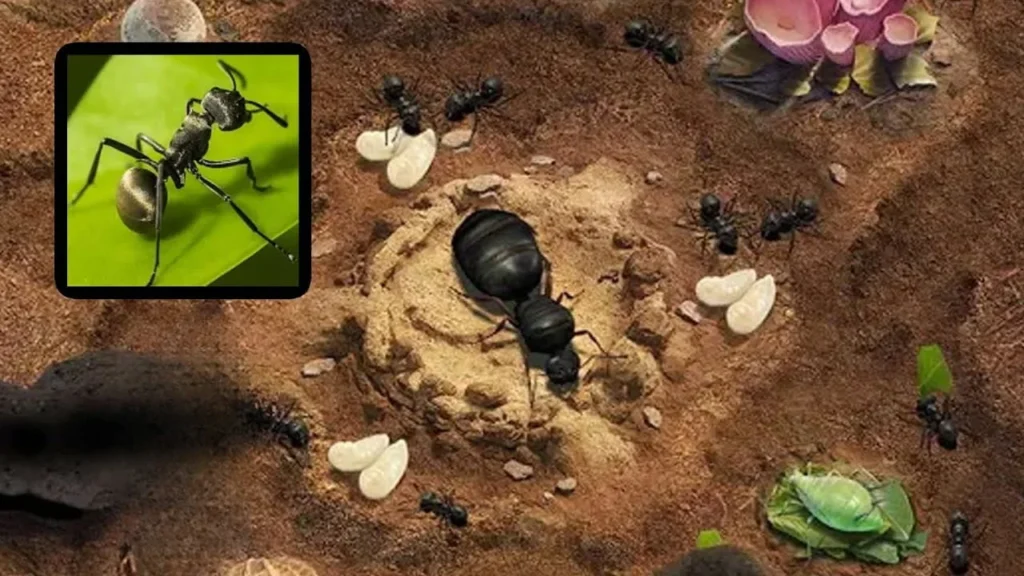
Underground Ant Nest Structure and Development
The underground ant nest structure and development of a mature Lasius niger colony reflects a level of organisation that’s genuinely impressive for creatures this size. Interconnected chambers sit at varying depths, each serving a distinct function. Brood chambers are positioned where temperature remains most stable. Waste is kept well away from food storage areas. The layout isn’t accidental — it has been shaped by the collective behaviour of thousands of workers over years of continuous excavation.
Displaced soil accumulates at the surface around nest entrances, forming the small granular mounds that many gardeners recognise. A well-established black garden ant life cycle nest may extend one to two metres below ground level, providing the thermal insulation the colony needs to survive winter without significant losses.
- Nest entrance: small, often surrounded by loose soil particles
- Brood chamber: positioned for optimal warmth (15–25°C ideal)
- Depth range: surface level to 1–2 metres below ground
- Tunnel width: wide enough for two workers to pass simultaneously
- Winter zone: deepest chambers used during cold months
Black Ant Worker and Drone Lifespan
The black garden ant life cycle worker drone lifespan varies sharply between castes, reflecting the different demands placed on each group. Worker ants — infertile females who carry out every practical function within the colony — typically live between one and three years. Even within this group, lifespan is not uniform. Foragers who spend their days navigating the surface, facing weather, predators, and physical wear, generally live shorter lives than workers who remain inside the nest tending to the black garden ant life cycle brood.
Drones are the colony’s most short-lived members. Produced in spring and early summer, they spend weeks maturing inside the nest before the mating flight. Once they’ve mated, their biological purpose is complete, and they die within days. It’s a brief existence — but a necessary one for the continuation of the species.
New queens who successfully establish colonies occupy the opposite end of the lifespan spectrum entirely. Living 10 to 15 years, they outlast every worker they produce. Researchers believe this longevity reflects a combination of factors: reduced physical activity, a sheltered location deep within the nest, and possibly antioxidant processes at the cellular level that are still being investigated by entomologists.
Ant Colony Founding and Expansion
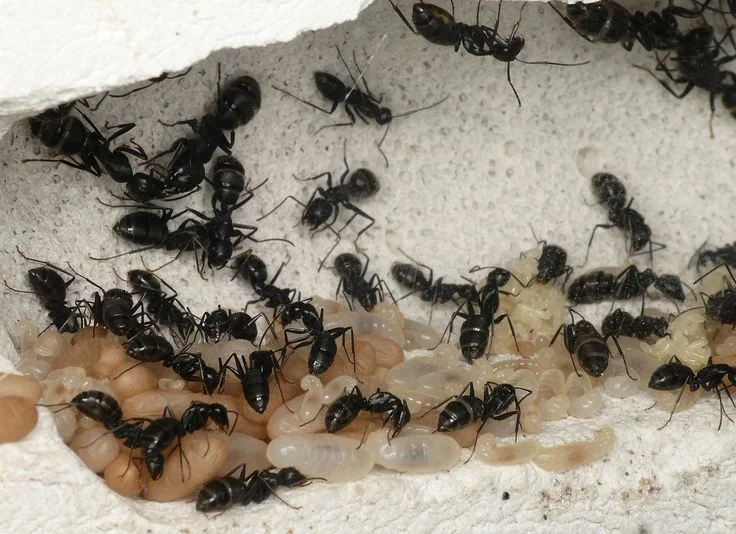
Ant colony founding and expansion is among the most precarious phases of the entire black garden ant life cycle. After the mating flight, a fertilised queen is entirely on her own. She must select a founding site, excavate a small chamber, lay her first eggs, and raise the first generation of workers without any support at all.
This phase is known as claustral colony founding. The queen seals herself into her chamber and draws on stored body fat and energy from her wing muscles — now permanently shed — to survive. She may lose close to half her body weight before the first workers emerge. Her earliest eggs are small, and the larvae that hatch from them are fed on her own saliva and on trophic eggs — infertile eggs she produces specifically as a food source.
When the first workers finally emerge — called nanitics, and noticeably smaller than later generations — the colony’s character changes immediately. Nanitics begin foraging, expanding the nest structure, and returning with food for the queen. It is from this point that the black garden ant life cycle truly begins to grow, and the risks of the founding phase start to recede.
What Affects the Development Rate of Black Garden Ants?
The black garden ant life cycle doesn’t operate on a fixed schedule. Development times respond to environmental conditions, and the differences can be significant. Temperature is the most influential factor. At 20°C, the full cycle from egg to adult takes roughly 8 to 10 weeks. At 25°C, that window narrows to around 6 to 7 weeks. Below 15°C, development effectively stalls.
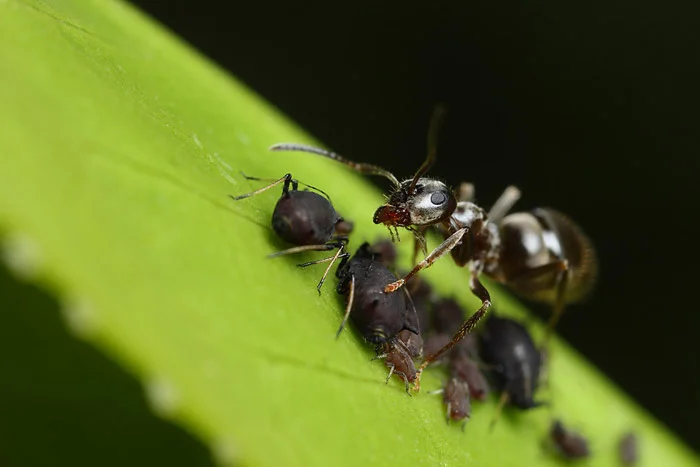
Nutrition quality shapes the outcome too. Larvae that receive high-protein food — the kind that comes from insect prey rather than plant-based sugars — develop faster and into larger, more capable adults. This is one reason colonies invest effort in tending aphid populations: the honeydew aphids produce is a reliable energy source, but it needs to be supplemented with the protein that comes from active hunting.
Humidity is the third key variable. Pupae are particularly sensitive to moisture loss, and workers respond by constantly repositioning developing brood within the nest to keep conditions suitable. This sensitivity to environmental detail is precisely why entomologists sometimes use black garden ant life cycle health as an indicator of local habitat conditions — when the colony is thriving, the microenvironment around it usually is too.
Frequently Asked Questions
How long does the black garden ant life cycle take from egg to adult?
At typical summer temperatures between 20 and 25°C, the complete cycle takes approximately 6 to 10 weeks. Cooler conditions extend this considerably, while peak warmth in midsummer can compress it.
How many eggs does a black garden ant queen lay?
A mature queen can produce between 100 and 300 eggs per day during peak season. Across a lifespan that may reach 15 years, her total reproductive output can run into hundreds of thousands of offspring.
What is the difference between a worker ant and a drone in Lasius niger?
Workers are infertile females responsible for every practical colony function — foraging, nursing, defence, and nest maintenance. Drones are winged males produced for a single purpose: the mating flight. Workers can live for years; drones survive only weeks.
Why do black garden ants swarm in summer?
The summer swarming event — flying ant day — is the colony’s annual reproductive investment. Winged males and virgin queens emerge simultaneously from nests across a wide area, triggered by shared environmental cues. Swarming together maximises the chances of mating between unrelated individuals and reduces each ant’s individual predation risk.
Do black garden ants hibernate in winter?
They don’t hibernate in the strict sense, but activity drops sharply as temperatures fall. The colony retreats to deeper nest chambers, egg production slows significantly, and the ants enter a semi-dormant state sustained by stored food reserves until warmth returns in spring.
Can a black garden ant colony survive without a queen?
Not in the long term. The queen is the only source of new workers. Without her, the colony produces no replacements for ageing workers, and the population declines steadily until the colony fails entirely.
How deep do black garden ant nests go?
Mature nests can reach one to two metres below the surface. Younger or smaller colonies typically remain within the top 20 to 30 centimetres of soil.
Conclusion
The black garden ant life cycle is one of those subjects that genuinely rewards a closer look. What starts as a simple curiosity — why are there so many ants in my garden? — opens up into something far more layered and interesting than most people expect.
These are not simple creatures running on instinct alone. From the moment a queen seals herself into a tiny chamber and begins raising her first generation without food or help, to the moment thousands of winged ants take to the sky in a perfectly timed summer swarm, every phase of this cycle reflects a level of biological sophistication that is easy to overlook when you’re just watching them march across a patio.
What stays with you, once you understand the full picture, is the patience built into this process. A colony that will eventually house tens of thousands of workers begins with a single ant, in a small hole in the ground, waiting. The egg becomes a larva. The larva becomes a pupa. The pupa becomes a worker. And that worker, along with thousands of others produced the same way, keeps the colony alive for another season.
Next time you see black garden ants moving through your garden, you’ll know exactly what’s happening beneath the surface — and hopefully, you’ll find it at least a little more interesting than before.
If this guide helped you understand the black garden ant life cycle better, consider exploring related topics like how ant colonies compare across species, what garden ants eat through the seasons, or how to tell a black garden ant apart from other common ant species in your area. There’s always more to discover.