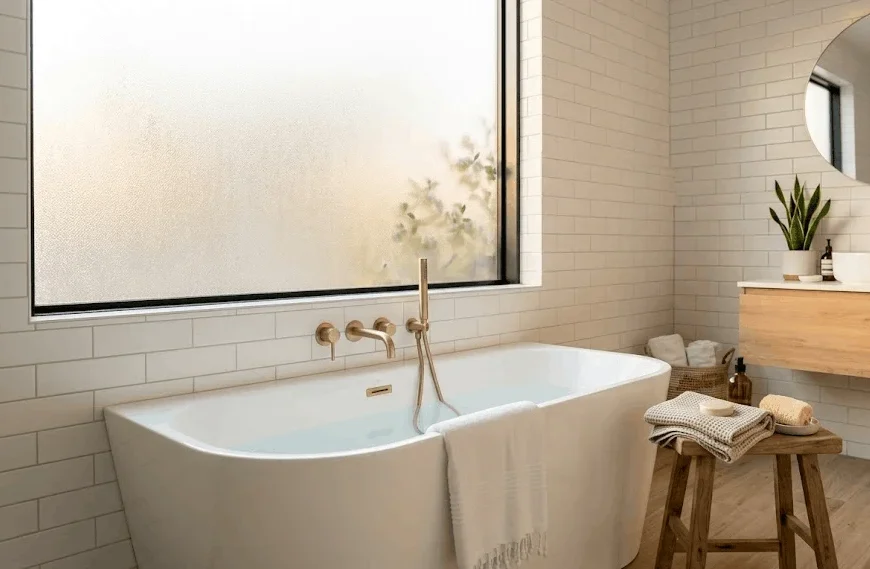
You’re standing in the shower, and you suddenly realize your neighbor’s kitchen window has a direct line of sight to yours. That moment — half-panic, half-annoyance — is exactly why bathroom window privacy matters so much more than people think about until it’s too late. Maybe you just moved in. Maybe a new building went up next door. Either way, you want a fix that actually works, not just something that looks private from a certain angle at a certain time of day.
Here’s what you’ll walk away with: a clear breakdown of every real option, what each one actually does at night versus during the day, and how to pick the right one for your exact window without wasting money on something that doesn’t hold up.
Why Bathroom Window Privacy Matters More Than You Think
Your bathroom is probably the one room in your house where you’re the most exposed — literally. Bathroom window privacy isn’t just about modesty, either. It’s about feeling comfortable enough to actually relax in there, whether you’re taking a two-minute shower before work or soaking for an hour after a long day.
Here’s why it trips people up more than other rooms: bathrooms deal with steam, splashing water, and humidity every single day. That rules out a lot of window treatment options that work fine in a living room but fall apart in a bathroom. Fabric shades can mold. Paper blinds warp. Wood shutters swell. So when you’re choosing a privacy solution, you’re not just picking for looks — you’re picking for a room that gets attacked by moisture daily.
On top of that, there’s the timing problem. A lot of privacy solutions look great at 2pm and completely fail at 9pm once you flip the bathroom light on. We’ll get into exactly which options have that flaw later, because it trips up more people than you’d expect.
Here’s why this catches people off guard: most of us shop for bathroom window privacy during the day, when the sun is doing half the work for us. You hold up a sample of film against the glass, it looks perfectly private, and you buy it without ever testing it after dark.
Then the first night you’re in there with the lights on, you realize the outside world can see exactly what you’re doing. What this means is you need to think about your window’s exposure at both ends of the day, not just the one you happened to be shopping in. A little planning here saves you from buying the wrong solution twice.
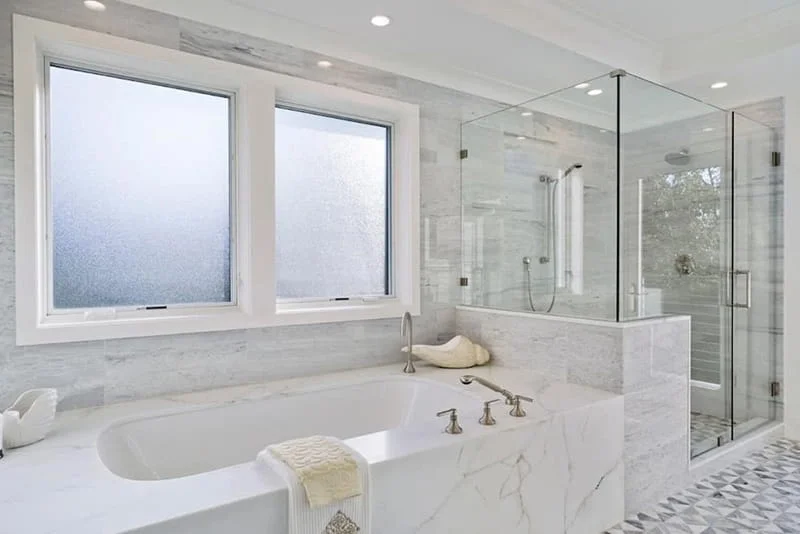
Frosted Glass Window Film: The Go-To Bathroom Window Privacy Fix
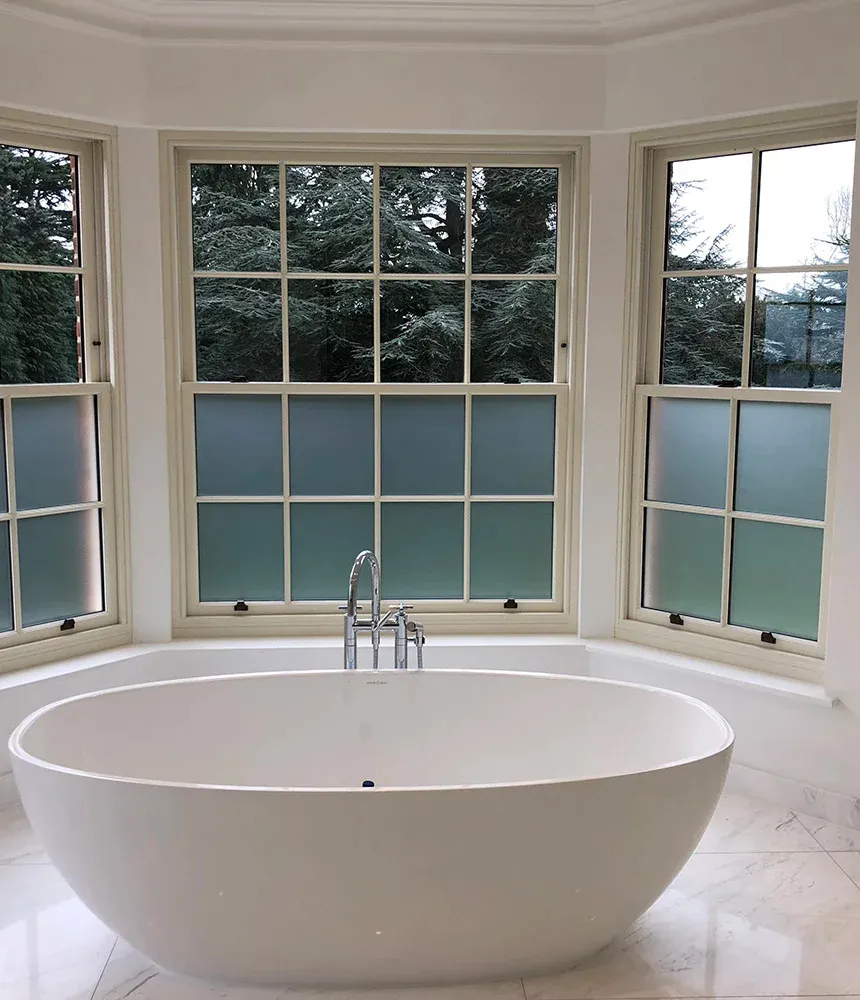
If you ask ten people what they’d use for bathroom window privacy, frosted glass window film is probably what eight of them say. And for good reason — it’s affordable, it works day and night, and you don’t need to touch the actual window frame.
Frosted window film sticks directly onto the glass and diffuses light instead of blocking it. What this means is you still get plenty of natural light coming in, but the view is scrambled into a soft blur. Nobody outside can make out shapes, and you can’t see them either.
Here’s why that matters for bathroom window privacy specifically: unlike curtains or blinds, there’s nothing to forget to close. The film just does its job around the clock, whether you’re stepping out of the shower at 7am or brushing your teeth at midnight.
For example, a lot of homeowners in busy neighborhoods choose this exact option because it removes the guesswork entirely — there’s no “did I close the blinds” moment of panic. On top of that, it gives your window a soft, finished look even when you’re not thinking about privacy at all, since the frosted texture reads as a design choice rather than an obvious cover-up.
How Installation Actually Works
You clean the glass, spray it lightly with a soap-and-water mix, then apply the film and squeegee out the bubbles. It sounds simple, and it mostly is, but bubbles and peeling edges are the most common complaint — usually from skipping the cleaning step or rushing the squeegee pass.
Here’s the thing about getting bathroom window privacy right the first time: patience during installation matters more than the actual product you buy. For example, even a high-quality film will bubble if you rush the squeegee pass or leave dust trapped underneath.
What this means is you should work in slow, overlapping strokes from the center of the glass outward, pushing air and moisture toward the edges instead of trapping it in the middle. On top of that, giving the film a full 24 hours to cure before you run a hot shower helps it bond properly, so you’re not stuck redoing the whole job a week later.
Pros and Cons
The upside: it’s cheap, DIY-friendly, and works in both directions regardless of lighting. The downside: cheaper films can peel in a steamy bathroom over time, so it’s worth spending a bit more on a film rated for wet rooms specifically.For example, a film labeled for kitchens or living rooms isn’t automatically built to handle daily steam exposure, even if it looks identical on the shelf.
What this means is you should check the product description specifically for words like “waterproof” or “wet room rated” before buying, rather than assuming all frosted films are the same. On top of that, a slightly higher upfront cost for a proper wet-room film usually works out cheaper long-term, since you won’t be replacing peeling film every year or two.
Privacy Glass for Bathroom Windows vs. Etched Glass Bathroom Windows
If you’re renovating rather than just retrofitting an existing window, you’ll run into two permanent options: privacy glass for bathroom windows and etched glass bathroom window designs. These aren’t stuck-on treatments — they’re built into the glass itself at the factory.
Privacy glass (sometimes called obscure glass) has a textured or patterned surface baked right into the pane. It scatters light the same way frosted film does, but because it’s permanent, it never peels, bubbles, or needs replacing. The tradeoff is cost — you’re either replacing the whole window or paying for custom glass, which is a bigger investment than a $20 roll of film.
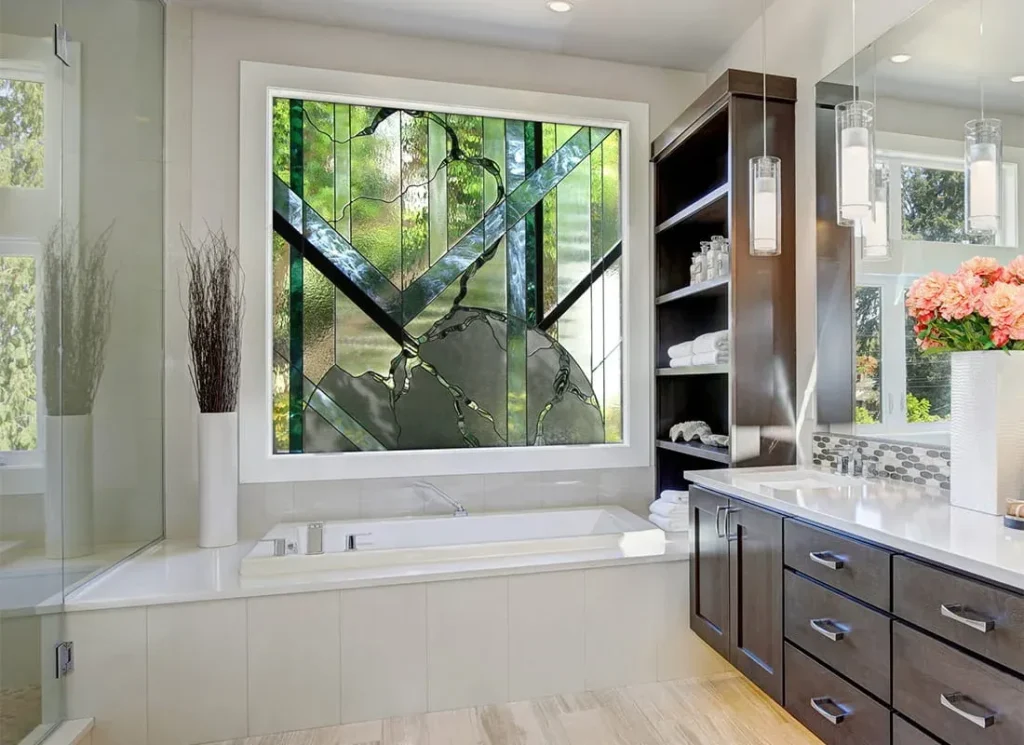
An etched glass bathroom window takes it a step further stylistically. Instead of an even frost, etched glass often has a decorative pattern — a leaf motif, geometric lines, whatever fits your bathroom’s style — cut into the surface. It gives you that upscale, custom look while still doing the privacy job. If you’re already investing in new windows for a remodel, this is worth the upgrade over plain frosted glass.
Here’s why this option keeps coming up when people research bathroom window privacy for a full remodel: it’s one of the only choices that adds visible design value instead of just disappearing into the background. For example, a leaf pattern etched into the lower half of the glass can double as a subtle design statement, while still fully obscuring the shower area behind it.
What this means is you get to skip the “does this look like an obvious privacy fix” problem that plain frost sometimes has. On top of that, because the pattern is cut into the glass itself rather than applied on top, there’s nothing to maintain, replace, or worry about peeling down the line.
Window Privacy Film for Bathrooms: Frosted Window Vinyl for Renters
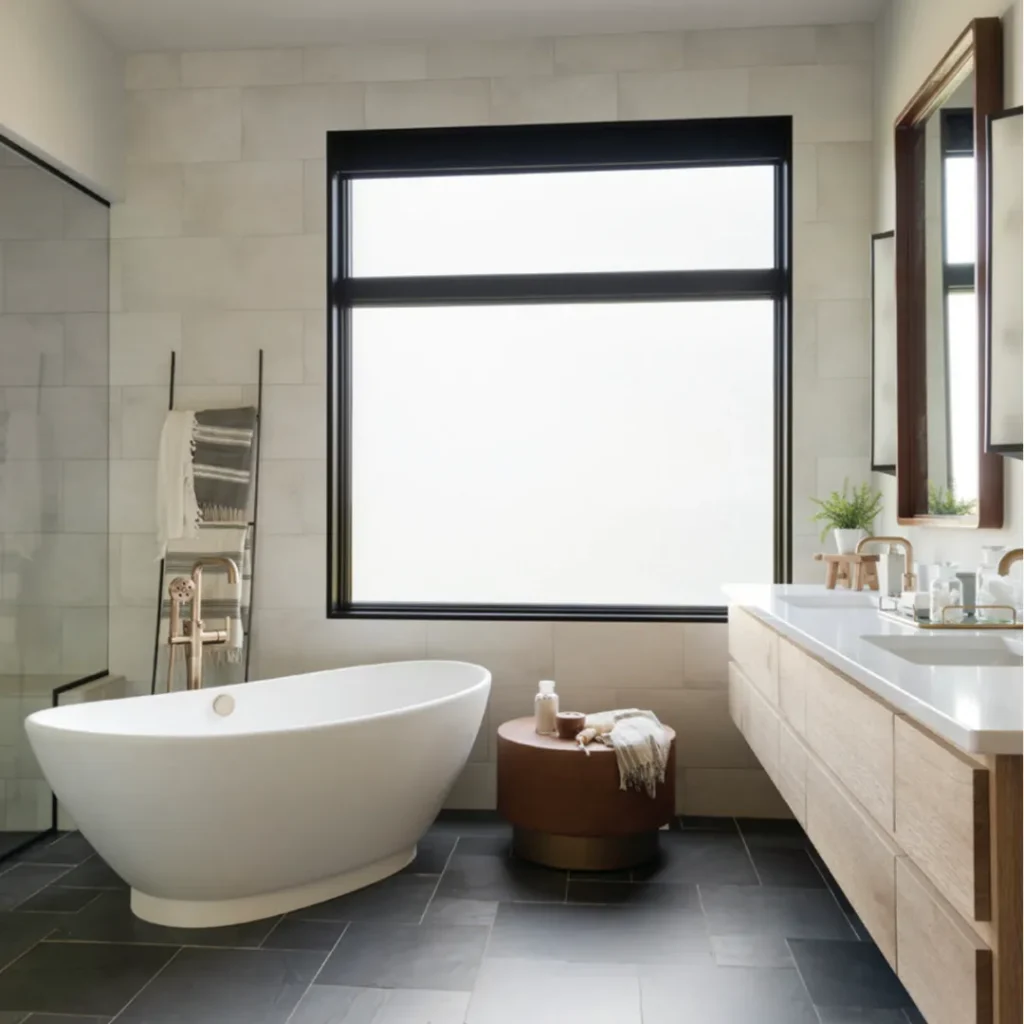
Not everyone can drill into walls or swap out glass, and that’s where window privacy film for bathrooms becomes the practical answer, especially if you’re renting. You can’t exactly ask your landlord to install custom etched glass.
Static cling frosted window vinyl is the renter’s best friend here. It uses static electricity (or a light water application) to stick to glass without any adhesive, which means when you move out, it peels off clean with zero residue and zero damage to the window. This is different from the permanent adhesive films used in owned homes, and it’s worth knowing the difference before you buy, since the wrong type can leave a sticky mess behind.
The privacy level is nearly identical to permanent film. The only real limitation is durability — cling film tends to need replacing sooner than adhesive film, especially in a bathroom with heavy shower use. Still, for a rental, it’s the only sensible route.
For example, most static cling options hold up well for a year or two before you notice the edges starting to lift, especially in a bathroom that sees daily hot showers. What this means for bathroom window privacy in a rental is simple: you’re trading a bit of longevity for zero risk to your security deposit, which is usually the right trade to make. On top of that, replacing cling film is quick and inexpensive when the time comes, so it’s less of a hassle than it sounds. Here’s why that matters — you can reapply a fresh sheet in under 20 minutes without needing any special tools or skills.
Bathroom Window Coverings for Privacy: Blinds, Shutters, and Curtains
Not everyone wants their glass permanently altered. If you like the idea of opening things up when you want a view and closing them when you don’t, bathroom window coverings for privacy give you that flexibility in a way film and glass can’t.
Blinds and Shutters
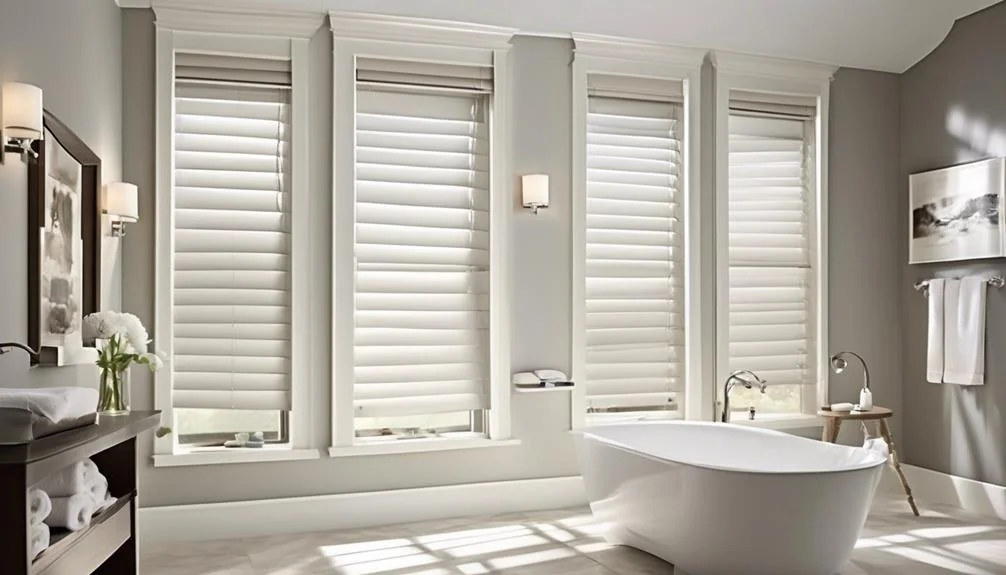
Vinyl or faux-wood blinds handle moisture better than real wood, and they let you tilt the slats for partial privacy without blocking all the light. Shutters give you a more finished, built-in look but usually cost more and require more precise measuring for a proper fit.
Here’s why blinds are such a popular pick for bathroom window privacy: the tilt function gives you control that fixed options like film simply can’t offer. For example, you can angle the slats up for privacy while still letting light bounce off the ceiling, then open them fully once you’re done showering. What this means is you’re not locked into one level of privacy all day — it adjusts to whatever you need in the moment. On top of that, vinyl blinds wipe clean in seconds if they get splashed, which makes them a low-maintenance choice for a room that sees water almost every day.
Sheer and Café Curtains
Sheer curtains work if your bathroom isn’t directly facing another building — they soften the view without fully blocking it. Café curtains, which only cover the lower half of the window, are popular for exactly this reason: they block the sightline into the shower or tub while leaving the top of the window clear for light.
Among privacy window treatments, fabric options are the most style-flexible for bathroom window privacy, but they’re also the ones most vulnerable to mold in a humid room, so look for moisture-resistant, easy-to-wipe materials specifically labeled for bathroom use.
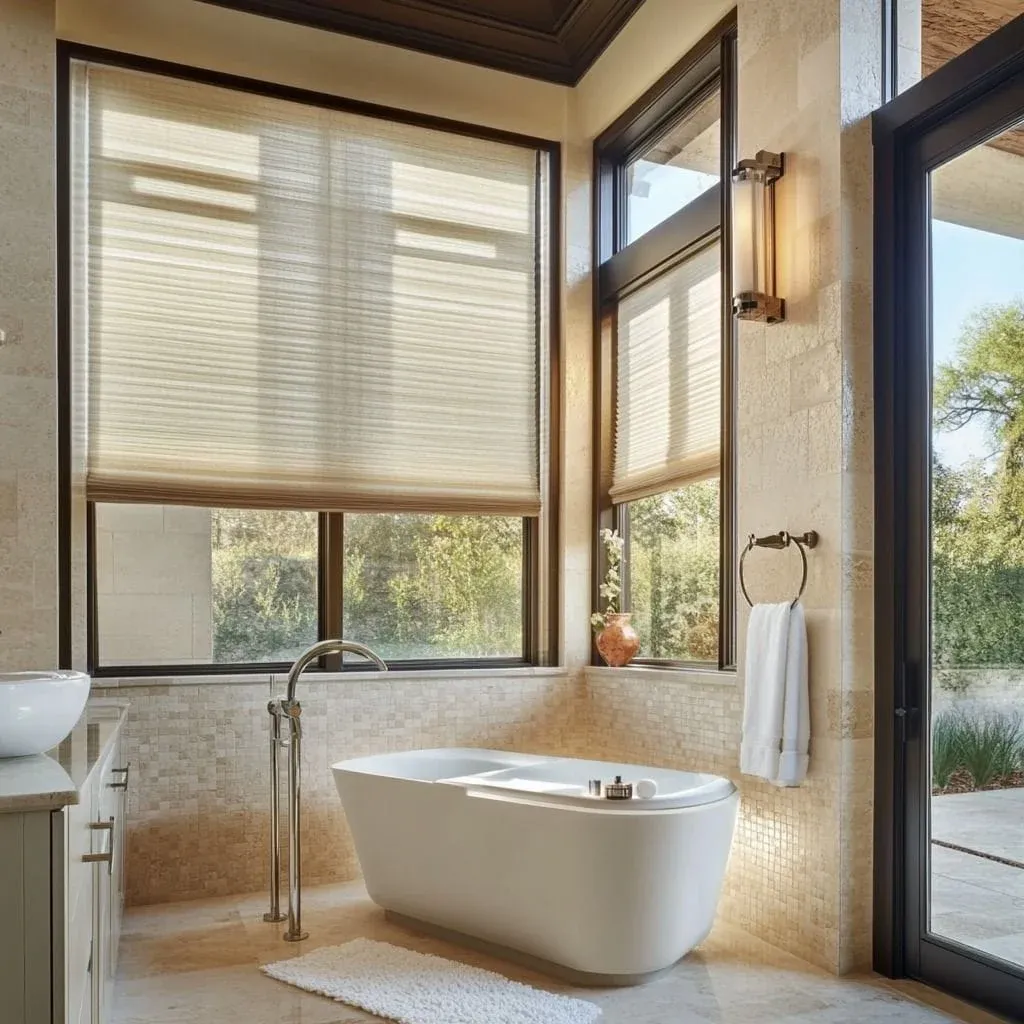
One-Way Window Film Privacy: Does It Actually Work at Night?
This is the question nobody warns you about until it’s too late. One-way window film privacy — sometimes marketed as mirror or reflective film — only works one direction, and only under specific lighting conditions.
Here’s the catch: this type of bathroom window privacy relies on the outside being brighter than the inside. During the day, that’s usually true, so the film reflects light back out and hides your bathroom from view. But the second the sun goes down and you flip on your bathroom light, the balance flips too. Now your bathroom is brighter than outside, and anyone passing by can see in clearly — the exact opposite of what you wanted.
If you’re considering this type of film, it’s really only reliable for daytime privacy in bathrooms that aren’t used much after dark, or you’ll need to pair it with a secondary covering like a blind or curtain for nighttime hours.
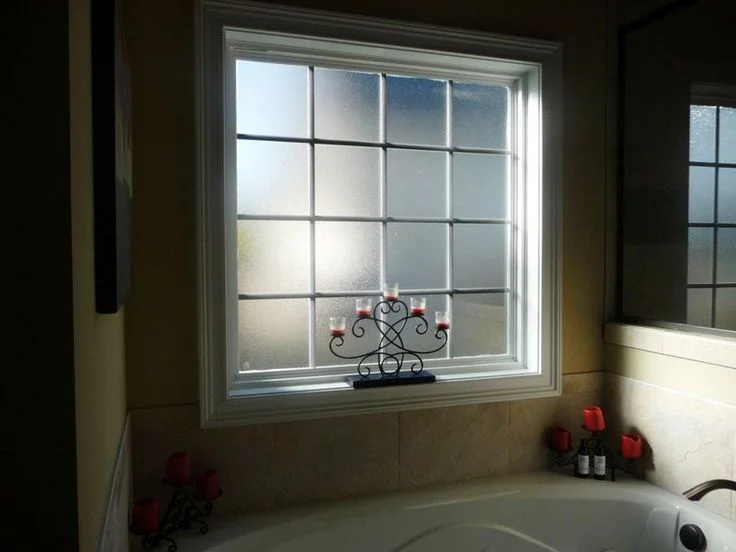
Stained Glass Window Film Privacy for a Decorative Touch
If plain frosted glass feels a little clinical for your taste, stained glass window film privacy gives you both function and personality. These films mimic the look of traditional leaded stained glass — colored panels, geometric patterns, floral designs — while still doing the core job of obscuring the view.
It’s a favorite for older homes or anyone wanting their bathroom window privacy solution to double as a design feature rather than just a privacy fix. The application process is the same as standard frosted film, so it’s still a DIY-friendly weekend project, but the visual payoff is noticeably higher. The only real downside is cost — decorative patterned films run more than plain frost, simply because of the printing process involved.
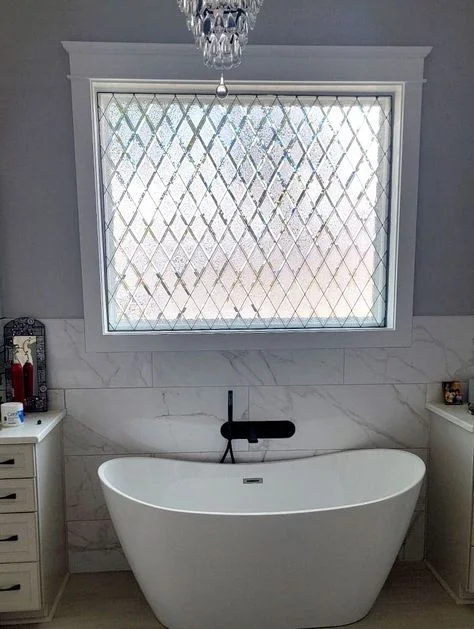
Choosing the Right Bathroom Window Privacy Solution for Your Space
So how do you actually pick? It comes down to three questions: how exposed is your window, do you rent or own, and how much are you willing to spend?
If your window faces a busy street or a neighbor’s window at eye level, you need something that works day and night — frosted film, permanent privacy glass, or an etched glass bathroom window are your safest bets. If your view is more private (a fenced yard, a high window, nothing facing it directly), lighter options like sheer curtains or one-way film can work fine during the day.
Renters should lean toward static cling frosted window vinyl for bathroom window privacy — no damage, no deposit risk, and it still gets the job done. Homeowners doing a full remodel have more freedom to go with permanent privacy glass or a decorative etched design if budget allows.
Whatever you land on, always check that it’s rated for high-moisture environments. A treatment that works beautifully in a bedroom can warp, peel, or mold within a year in a bathroom.
FAQs: Bathroom Window Privacy
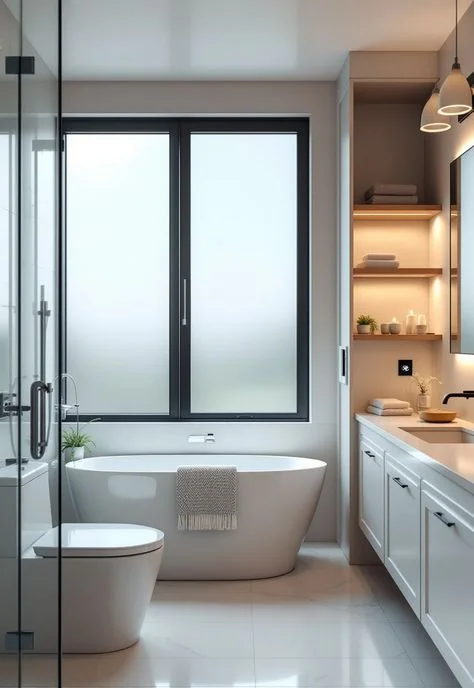
Does frosted window film really block the view at night?
Yes, unlike one-way reflective film, standard frosted film diffuses light instead of relying on brightness contrast. It works the same whether it’s noon or midnight, which makes it more reliable for bathroom window privacy than mirror-style films.
Can I remove privacy film without damaging the glass?
Static cling vinyl films can be peeled off with no residue, making them ideal for renters. Adhesive films may leave sticky residue that needs a scraper and adhesive remover to fully clean off.
Is privacy glass more expensive than film?
Yes, significantly. Film costs roughly $15–40 per window, while custom or replacement privacy glass can run into hundreds of dollars per pane, since it usually requires professional installation.
Will privacy film hold up in a steamy shower?
Films specifically rated for wet rooms handle steam and splashing fine. Cheaper, non-rated films are more likely to peel or bubble over time in high-humidity conditions.
What’s the cheapest bathroom window privacy option?
Static cling frosted film is generally the most budget-friendly, often costing less than curtains, blinds, or any permanent glass replacement, while still delivering solid all-day, all-night privacy.
Conclusion
Bathroom window privacy isn’t a one-size-fits-all problem, and honestly, that’s good news — it means there’s an option that fits your exact window, your budget, and how permanent you want the change to be. Whether it’s a $15 roll of frosted film you apply this afternoon or a full glass swap during a remodel, the fix is usually simpler than people expect.
Take a look at your bathroom window this weekend, notice what’s facing it, and pick the solution that matches. You’ll wonder why you didn’t do it sooner.