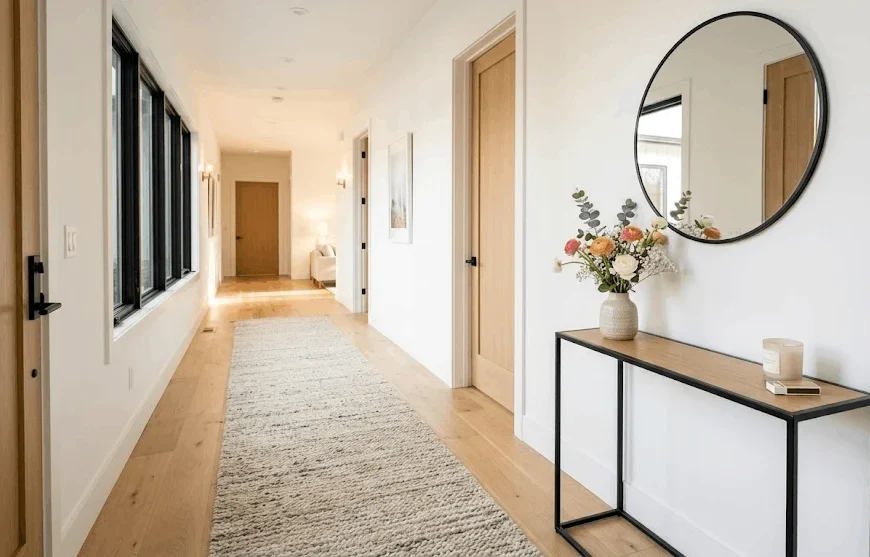
If you’ve ever stood at the end of your hallway wondering why it still looks bare even after you cleaned it, you’re not alone. Hallways are weirdly hard to decorate. They’re long, narrow, and usually get more foot traffic than any other room in the house. That’s exactly why good hallway runner ideas matter so much — the right rug can turn a boring strip of floor into the best-looking part of your home. In this guide, we’ll go through sizing, materials, patterns, and placement so you walk away knowing exactly what to buy.
Why Hallway Runner Ideas Start With Measuring, Not Shopping
Most people jump straight to browsing rugs online before they’ve even measured their space, and that’s where hallway runner ideas go wrong from the start. Here’s why: a runner that looks perfect in a photo can look completely off if it’s too wide, too short, or swallows up your baseboards.
Before you pick a color or pattern, grab a tape measure. Leave 3 to 6 inches of bare floor on each side of the runner — this is the golden rule interior designers use for a runner rug size guide for hallways. So if your hallway is 36 inches wide, you’re looking at a runner around 24 to 30 inches wide.
This one step saves you from the most common mistake people make with hallway runner ideas: buying a rug that looks great online but feels completely wrong once it’s actually down on your floor. A runner that’s too wide can make a hallway feel cramped, while one that’s too narrow just looks like an afterthought. Taking five minutes to measure properly means every other decision — color, pattern, material — actually has a chance to look intentional instead of accidental.
Length works a little differently. You want to leave about 6 to 10 inches of floor showing at each end, rather than running the rug wall-to-wall. It gives the hallway breathing room instead of looking like wall-to-wall carpet got cut short.
Standard Sizes to Know
- 2.5 x 6 ft – short hallways, small landings.
- 2.5 x 8 ft – average hallways.
- 2.5 x 10 to 12 ft – long hallway rug designs for larger homes.
- Custom cut – for anything unusually long or oddly shaped.
Narrow Entryway Runner Rugs: Solving the Tightest Spaces
If your hallway is more of a squeeze than a stroll, narrow entryway runner rugs solve a problem regular rugs can’t. These are typically 20 to 26 inches wide and work well in older homes or apartments where hallways were built before anyone thought about furniture flow.
The trick with tight spaces is going lighter, not darker. A pale or textured runner makes a narrow hallway look wider than it is, while a busy, dark rug can make it feel like a tunnel. This is one of those hallway runner ideas that costs nothing extra but changes the whole feel of the space.
Light doesn’t just mean plain, either — a soft cream or beige runner with subtle texture can still feel interesting without weighing the hallway down visually. What this means is you get the best of both worlds: a rug that adds personality but still lets the space breathe. On top of that, pale tones tend to reflect whatever natural light your hallway gets, which makes even a windowless corridor feel less closed-in.
If you’re still not sure which direction to go, here’s a simple test: stand at one end of the hallway and picture the rug as a shadow on the floor — if it looks like it’s swallowing the space, it’s too dark, and that’s one of the easiest hallway runner ideas to course-correct before you commit to buying.
Hallway Carpet Runner Styles Worth Considering
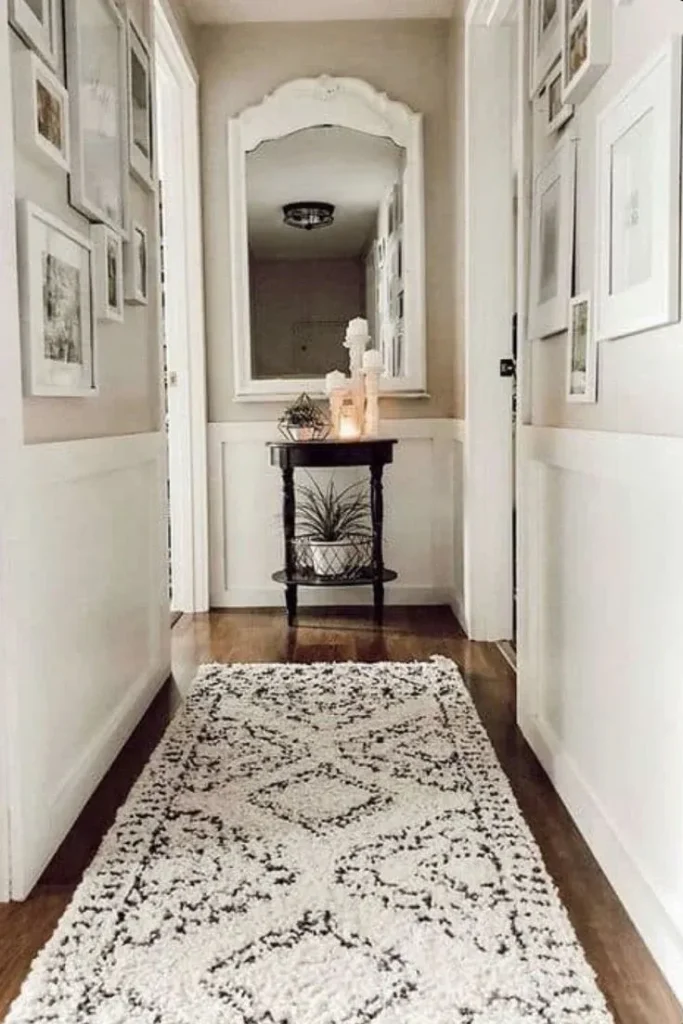
There isn’t just one “right” style. Hallway carpet runner styles usually fall into a few camps, and picking one depends on your home’s overall vibe.
Flat-weave runners are thin, easy to clean, and great for high-traffic hallways. They don’t bunch up under foot traffic the way plush rugs sometimes do.
Hand-knotted or hand-tufted runners bring texture and a more expensive look, but they need more upkeep, especially in homes with kids or pets.
Braided runners feel more casual and cottage-style — a good match for farmhouse or coastal interiors.
Persian or oriental-style runners are the classic choice, and they hide dirt and wear better than solid colors, which matters a lot in a space that gets walked on daily.
- They work in almost any home style, from traditional to eclectic, which is why they show up so often in hallway runner ideas for older homes and character properties.
- The intricate patterns mean small scuffs, pet hair, or dropped crumbs blend right into the design instead of standing out.
- Many oriental-style runners are made with tightly woven wool, so on top of hiding wear visually, they actually hold up better structurally over years of foot traffic.
- They pair well with both hardwood and tile flooring, giving you flexibility if you ever renovate or change up your hallway decor down the line.
Best Materials for Hallway Runners (And Which Ones to Skip)
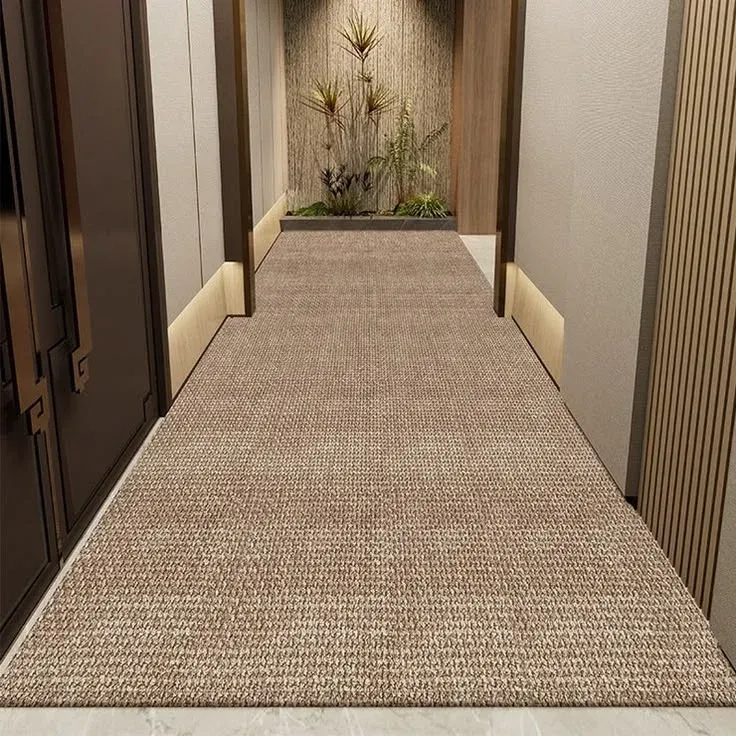
This is where a lot of hallway runner ideas either hold up for years or fall apart within months. The best materials for hallway runners depend on how much foot traffic — and how many muddy shoes — your hallway sees.
- Wool – durable, stain-resistant, and a solid long-term investment for busy hallways.
- Jute or sisal – natural texture, but not great near entry doors that see rain or snow.
- Polypropylene – budget-friendly and stain-resistant, good for renters.
- Cotton – soft and washable, best for lower-traffic hallways like upstairs landings.
If you have kids, pets, or a front door that opens straight into the hallway, skip delicate silk-blend rugs entirely. They look beautiful in showrooms and stressful in real life.
Silk fibers snag easily, show water stains almost instantly, and just aren’t built for muddy shoes or a dog shaking off rain. What this means is you’ll spend more time worrying about the rug than actually enjoying your hallway.
For entryways especially, here’s why durability should always come before looks: a stunning runner that stains after one rainy week isn’t saving you money, it’s costing you a replacement. This is one of those hallway runner ideas that’s easy to skip past when you’re browsing pretty photos online, but it’s the difference between a rug that lasts five years and one that looks worn out in five months.
Washable Hallway Runner Options for Busy Households
Washable hallway runner options have become one of the most searched hallway runner ideas over the last couple of years, and it’s easy to see why. Machine-washable runners — often made from recycled polyester or cotton blends — let you toss the whole rug in the wash instead of hauling it to a dry cleaner or scrubbing it by hand.
Brands like Ruggable popularized this category by using a two-piece system: a non-slip pad underneath and a washable top layer that zips or velcros on. It’s a smart pick for households with pets, young kids, or anyone who just hates spot-cleaning stains on their hands and homes.
What this means is you get the look of a traditional runner without the maintenance headache that usually comes with it. On top of that, most washable tops dry within a few hours, so your hallway isn’t left without a rug for days while you wait.
For anyone comparing hallway runner ideas on a budget, this option often works out cheaper long-term since you’re not replacing a stained rug every year or two. Here’s why it’s worth considering even if you don’t have kids or pets: everyday life still means dropped coffee, wet umbrellas, and dusty shoes, and a washable runner just makes cleanup part of your normal routine instead of a stressful chore.
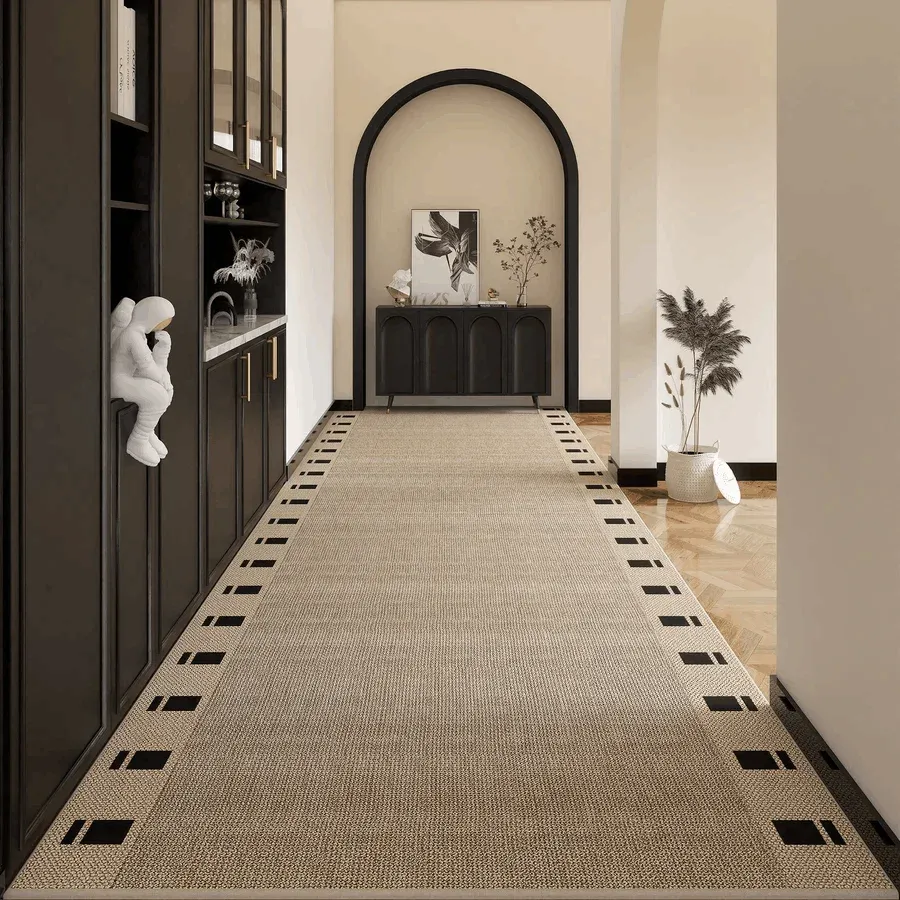
Modern Hallway Runner Patterns to Try
If your hallway feels dated, modern hallway runner patterns are usually the fastest fix — faster than repainting, and way cheaper than new flooring.
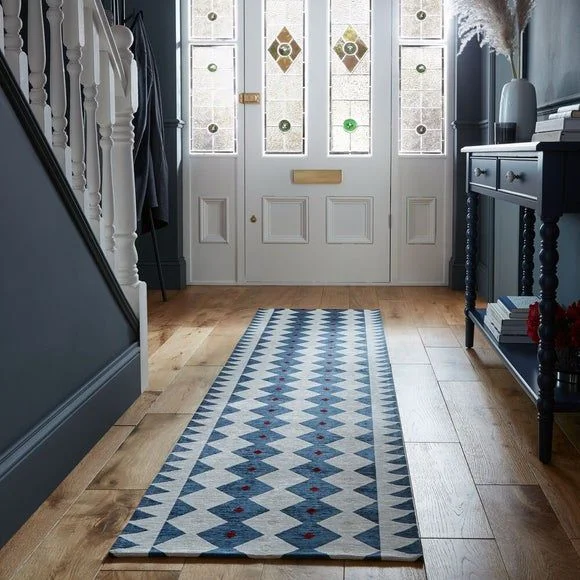
Geometric Patterns
Bold geometric prints work well in hallways with plain white walls and minimal decor. They add energy without needing extra artwork.
For example, a black-and-white chevron or diamond pattern can turn a plain white hallway into the most interesting part of your home without adding a single frame to the wall. This is one of those hallway runner ideas that works especially well in newer builds or rental homes, where you can’t paint or hang much on the walls anyway.
On top of that, geometric patterns tend to photograph well, which matters if you’re planning to sell your home or just want your space to look good on social media. If you’re worried bold prints will feel overwhelming, start with a two-tone design rather than a multicolor one — it gives you the visual punch without competing with your furniture or decor.
Abstract and Watercolor Designs
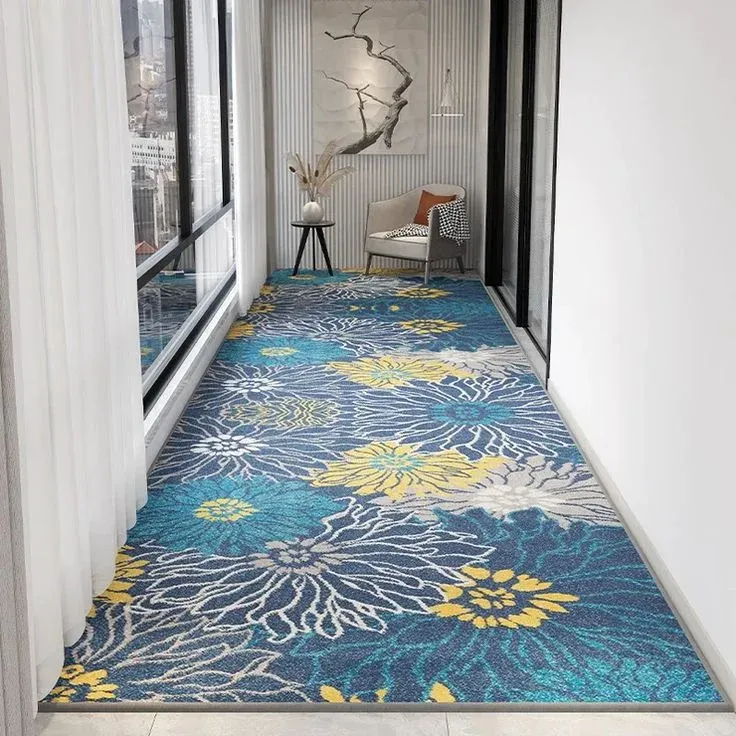
Soft, blurred patterns hide dirt and pet hair better than solid colors, making them practical as well as good-looking.
Watercolor and abstract designs work by blending tones together, so a bit of dust or a stray hair doesn’t stand out the way it would on a flat, solid-colored rug. What this means is less time vacuuming and more time actually enjoying your hallway.
These patterns also tend to work well as a bridge between bolder wall colors and neutral flooring, tying the whole space together without competing for attention. For anyone exploring hallway runner ideas that need to survive daily life without looking high-maintenance, soft abstract patterns are one of the easiest, lowest-effort choices you can make.
Vintage-Inspired Distressed Rugs
These look like an antique rug that’s been walked on for decades, which — ironically — makes new stains and wear blend right in.
The faded, worn-in look is actually manufactured on purpose, so you get all the character of a vintage find without having to hunt one down at an estate sale. What this means is a fresh new stain or scuff mark just looks like part of the original design instead of damage you need to hide.
This is one of those hallway runner ideas that works especially well in homes with older architecture, exposed brick, or traditional trim, since the distressed look fits right in. On top of that, these rugs tend to hide everyday wear so well that you can go longer between deep cleans without anyone noticing the difference.
Striped Runners
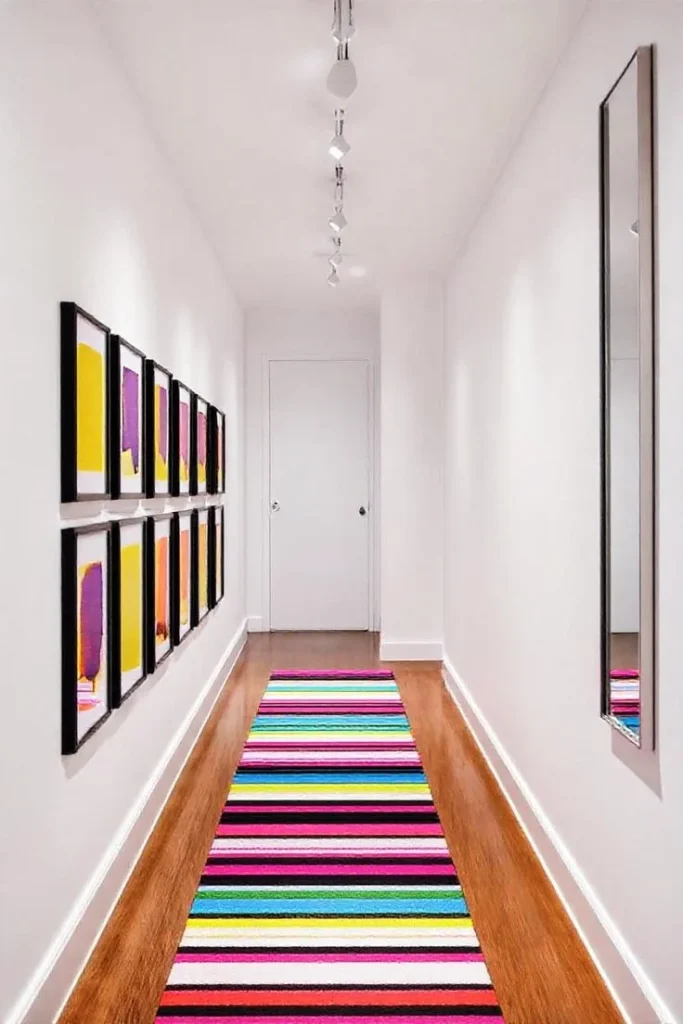
Horizontal stripes can visually widen a narrow hallway, while vertical stripes elongate a shorter one. Simple trick, big visual payoff.
Here’s why this works: your eye naturally follows the direction of the lines, so it reads the space as wider or longer than it actually is, even though nothing about the hallway’s real dimensions has changed. What this means is you can fix an awkward-feeling space just by choosing the right stripe direction, without any construction or renovation involved.
This is one of those hallway runner ideas that’s especially useful for older homes with narrow, boxy hallways, since it’s a free visual trick that costs nothing beyond the price of the rug. On top of that, striped runners tend to hide dirt along the edges better than solid colors, since the contrast breaks up any buildup of dust or footprints.
Stair and Hallway Runner Combinations
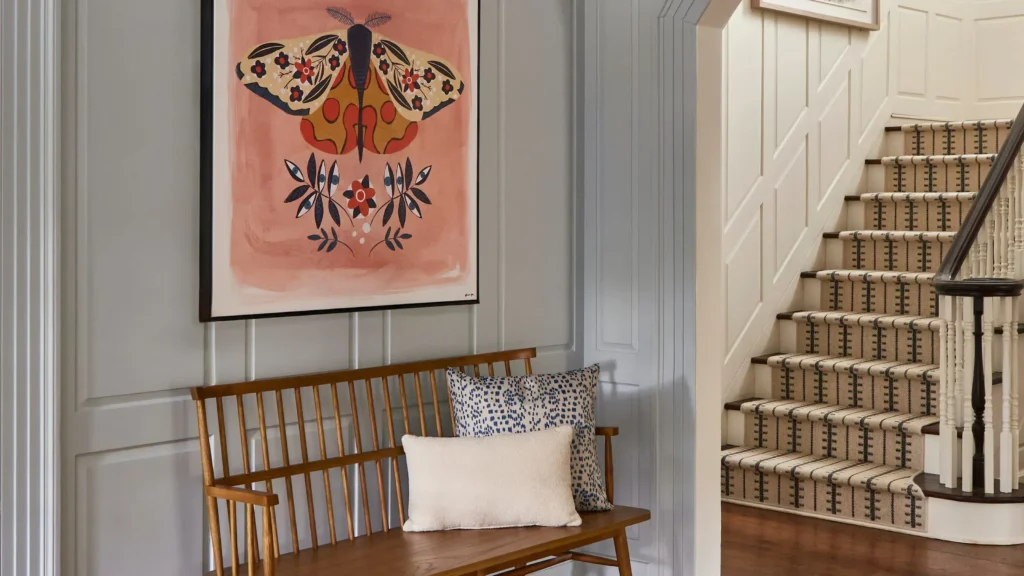
If your hallway leads to a staircase, stair and hallway runner combinations create a cohesive look instead of two separate design decisions competing with each other. Matching (or coordinating) the runner on your stairs with the one in your hallway makes the whole path feel intentional rather than pieced together.
You don’t have to use the exact same rug. A lot of hallway runner ideas actually work better when the stair runner is a solid color and the hallway runner picks up a pattern or accent color from it — same tone, different texture.
For example, if your stairs have a deep navy runner, the hallway version could pick up navy as an accent within a patterned design, rather than repeating the same solid color across both spaces. What this means is the two areas feel connected without looking matchy or overly coordinated, which can sometimes feel a bit dated.
Here’s why this approach works so well: it gives you room to experiment with texture and pattern in the hallway while keeping the stairs simple and durable, since stairs usually see more direct wear. This is one of those hallway runner ideas that pulls a whole entryway together, especially in homes where the staircase is one of the first things guests see when they walk in.
Hallway Decor With Area Rugs: Beyond Just the Runner
Good hallway decor with area rugs isn’t only about the runner itself. Think about what’s happening around it — a console table, a mirror, wall art, or a bench near the entry all work together with the rug to make the space feel finished.
A common mistake is treating the runner as an afterthought instead of the anchor piece. Pick your rug first, then choose wall colors or accessories that complement it, not the other way around.
Hallway Runner Placement Tips That Prevent Accidents
Hallway runner placement tips matter more than people realize, especially because hallways are where slips and trips happen most in homes. A rug pad underneath isn’t optional — it’s the difference between a runner that stays put for years and one that bunches up and becomes a tripping hazard within weeks.
Here’s what actually works:
- Use a non-slip rug pad, especially on hardwood or tile.
- Keep the runner centered, not pushed to one side.
- Avoid placing the runner directly in doorway swing paths.
- Re-check placement every few months, since rugs shift with regular foot traffic.
FAQs: Hallway Runner Ideas
1. How wide should a hallway runner be?
Leave 3–6 inches of visible floor on each side of the runner. For a 36-inch hallway, a 24–30 inch wide runner usually looks best and follows standard hallway runner ideas.
2. Can I use two runners in one long hallway?
Yes, especially in extra-long hallways. Just make sure both pieces match in color and pattern so it reads as one continuous look, not two mismatched rugs.
3. What’s the most durable material for a high-traffic hallway?
Wool and polypropylene blends hold up best. Wool resists stains naturally, while polypropylene is budget-friendly and easy to clean, both solid picks among hallway runner ideas for busy homes.
4. Do hallway runners need a rug pad?
Yes. A non-slip pad prevents bunching, protects flooring, and reduces trip hazards — especially important on hardwood or tile.
5. How often should I replace a hallway runner?
Most runners last 5–10 years depending on material and foot traffic. Washable options can last longer since they’re easier to keep clean between replacements.
Conclusion
At the end of the day, hallway runner ideas come down to three things: the right size, a material that fits your lifestyle, and a pattern that matches your home’s overall look. You don’t need to overthink it — measure your space, pick a durable material if you’ve got kids or pets, and choose a pattern that hides daily wear rather than showing it off.
Start simple. Measure your hallway this weekend, note the width and length, and use that number before you fall in love with a rug online that turns out to be the wrong size.