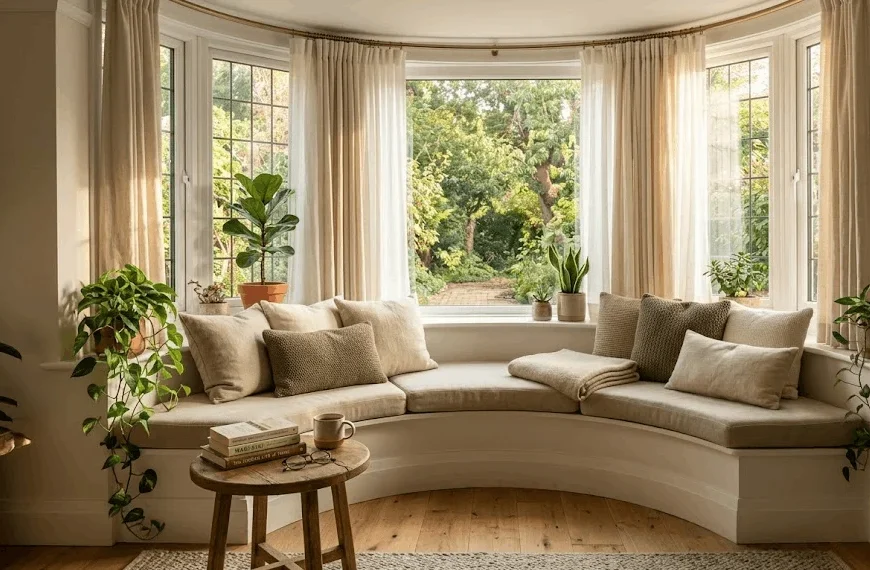
Here’s a scene a lot of homeowners know too well: you’ve got this gorgeous bay window jutting out of your living room, flooding the space with light, and… it’s just sitting there. Maybe there’s a sad little plant on the sill. Maybe it’s become the spot where mail piles up. If you’ve been putting off doing anything with yours, you’re not alone — figuring out bay window decor trips up a lot of people, mostly because there are too many directions to go and no clear starting point.
That’s what this guide is for. We’ll walk through the ideas that actually work in real homes, not just in photos, so you can pick what fits your space and get it done this weekend.
Why Bay Window Decor Is Trickier Than It Looks
Good bay window decor isn’t really about picking a pretty curtain and calling it a day. The tricky part is that a bay window is three jobs in one: it’s a light source, a piece of architecture, and — if you use it right — extra square footage you’re probably wasting right now.
Most people get stuck because they treat it like a regular window instead of a mini-room of its own. Once you start thinking of it as its own zone with a purpose (reading, plants, dining, whatever), the decisions get a lot easier. Ask yourself one question first: do you want to sit in this space, or just look at it? That answer shapes everything else.
Good bay window decor almost always starts with that one decision, and skipping it is why so many bay windows end up half-finished. If you pick “sit,” you’re now shopping for cushions and storage, not curtains. If you pick “look,” your energy goes into the view, the plants, or the art you frame with it. Either way, write down your answer before you buy a single thing. It’ll save you from ending up with a window that’s trying to do three jobs badly instead of one job well.
Bay Window Seating Design: The Most Popular Fix
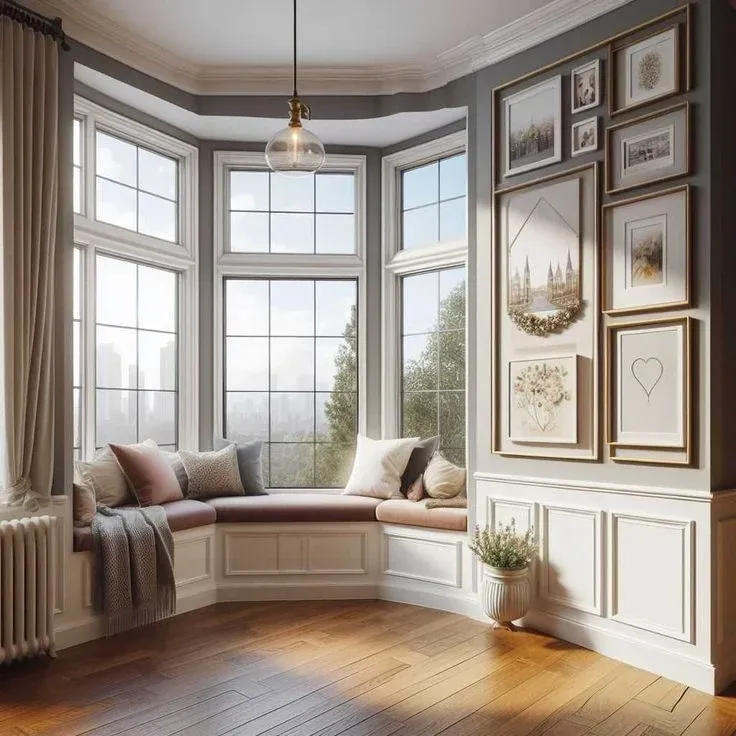
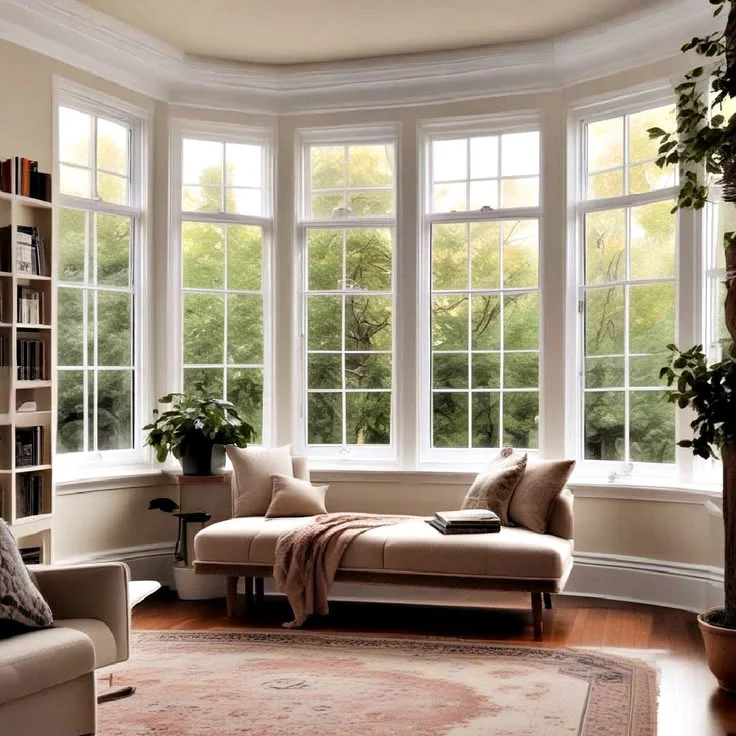
If your bay window is deep enough to sit in, this is where most people land — and for good reason. A window seat turns dead space into the coziest corner in the house.
Built-In Bench with Storage
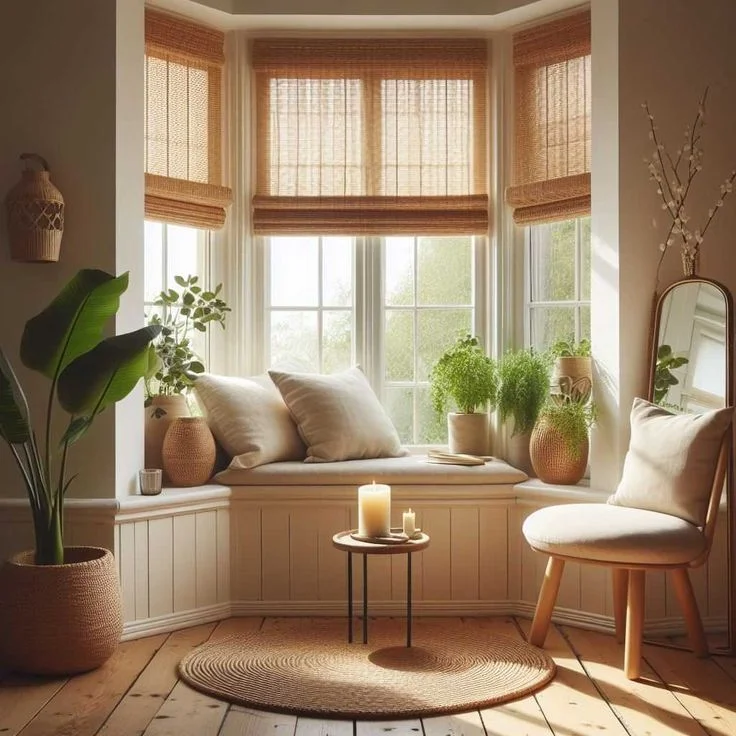
A bay window bench with storage is the gold standard here. You get a place to sit and hidden space underneath for blankets, books, or seasonal stuff you don’t want cluttering closets. If you’re handy, this is a doable weekend project with plywood and a saw. If not, plenty of carpenters build these to fit odd angles for a reasonable price.
This one idea alone solves more bay window decor problems than almost anything else on this list, since it handles seating and clutter in a single move. Measure twice before you order lumber or hire someone — bay windows rarely have perfectly even angles, and an off-by-an-inch bench will bug you every time you look at it. Top it with a cushion cut to match the bench shape exactly, not a generic rectangle that leaves gaps at the corners. Once it’s in place, you’ll wonder why that corner sat empty for so long.
No Built-In? Try Furniture Instead
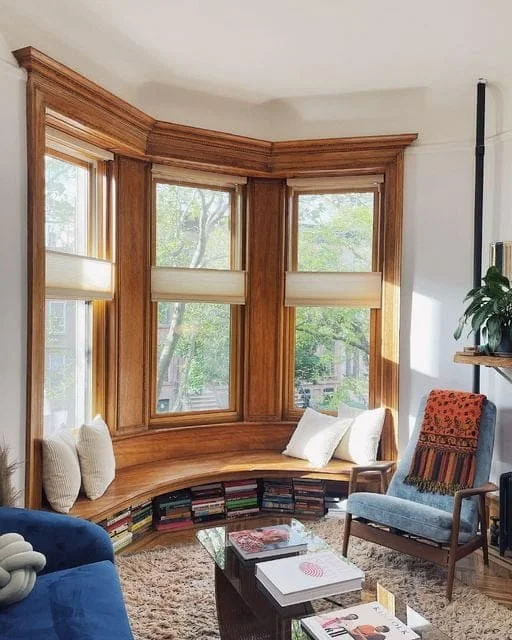
Don’t want to commit to construction? A daybed, a stack of floor cushions, or even a low bench you already own can do the job. Add a couple of throw pillows and a soft blanket, and you’ve got a reading nook window seat without touching a single wall.
This is honestly the easiest entry point into bay window decor if you’re renting or just not ready for a bigger project. Push the piece flush against the window so there’s no awkward gap catching dust behind it. Stick to two or three cushion colors instead of a random mix, or the corner starts looking cluttered instead of cozy. And if you can, add a small side table or even a stack of books to hold a mug or a lamp within reach.
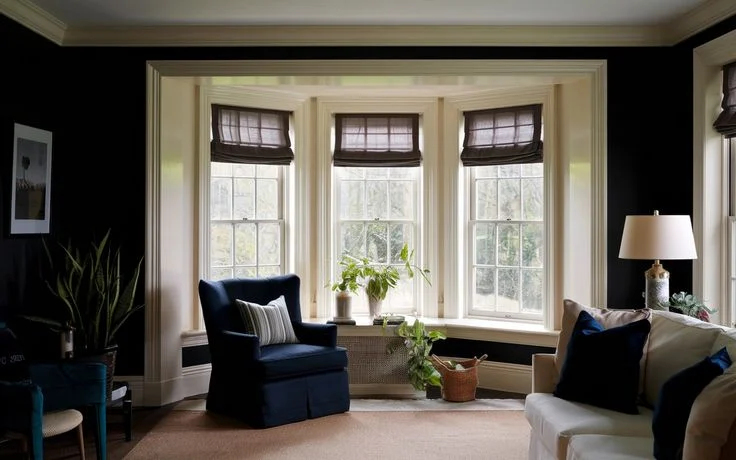
Bay Window Curtain Ideas That Don’t Fight the Angles
Bay windows bend in ways regular windows don’t, which trips up a lot of curtain rods. Here’s what actually works.
Wrap-Around Curtain Tracks
A flexible or custom-bent curtain track that follows the shape of the bay lets your fabric flow around the whole window instead of stopping awkwardly at each pane. This is one of the more popular bay window curtain ideas because it makes the whole nook feel like one continuous, intentional space rather than three separate windows stuck together.
Getting this right is one of the fastest ways to upgrade bay window decor without touching furniture or paint. Most hardware stores carry bendable tracks, but for tighter or unusual angles, a custom-cut rod measured to your exact window is worth the extra cost. Mount it a few inches above the window frame and wider than the opening, so the curtains can fully clear the glass when pulled back. That small detail alone is often the difference between a bay window that looks staged and one that looks like it was always meant to be there.
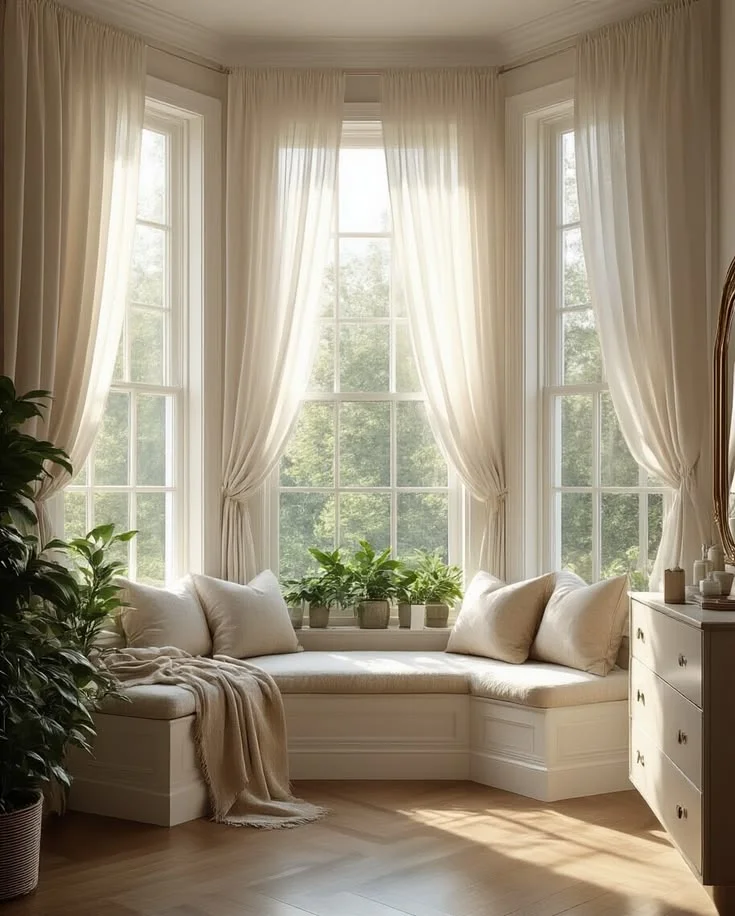
Layer for Function and Warmth
Sheers up close for daytime light, heavier drapes on the outer track for evening privacy — this combo is everywhere in 2026 designs for a reason. It gives you control without blocking the view you paid extra for when you got the window in the first place.
This layered approach shows up so often in current bay window decor because it solves two problems at once instead of forcing a compromise. During the day, the sheers soften harsh sun without turning the room dark or blocking your view outside. At night, you simply pull the heavier drapes closed for privacy, no extra blinds required. Just make sure both layers run on separate tracks so you can adjust them independently, rather than fighting with one rod trying to do both jobs.
Skip Curtains Entirely
If your window faces a private yard or you just love the unobstructed view, skip fabric altogether and lean on blinds or shutters instead.
Going fabric-free is a legitimate bay window decor choice, not a shortcut you’re settling for. Plantation shutters give you a clean, architectural look that works well in both traditional and modern homes. Blinds are the more budget-friendly option and still let you adjust light throughout the day without any bulk around the glass. Either way, this route keeps the focus on the window itself and whatever view you’re lucky enough to have outside it.
Bay Window Blinds and Shades for Privacy Without Bulk
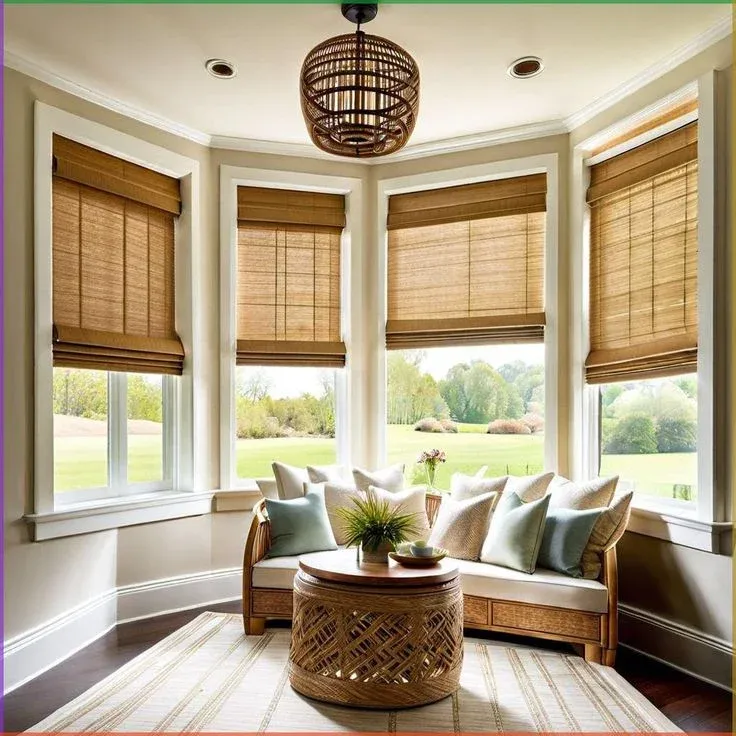
Not everyone wants yards of fabric hanging off their windows, and that’s fine. Bay window blinds and shades give you privacy and light control with a cleaner look.
Wood or faux-wood blinds suit traditional homes and hold up well against direct sun. Roman shades in a neutral tone are a favorite for anyone who wants texture without visual noise — they roll up cleanly and don’t pool on a window seat the way long curtains sometimes do. If you’ve got a bay window in a bathroom or bedroom, frosted or textured glass films paired with simple shades solve privacy without blocking light at all.
Matching the material to the room is one of the easier wins in bay window decor, since it saves you from buying something that looks off within a year. Faux-wood is worth the small upcharge in humid rooms, since real wood can warp near steam or moisture. If you’ve got a window seat, Roman shades are especially practical since they stay flush against the glass instead of dragging across cushions. Whatever you choose, stick to one finish throughout the whole bay rather than mixing materials pane to pane — it keeps the window looking like one cohesive piece.
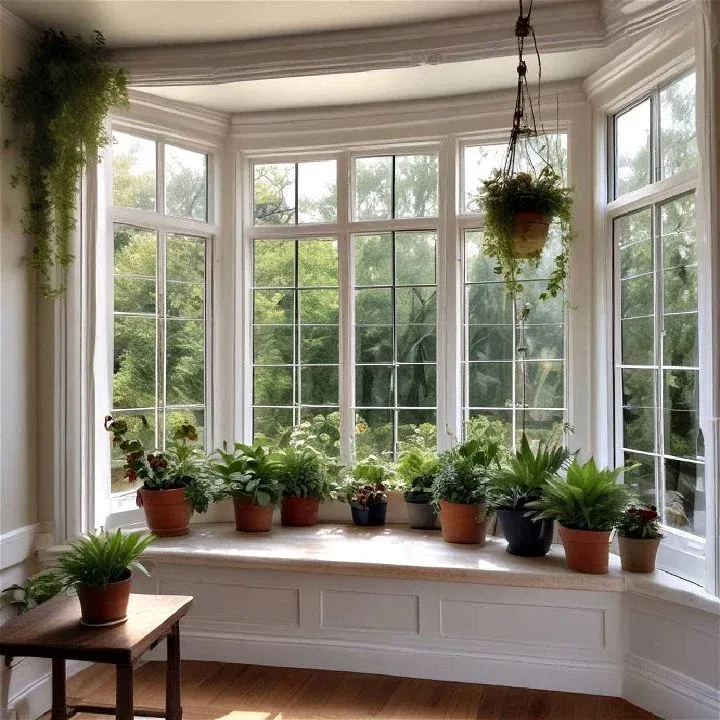
Bay Window Plant Display: Making the Most of the Light
A bay window basically hands you a greenhouse for free — three exposures of light instead of one. It would be a shame not to use it.
Line the sill with a mix of trailing plants (pothos, ivy) and upright ones (snake plants, small ficus trees) for height variation. If you don’t have deep window ledges, a slim console table pushed right up against the glass works just as well and gives you room for bigger pots. Rotate in seasonal touches too — spring bulbs, a small pumpkin display in fall, a mini tree at the holidays — since a bay window plant display doesn’t have to stay static all year.
Plants are one of the lowest-cost ways to make bay window decor feel finished, since you’re working with what the window already gives you for free: light. Group pots in odd numbers — three or five — instead of spacing them out evenly, since that reads as more natural and less “arranged.” Vary pot materials too, mixing terracotta with a ceramic piece or two, so the display doesn’t look like a matched set from a store shelf. Just keep an eye on which plants actually get direct afternoon sun versus filtered light, since a bay window’s three angles don’t always receive the same intensity throughout the day.
Window Nook Decorating for Small or Awkward Spaces
Not every bay window is big enough for a bench. If yours is narrow or shallow, window nook decorating is about making the most of a tighter footprint.
Turn It Into a Micro Workspace
A slim desk pushed into the bay, with open shelving instead of bulky cabinets, gives you a home office corner without eating up the rest of the room. The natural light alone makes it better than most spare-bedroom setups.
Turning the nook into a workspace is one of the more underrated bay window decor moves, especially if you work from home and don’t have a spare room to spare. Position the desk so you’re facing out toward the window rather than with your back to it — the view does more for focus than people expect.
Keep cords tucked along the baseboard or inside a simple cable box, since a tangle of wires ruins the clean look fast. And skip the overhead desk lamp during the day; between the natural light and a small task lamp for evenings, you likely won’t need it at all.
Breakfast Nook Energy
In a kitchen, even a small bay window fits a round table and two chairs. It instantly becomes the spot everyone actually wants to eat breakfast, instead of the counter.
A breakfast nook is one of the most functional bay window decor ideas on this list, since it turns unused square footage into a spot the whole family actually fights over. Round tables work better than square ones here, since they don’t fight with the angles the way sharp corners do.
Bench seating along the window side saves floor space too, especially in tighter kitchens where a full chair set won’t fit. Add a small pendant light overhead, and that corner stops feeling like an afterthought and starts feeling like the reason you renovated the kitchen in the first place.
A Focal Point with Art or Objects
If seating and storage don’t make sense, use the space as a display shelf instead — books, pottery, a favorite lamp. Bay windows naturally draw the eye, so whatever you put there becomes the room’s focal point without much extra effort.
This is the simplest form of bay window decor when you don’t have the budget or space for furniture, and it still makes a real difference. Group items in varying heights — a tall vase, a stack of books, a low bowl — so the eye has somewhere to travel instead of landing flat.
Leave a little negative space between objects too; cramming the sill full of knickknacks reads as clutter, not curation. Swap a piece or two out every season, and that shelf never starts to feel stale or forgotten.
Bay Window Valance Styles for a Finished Look
A valance is the detail that makes bay window decor look pulled-together instead of half-finished. Bay window valance styles range from tailored box pleats (clean, structured, great for traditional homes) to soft swag valances that add a little romance without heavy fabric. If your window already has a lot going on — like patterned blinds underneath — keep the valance solid and simple. If the blinds or shades are plain, a patterned valance is a low-commitment way to add personality.
Living Room Bay Window Ideas That Tie the Whole Room Together
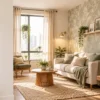
In a living room specifically, the goal is making the bay window feel like part of the layout, not a separate feature bolted onto the wall. Angle a sofa or armchair toward the window instead of away from it. Use the window seat as extra seating during gatherings. And keep furniture heights lower near the window so you’re not blocking the light that makes bay windows worth having in the first place.
One more thing worth remembering: whatever style you choose, thoughtful bay window decor should make the space feel like a natural extension of the room, not a decorated afterthought stuck onto the wall.
Walk into the room from the doorway and check whether your eye travels naturally toward the window or skips right past it — that’s the real test of whether the space is working. If it feels disconnected, try matching one material or color from the window area to something else in the room, like a cushion fabric or a paint accent.
Small ties like that pull the whole space together without a full redesign. Give it that connection, and the bay window stops looking like a bolt-on feature and starts looking like the reason the room works.
FAQs: Bay Window Decor
Q: What’s the cheapest way to update bay window decor?
A: Swap curtains, add throw pillows to an existing seat, or group a few plants on the sill. These changes cost very little and make a noticeable difference without any construction involved.
Q: Do bay windows need special curtain rods?
A: Yes, usually. Standard straight rods don’t follow the angles well. A bendable or custom-cut track designed for bay windows gives you a much cleaner, continuous look.
Q: How deep does a bay window need to be for seating?
A: Most designers recommend at least 20 inches of depth for comfortable seating. Shallower windows work better as display shelves, plant stands, or small workspaces instead.
Q: Are blinds or curtains better for a bay window?
A: It depends on your priority. Blinds offer cleaner lines and better light control; curtains add softness and warmth. Many homeowners layer both for flexibility.
Q: How do I make an awkward, unused bay window feel intentional?
A: Give it one clear job — seating, storage, plants, or display — instead of a little of everything. A defined purpose is what separates good bay window decor from a cluttered afterthought.
Conclusion
At the end of the day, bay window decor comes down to one decision: are you sitting in that space, displaying in it, or just dressing the glass? Once you pick a lane — a cozy bench, a plant-filled ledge, layered curtains, or a mix of all three — the rest of the choices fall into place pretty naturally.
You don’t need to do everything on this list at once. Start with one change this weekend — swap in a wraparound curtain track, add a bench cushion, or move your plants over — and build from there as budget and time allow. That empty, awkward corner has more potential than it’s getting credit for right now.