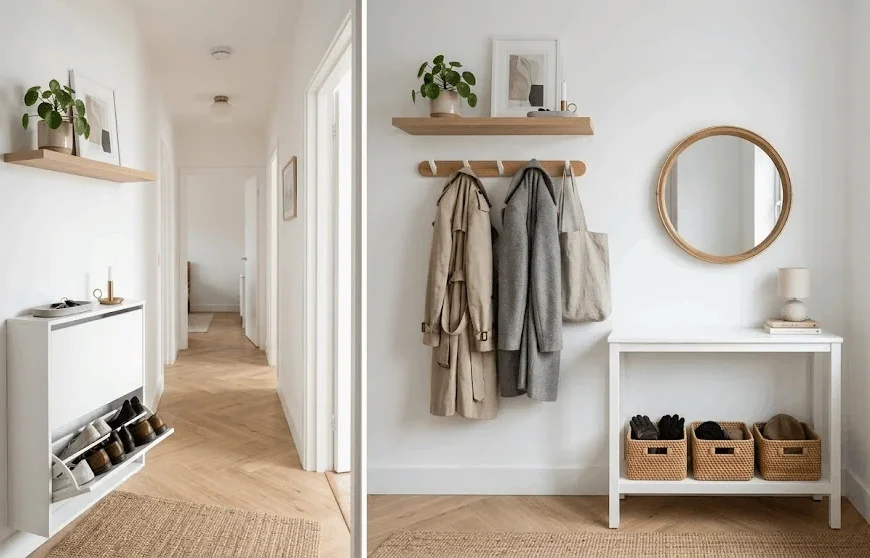
If you’ve ever tripped over a pile of shoes the second you walk through your front door, you already know the struggle. Small hallway storage isn’t just a Pinterest aesthetic thing — it’s about being able to actually get into your house without doing an obstacle course first. Most homes with narrow entries weren’t built with much thought for where coats, bags, and shoes are supposed to go, so you end up improvising. And usually, that improvising looks like a chair covered in jackets.
The good news? You don’t need a big budget or a renovation to fix this. By the end of this article, you’ll have a handful of practical, tested ideas for small hallway storage that work even in the tightest entryways — plus a few tricks most articles on this topic don’t mention.
Why Small Hallway Storage Feels So Hard to Get Right
Small hallway storage is genuinely one of the trickiest design problems in a house. Here’s why: you’re usually working with a few feet of width, low natural light, and a high-traffic path that can’t be blocked. Unlike a bedroom or living room, you can’t just push furniture against a wall and call it done — every inch in a hallway competes with people walking through.
What this means is that most standard furniture simply doesn’t fit. A regular console table or shoe rack designed for an average-sized room will swallow up a narrow hallway and make it feel even more cramped. That’s why depth matters more than width when you’re shopping. Look for anything under 12 inches deep if your hallway is genuinely tight — it sounds small, but it makes a real difference when you’re walking past it daily.
It’s worth grabbing a tape measure before you even start browsing online. Write down your hallway’s narrowest point, then keep that number in your pocket (literally, on your phone) every time you’re tempted by a piece that looks great in photos. A lot of small hallway storage mistakes happen because people fall for the look of a piece before checking if it actually fits the space. When in doubt, go a size smaller than you think you need — you can always add a basket or shelf later, but you can’t un-buy a console table that blocks your front door.
Slim Console Table With Storage: The Classic Fix
A slim console table with storage is one of the most reliable small hallway storage solutions because it does double duty — it’s a landing spot for keys and mail, and a place to tuck shoes or baskets underneath. The trick is sizing it right.
Here’s why this works so well: most console tables come in standard depths of 14–18 inches, which is too bulky for a tight space. Look specifically for ones marketed as “slim” or “narrow” — typically 8–10 inches deep. Pair it with a couple of woven baskets underneath, and you’ve got a spot for shoes without anything looking cluttered.
If your hallway is too narrow for even a slim table, a floating shelf does the same job without eating into your walking path at all.
Floating shelves are honestly one of the most underrated picks for tight entryways, mainly because they don’t need any floor clearance at all — they just sit flush against the wall. You can mount one at roughly waist height for keys and mail, then add a second one higher up for things you don’t need to grab every day. And if you’re renting and can’t drill into walls, there are plenty of adhesive-mounted options now that hold a surprising amount of weight without leaving permanent damage.
Compact Shoe Storage for Hallway: Where Everyone Goes Wrong
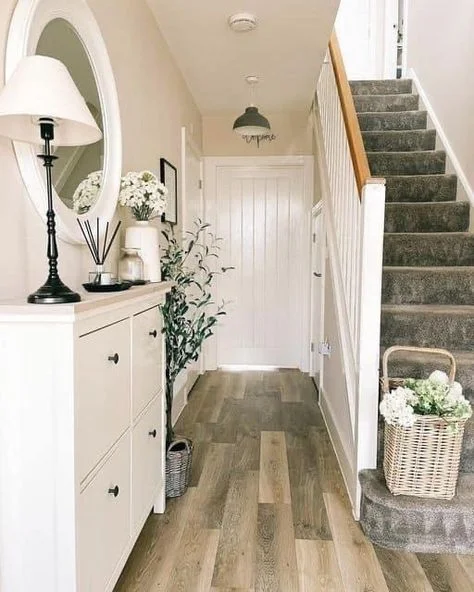
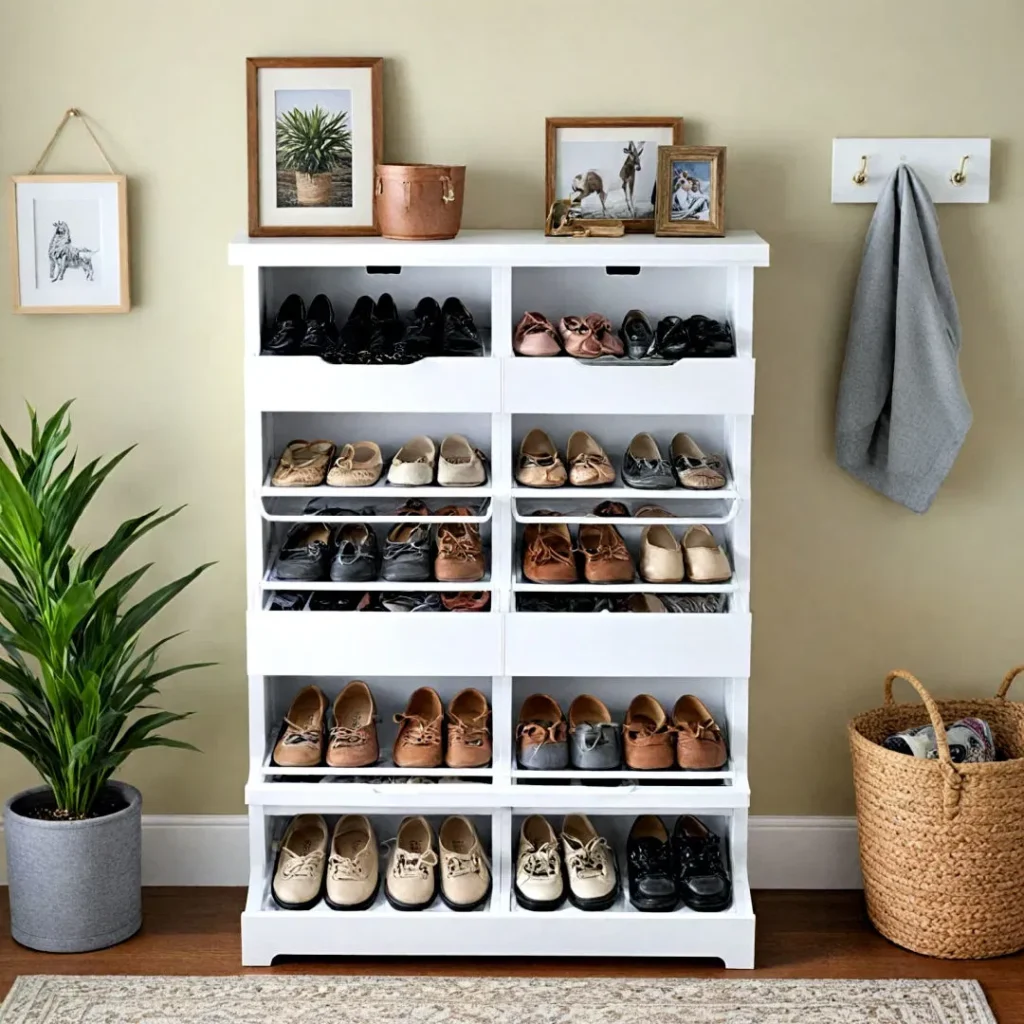
Shoes are usually the biggest offender in any small hallway storage problem. Compact shoe storage for hallway spaces needs to think vertical, not horizontal — that’s the single biggest mindset shift that fixes most cluttered entryways.
A few options that actually work in tight spots:
- Slim shoe cabinets that are barely deeper than the shoes themselves (these are popular for a reason — they hide mess behind doors).
- Over-the-door shoe organizers, which use zero floor space at all.
- Stackable shoe cubbies that you can build up vertically instead of spreading out.
This one simple habit can free up almost a third of your shoe storage without buying a single new piece of furniture. Try doing a quick swap every few months — boots and heavy coats go into under-bed bins or a closet during the off-season, while sandals and lighter jackets take their place. It also makes cleaning the entryway faster, since you’re not constantly shuffling through shoes you won’t wear for months. A little seasonal rotation goes a long way toward keeping a small space feeling functional instead of crowded.
Hallway Storage Bench With Cubbies: A Two-in-One Solution
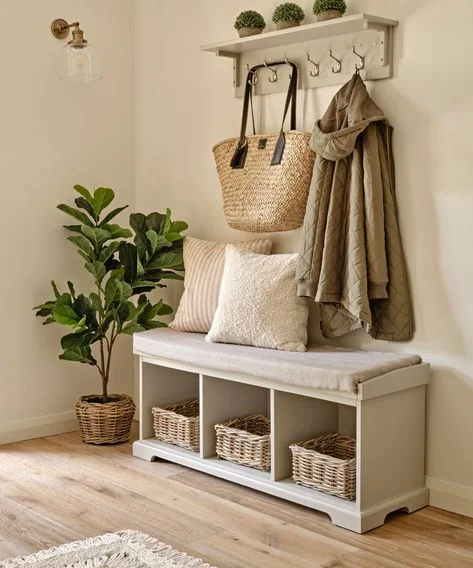
A hallway storage bench with cubbies might be the single best piece of furniture for tight entryways because it solves two problems at once — somewhere to sit while you put shoes on, and somewhere to hide them once you’re done.
For genuinely narrow spaces, look for benches under 14 inches deep with open cubbies underneath rather than a solid base. Open cubbies feel less bulky visually, even though they hold just as much. If you’ve got slightly more room to work with, a bench with a lift-up lid hides everything completely — handy if you’ve got guests over and don’t want shoes on display.
Material matters here too. A bench with a metal or wood-slat frame tends to feel lighter and less imposing in a tight space than one with a solid, boxy base, even when the actual dimensions are identical. If you’ve got kids, open cubbies are also more practical day to day since little ones can just toss shoes in without needing to lift a lid. And if you’re tight on budget, a simple bench insert can be added to an existing shelf or alcove instead of buying a freestanding piece altogether.
Tight Space Coat Rack and Shelf: The Vertical Combo
Coats are the other major clutter source, and a tight space coat rack and shelf combo handles them without needing floor space at all. This is genuinely one of the most underused small hallway storage tricks out there.
Here’s a detail almost nobody talks about: instead of hanging coats the normal way (hangers facing out), turn the hooks so coats hang flat against the wall. It sounds like a small thing, but it can save several inches of depth — which matters enormously in a hallway only two or three feet wide.
Add a shelf above the hooks for hats, gloves, or a basket for scarves, and you’ve got a full vertical storage system using a strip of wall that would otherwise sit empty.
A single shelf about 6-8 inches wide is usually plenty for this purpose, so it won’t stick out far enough to bump into as you pass by. If you want to keep things looking tidy rather than cluttered, stick to two or three baskets max and label them so everyone in the household knows where things go. This kind of setup works especially well near a front door, since it puts everything you grab on your way out — hats, gloves, sunglasses — within arm’s reach instead of scattered across different rooms.
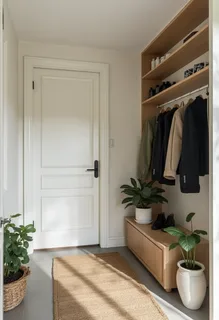
Wall-Mounted Hallway Storage Cabinet: Going Up Instead of Out
If your hallway floor is already maxed out, a wall-mounted hallway storage cabinet is your next move. The whole point of going vertical is that wall space above eye level is almost always unused — and it’s free real estate.
These small hallway storage cabinets work especially well for things you don’t need daily access to: spare keys, sunscreen, umbrellas, dog leashes, whatever tends to pile up. Mount one above a coat rack or bench, and suddenly you’ve turned a single wall into a fully organized system instead of three separate problems.
Aim to mount the cabinet around eye level or slightly above, so it’s reachable without a step stool but still leaves the lower wall free for hooks and shelving. A cabinet with a simple push-latch door looks cleaner than one with visible handles, which matters in a tight space where every detail is more noticeable. This setup is also great for hiding less attractive essentials, like phone chargers or a first aid kit, so your entryway stays looking pulled together even when it’s doing a lot of work behind the scenes.
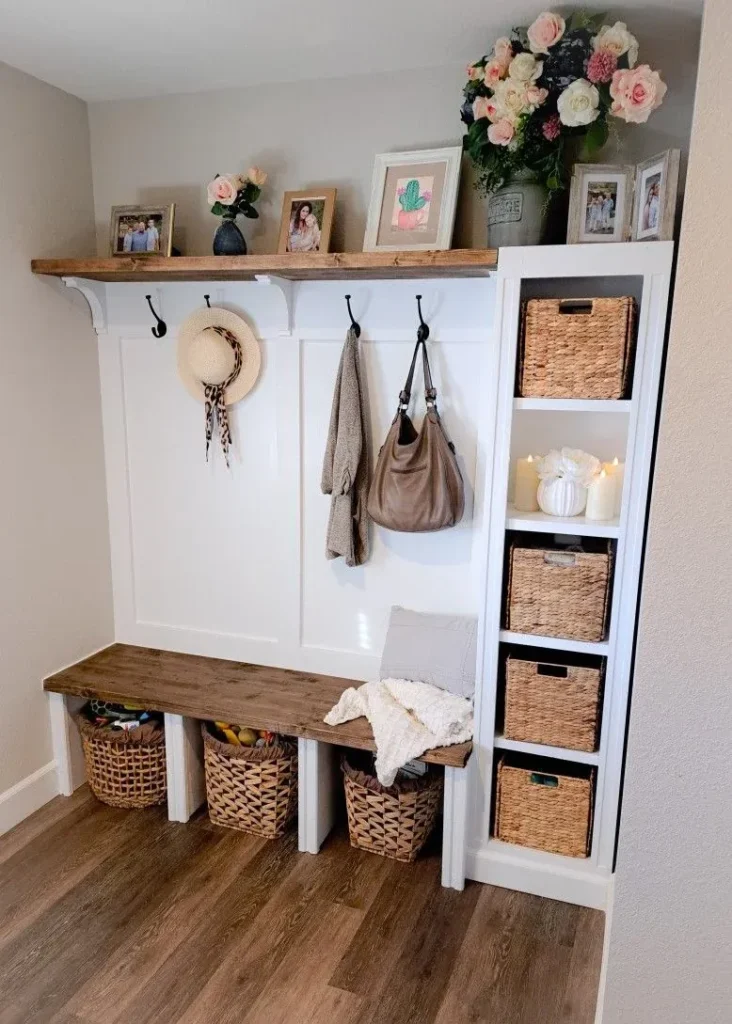
Entryway Organizer for Small Spaces: Keep It Simple
An entryway organizer for small spaces doesn’t need to be fancy — sometimes it’s just a wall-mounted key holder, a small tray, and a hook or two. The goal isn’t to cram in every storage idea on this list. It’s to pick two or three that match what your household actually needs daily.
Be honest with yourself here. If you’ve got kids, you need a lower shelf they can reach. If you work from home and get packages daily, a small drop zone for mail matters more than shoe storage. Tailor your small hallway storage organizer to your actual routine, not a generic template.
Think about the last week and what actually piled up by your door — that’s a better guide than any Pinterest board. If it was mostly packages, prioritize a tray or basket at counter height instead of more shoe space. If it was sports gear for the kids, a lower hook and open bin will get used far more than a closed cabinet they can’t reach. The best small hallway storage setup isn’t the most impressive one, it’s the one that matches how your household actually moves through the door each day.
Mudroom Storage Ideas for Narrow Spaces (Even Without a Mudroom)
You don’t need an actual mudroom to borrow mudroom storage ideas for narrow spaces. The core principle — zones for specific items, each with its own dedicated spot — works in any tight hallway.
Try assigning each family member a hook, a basket, or a cubby as part of your small hallway storage setup. It sounds simple, but it cuts down on the daily “whose shoes are these” chaos significantly. A bench, hooks above it, and a shelf above that mimics a mini mudroom setup in a strip of wall just a few feet wide.
Color-coding helps too, especially with younger kids who can’t read labels yet — a blue basket for one child and a green one for another makes it obvious where things belong without anyone having to ask. This kind of system also makes mornings noticeably smoother, since nobody’s digging through a shared pile looking for their shoes right before school or work.
Once everyone has their own designated spot, the whole entryway tends to stay tidier on its own, simply because there’s a clear “home” for every item instead of one communal dumping ground.
Space-Saving Hallway Furniture: What to Look for When Shopping
When you’re buying space-saving hallway furniture, depth is everything when it comes to small hallway storage. A piece that’s 8 inches deep instead of 14 might not sound like much, but in a three-foot-wide hallway, that’s a noticeable chunk of your walking space back.
It helps to physically mark out the depth with painter’s tape on your floor before buying anything, just so you can see exactly how much room a piece will actually take up. Online photos rarely give you a real sense of scale, and dimensions listed in inches can be easy to misjudge without something to compare them to.
A few extra inches saved here and there adds up fast, and it’s often the difference between a hallway that feels open and one that feels like a squeeze every time you walk through.
A few practical shopping tips:
- Measure your hallway’s narrowest point before buying anything.
- Leave at least 24 inches of clear walking space, even after furniture goes in.
- Choose furniture with legs rather than solid bases — it visually opens up the floor.
Small Foyer Storage Units: Combining Everything Into One System
If you want a single, cohesive setup rather than a patchwork of separate pieces, small foyer storage units that combine a bench, hooks, and shelving in one unit are worth the investment. Houzz featured a hallway that combined a storage bench, coat hooks above it, and a wall-mounted shelf higher up — essentially three storage zones stacked into one wall.
This “stacked system” approach is honestly the most effective method I’ve seen for small hallway storage, because it uses every inch of vertical space without needing more floor footprint than a single bench would take up alone.
The beauty of stacking is that you’re essentially turning one wall into three separate storage zones — seating and shoes down low, coats and bags at mid-height, and overflow items up top — without the hallway ever feeling boxed in.
It also makes the space far more adaptable over time, since you can swap out individual pieces (a different basket, a new hook style) without rebuilding the whole system. If you only take one idea away from this article, let it be this one: vertical, layered small hallway storage will almost always outperform a single big piece of furniture in a tight space.
FAQs: Small Hallway Storage
What’s the best storage for a hallway too narrow for furniture?
Go vertical. Wall-mounted hooks, floating shelves, and over-the-door organizers take up zero floor space, which makes them ideal for small hallway storage when there’s no room for a bench or table.
How deep should hallway furniture be for a tight space?
Aim for 8–12 inches deep. Anything deeper tends to block walking space and makes a narrow hallway feel even smaller than it actually is.
Is built-in or freestanding storage better for renters?
Freestanding pieces are almost always the safer bet for renters since they don’t require permanent wall modifications and can move with you if needed.
How do I store shoes with zero floor space?
Use over-the-door organizers or wall-mounted slim shoe racks. Both keep shoes off the ground entirely, which is ideal when floor space for small hallway storage is at a premium.
What’s an easy first step to organize a cluttered hallway?
Start with hooks. They’re cheap, easy to install, and immediately clear floor clutter — often the fastest visible win before tackling bigger furniture changes.
Conclusion
At the end of the day, small hallway storage comes down to one principle: go up, not out. Floor space is limited, but wall space almost never is. Combine a couple of the ideas above — a slim bench, hooks turned flat to the wall, a floating shelf — and you’ll have a hallway that actually functions, instead of one that collects clutter by default.
Pick one idea from this list and try it this weekend. Even a single change, like adding hooks or swapping a bulky shoe rack for a slimmer one, makes a noticeable difference fast.
You don’t need to overhaul the whole space at once — start small and build from there as you figure out what actually works for your routine. Take a before photo too, since it’s easy to forget how cluttered things felt once your hallway starts functioning the way it should. A tidy entryway sets the tone for the rest of your home, and it’s one of those small fixes that pays off every single day, not just on move-in day.