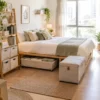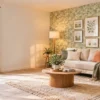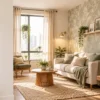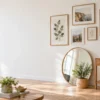
Walk into most homes and the hallway gets zero attention. It’s the space between the front door and everything else — somewhere to kick off shoes and dump keys, not somewhere you’d actually decorate. But that’s changing. Modern hallway design in 2026 treats this passage like a real room, not leftover square footage, and honestly, it makes a bigger difference than you’d expect.
Here’s what you’ll walk away with: practical ways to update your hallway’s lighting, color, flooring, and storage — without a full renovation budget or a design degree.
Why Modern Hallway Design Matters More Than You Think
Your hallway sets the tone before anyone even reaches the living room. It’s the first thing guests see and the last thing you see before heading out the door. That’s exactly why modern hallway design has picked up so much attention lately — designers and homeowners alike are realizing this “in-between” space carries real weight.
Think about it this way: if your hallway is dim, cluttered, and forgettable, it colors how someone experiences the rest of your home, even subconsciously. On the flip side, a hallway with good lighting, a clean color scheme, and a bit of personality makes everything past it feel more intentional. That’s the whole idea behind modern hallway design — small, deliberate choices in a space that’s easy to overlook.
Even real estate agents talk about this. Buyers form an opinion about a home within seconds of walking through the door, and the hallway is usually where that clock starts ticking. It’s not about impressing anyone — it’s about setting a tone that carries through the rest of the house.
Want me to insert this directly into the full article draft, or keep it as a standalone addition for now?
Contemporary Entryway Ideas That Don’t Require a Full Remodel
You don’t need to knock down walls to make your entryway feel current. A few contemporary entryway ideas can shift the whole mood of the space in a weekend.
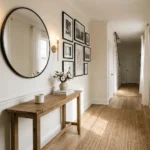
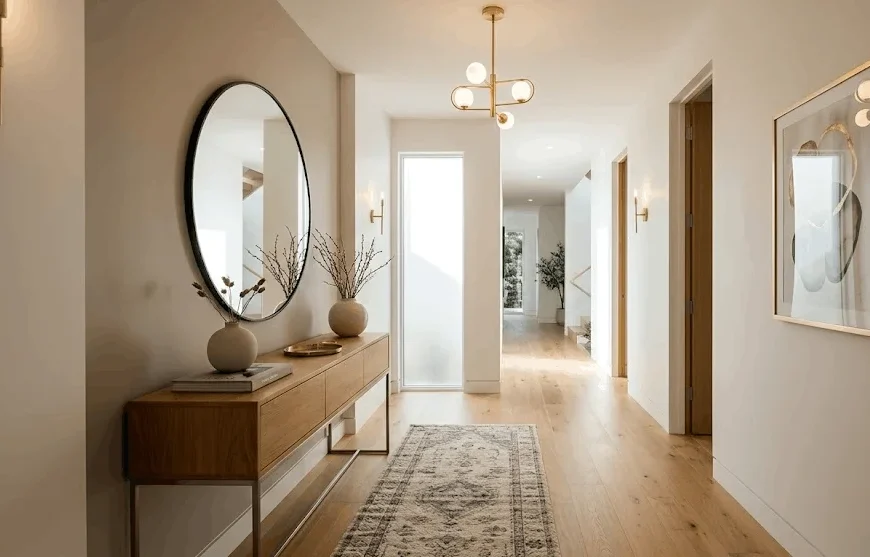
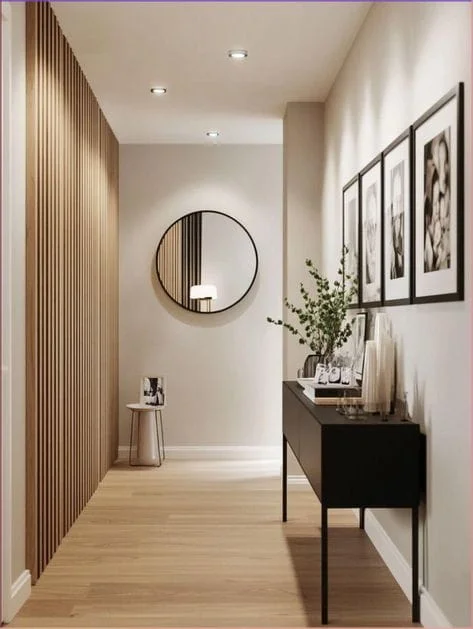
Start with a console table. A slim, floating console against one wall gives you a surface for keys and mail without eating up walking room. Pair it with a round or arched mirror above it — mirrors do double duty here, bouncing light around and visually widening a tight space.
If you’re short on floor space, wall-mounted consoles are worth the extra look — they free up the area underneath for shoes or baskets. A lot of modern hallway design comes down to this kind of layering: one functional piece, one reflective piece, working together instead of competing. Even a small tray on top for keys and sunglasses keeps the surface tidy without feeling bare.
Keep the Palette Simple
Contemporary entryways lean on restraint. Pick one or two accent colors and stick with them. A white or soft grey base with black metal accents (think a matte black light fixture or picture frames) reads clean and current without trying too hard.
Add One Standout Piece
Instead of filling every inch with decor, designers are choosing a single statement item — a sculptural coat stand, a bold pendant light, or an upholstered bench. One good piece beats five mediocre ones.
Minimalist Corridor Decor for Smaller Spaces
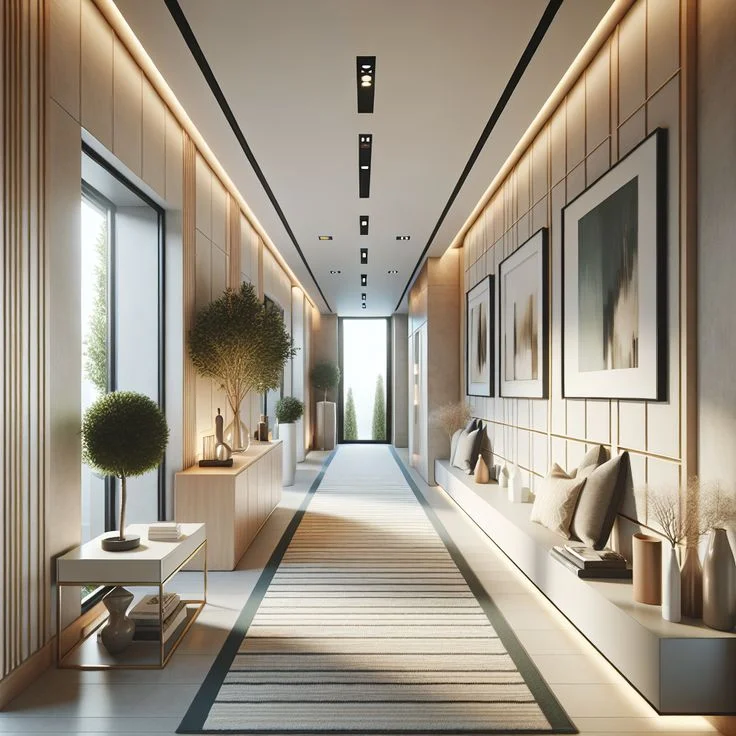
If your hallway is narrow, minimalist corridor decor is your best friend. The goal isn’t to remove personality — it’s to remove clutter so the personality that’s there actually stands out.
Here’s why this works: a narrow hallway packed with furniture feels like an obstacle course. A narrow hallway with one well-placed bench, a single piece of art, and open floor space feels intentional. That’s the difference between decorating and clutter.
A few things that help:
- Wall-mounted shelves instead of freestanding furniture (keeps the floor clear).
- Vertical storage — hooks and slim cabinets — rather than anything that eats into walking space.
- One rug or runner, not layered textiles.
What this means practically: measure your hallway width before buying anything. If people can’t comfortably pass each other, the furniture is too big, no matter how nice it looks in a catalog photo.
A good rule of thumb for modern hallway design is to leave at least 30-36 inches of clear walking space, even after furniture is in place. That’s roughly the width of a standard doorway, so if you can picture a door swinging through the space, you’ve got enough room. When in doubt, measure twice and use painter’s tape on the floor to map out where a piece would actually sit before you commit to buying it.
Hallway Lighting Fixtures: The Detail Most People Skip
Lighting might be the single most underused tool in modern hallway design, and it’s honestly the easiest fix. Most hallways rely on one flat overhead light, which does the job but adds zero warmth.
For example, layering a pendant light with a wall sconce or two creates depth instead of flat, even light. Warm-toned bulbs (not the cold white ones) make a huge difference in how welcoming the space feels, especially in hallways without windows.
Aim for a color temperature around 2700K to 3000K — that’s the warm, soft glow you’d get from a traditional bulb, not the bluish-white light common in offices. This detail matters more than people expect in modern hallway design, since the wrong bulb tone can make even a beautifully decorated hallway feel clinical. If you’re layering fixtures, put each one on its own switch or a smart dimmer so you can adjust the mood depending on the time of day.
Where to Place Hallway Lighting Fixtures
- Entry point: a statement pendant or flush mount to greet you.
- Midway points: wall sconces every 6-8 feet in longer hallways to avoid dark patches.
- Near mirrors: picture lights or small sconces to bounce extra brightness around.
On top of that, dimmer switches are worth the small investment. A hallway that’s bright in the morning and soft in the evening feels far more considered than one stuck at a single setting.
Most electricians can swap a standard switch for a dimmer in under an hour, and the cost is usually minimal compared to the impact it has. This is one of those small upgrades in modern hallway design that people notice without knowing why — the space just feels more polished. Smart dimmers take it a step further, letting you set schedules or control brightness from your phone, which is especially handy if your hallway doubles as a nightlight path for kids or guests.
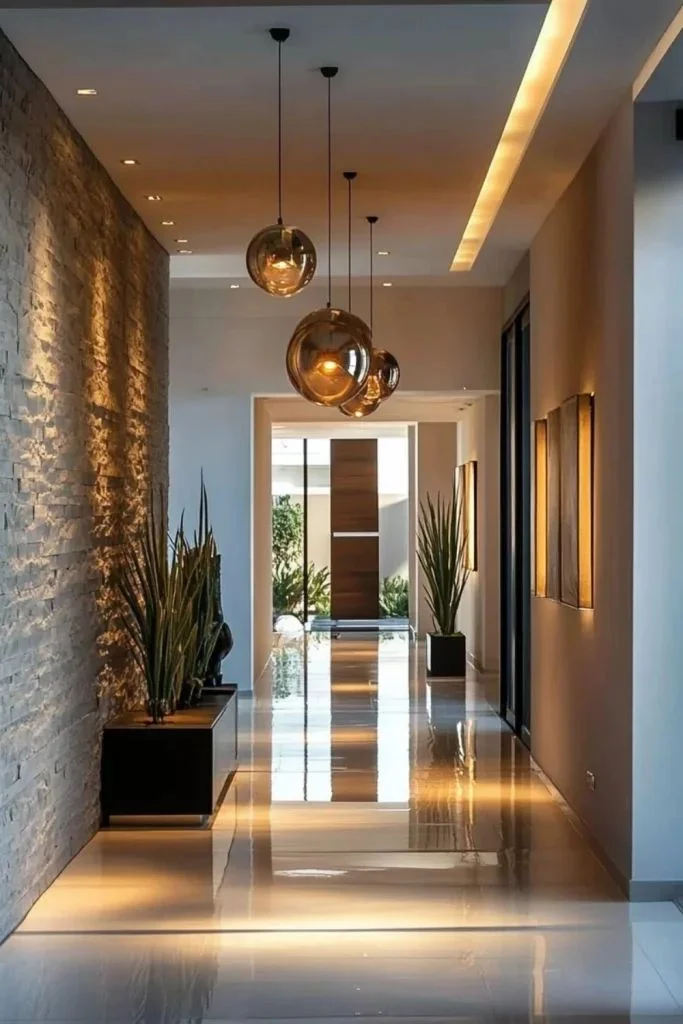
Narrow Hallway Makeover Tricks That Actually Add Space
A narrow hallway makeover doesn’t require construction — it requires a few smart visual tricks. Designers use these constantly, and they’re easy to copy at home.
Mirrors opposite windows or at the end of a corridor bounce natural light through the space and create an illusion of depth. Lighter wall colors — soft taupe, pale green, warm white — open up a tight hallway far better than dark, saturated tones. And vertical elements, like tall thin artwork or floor-to-ceiling paneling, draw the eye upward instead of emphasizing how narrow the walls are.
Here’s a trick a lot of people miss: keep furniture shallow. A console table that’s 12 inches deep instead of 20 makes a real difference in a tight hallway makeover, even if it seems minor on paper.
Those extra 8 inches might not sound like much, but in a narrow space, it’s often the difference between walking through comfortably and squeezing past awkwardly. This is a small detail, but it’s exactly the kind of thing that separates thoughtful modern hallway design from furniture that was picked for style alone. Before you shop, measure your hallway’s narrowest point — usually near a doorway or staircase — and use that number as your hard limit for depth.
Interior Hallway Flooring Options Worth Considering
Flooring gets overlooked in most hallway projects, but interior hallway flooring options actually shape the whole feel of the space. Since hallways get heavy foot traffic, durability matters as much as looks.
Polished concrete works well in contemporary homes — it’s low-maintenance and gives a sleek, modern edge, especially when it flows into an open kitchen or living area. Porcelain tile with a marble-effect finish offers a luxe look without the upkeep real marble demands. Wood or wood-look flooring stays timeless and pairs with almost any color scheme, though it shows scuffs more than tile does.
If you want a budget-friendly option, a patterned runner over existing flooring can transform a hallway without replacing anything underneath. Bold geometrics or earthy stripes are trending right now, and they add texture underfoot without a big spend.
A runner also protects your existing floor from scuffs and heavy foot traffic, which matters if you’re renting or not ready to commit to a full flooring change. When it comes to modern hallway design on a budget, this is usually the highest-impact, lowest-cost move you can make. Just make sure to size it correctly — leave a few inches of flooring visible on each side so the runner looks intentional rather than like an afterthought.
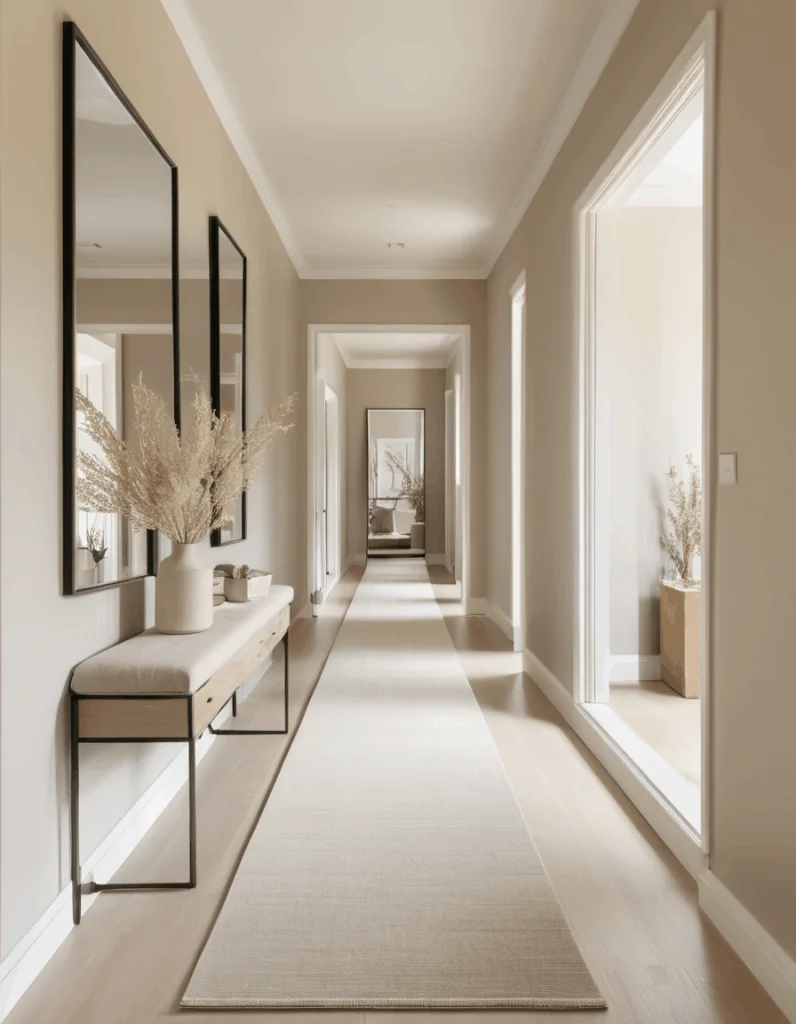
Modern Hallway Furniture: Less Is More
When it comes to modern hallway furniture, the general rule is simple: pick pieces that serve a function and stop there. A bench with hidden storage for shoes and bags. A slim console for keys and mail. Maybe one accent chair if the space allows it.
What separates modern hallway furniture from cluttered furniture is scale. Everything should feel proportional to the space — nothing too bulky, nothing that blocks the walking path. Modular systems (like Ikea-style bench-and-hook combinations) have become popular because they’re flexible. You can start small and add pieces later without redoing the whole layout.
This flexibility is a big part of why modular pieces fit so well into modern hallway design — you’re not locked into a single layout the moment you buy something. A bench today, a matching cabinet next month, a few extra hooks when the kids’ shoe pile gets out of hand. It’s a practical way to build the space over time instead of trying to get everything perfect in one shopping trip.
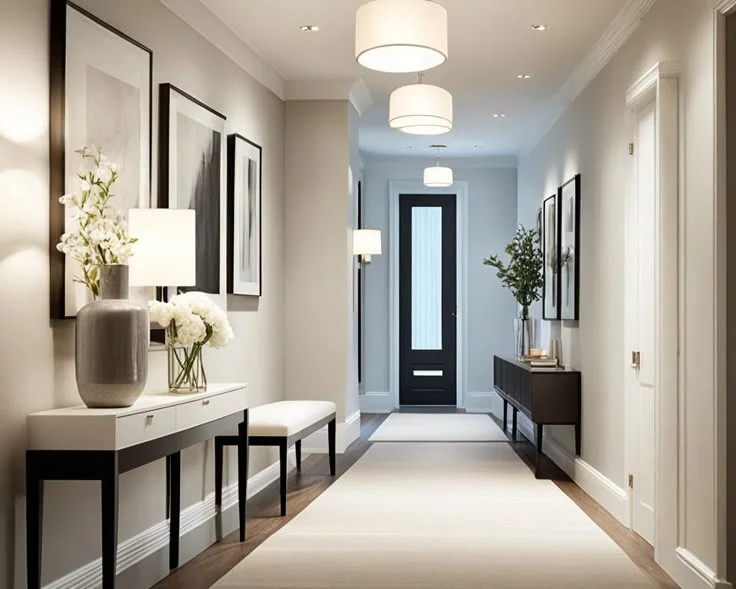
Hallway Wall Art Ideas That Bring Personality Back
A hallway without any wall art feels sterile, but overdoing it feels chaotic. The sweet spot is somewhere in between.
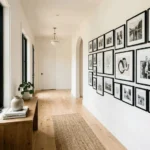
Gallery walls work well in longer hallways — mix frame sizes but keep the tops or bottoms aligned so it reads as intentional, not random. A single oversized piece suits shorter hallways better; it acts as a focal point without competing for attention. Picture lights above artwork add a layered lighting effect while highlighting the piece itself.
If you’re not sure where to start, black-and-white photography or simple line art tends to be the safest bet — it works with almost any hallway color scheme without clashing.
It’s a low-risk way to add personality to modern hallway design without worrying about it looking dated in a year or two. If you want more color later, you can always swap in a bolder piece once you’ve settled into the space.
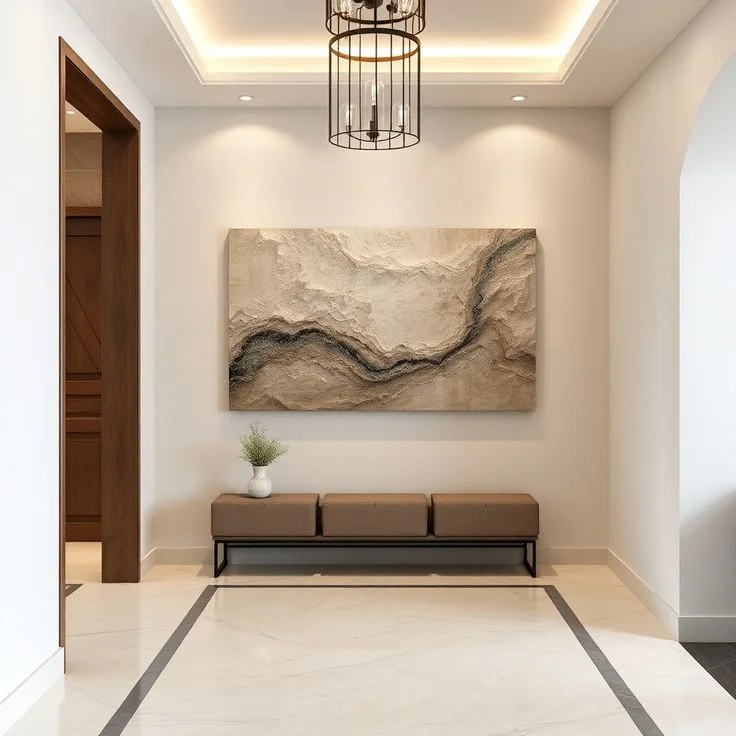
Sleek Foyer Design for a Grand First Impression
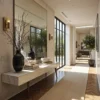
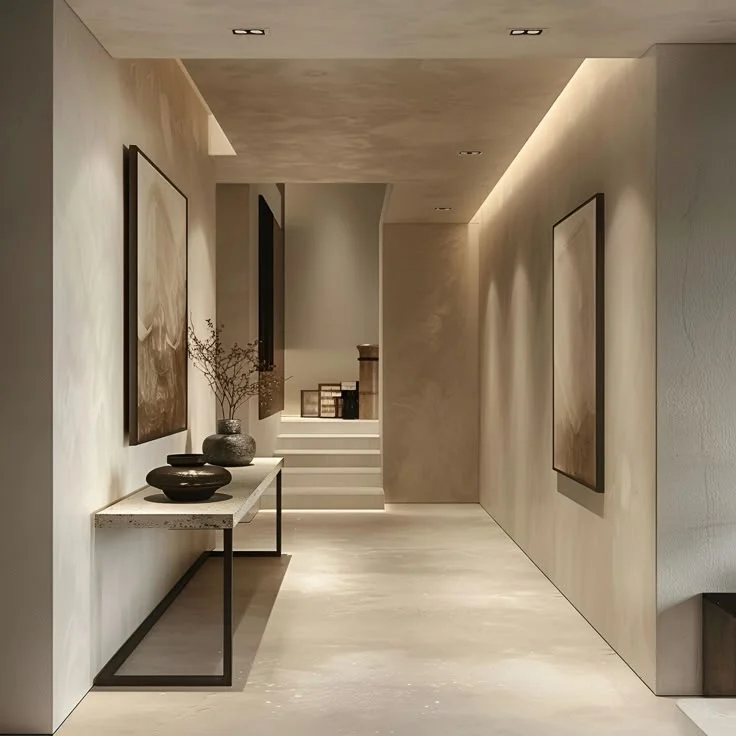
If your entry space is a proper foyer rather than a narrow hallway, you have more room to make a statement. Sleek foyer design usually centers on one architectural or decor feature — an arched doorway, a statement light fixture, or a bold floor pattern.
Glass and black metal accents against white walls create a clean, monochromatic look that reads as sophisticated without being cold. Adding a runner or area rug helps ground the space and keeps it from feeling like an empty showroom.
A few plants or a single sculptural vase can soften all those hard lines without breaking the color scheme. This kind of restraint is what makes sleek foyer design feel intentional rather than sparse — every piece is there for a reason, not just to fill space. If you want to add warmth, a wood or leather accent (like a bench seat) works well against the glass and metal without disrupting the palette.
Hallway Color Schemes That Set the Right Mood
Color plays a bigger role in modern hallway design than most people give it credit for. Since hallways often lack natural light, the color scheme has to work harder.
Soft whites and warm neutrals brighten darker hallways and feel calm. Deep greens, charcoal, or navy work in hallways with good lighting and add drama without feeling heavy — especially when used on lower walls with a lighter shade above. Earthy tones like olive or terracotta suit longer hallways and pair naturally with wood furniture.
A quick rule of thumb: north-facing or windowless hallways do better with lighter colors, while bright, well-lit hallways can handle darker, moodier shades.
It’s worth testing paint samples at different times of day before committing, since hallway lighting often shifts more than you’d expect between morning and evening. This is one of the more practical rules in modern hallway design — color choice isn’t just about taste, it’s about working with the light you actually have. If you’re unsure, a sample pot on a piece of card you can move around the hallway beats painting directly on the wall and hoping for the best.
Home Passage Decorating Tips to Tie It All Together
A few home passage decorating tips that pull everything together without overwhelming the space:
- Stick to one or two standout features rather than filling every wall.
- Use scent — a diffuser on a console shelf adds a sensory layer people notice without realizing why.
- Keep floors clear; storage should be vertical or wall-mounted where possible.
- Match your hallway’s color to the rooms it connects, so the transition feels smooth rather than jarring.
FAQs: Modern Hallway Design
What colors work best for modern hallway design?
Soft neutrals like warm white or taupe work well for narrow or dark hallways, while deep greens or charcoal suit larger, well-lit spaces. Pick based on your hallway’s natural light before committing to a bold shade.
How do I make a narrow hallway feel bigger?
Use mirrors opposite light sources, keep furniture shallow, and stick to lighter wall colors. Vertical artwork also draws the eye upward, which helps the space feel taller and less cramped.
What lighting works best in a hallway with no windows?
Layered lighting — a ceiling fixture plus wall sconces — with warm-toned bulbs works best. Avoid relying on a single overhead light, since it creates flat, uninviting brightness.
Is a runner or full carpet better for a hallway?
Runners are usually the better choice since they’re easier to clean, replace, and swap out for seasonal updates. Full carpet in high-traffic hallways wears down faster.
How much does a hallway makeover typically cost?
It depends heavily on scope, but paint, lighting, and a runner can refresh a hallway for a few hundred dollars. Flooring changes or built-in storage push costs higher.
Conclusion
Modern hallway design isn’t about grand gestures — it’s about paying attention to a space most people ignore. A better light fixture, a cleaner color palette, one good piece of furniture: these small changes add up to a hallway that actually feels like part of your home instead of just a path through it. Pick one idea from this list and try it this weekend. You’ll notice the difference the next time you walk through your own front door.