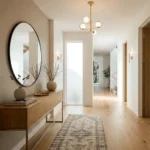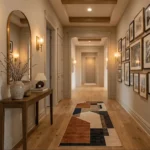
If you’re like most people, your hallway is the room you forgot to decorate. It’s the space between the rooms that matter, so it gets a coat of builder-grade white paint and nothing else. But here’s the thing — you walk through it every single day. These hallway decorating tips will show you how to turn that forgotten stretch of wall into something that actually feels like part of your home, without a full renovation budget.
Hallway Decorating Tips That Start With Paint
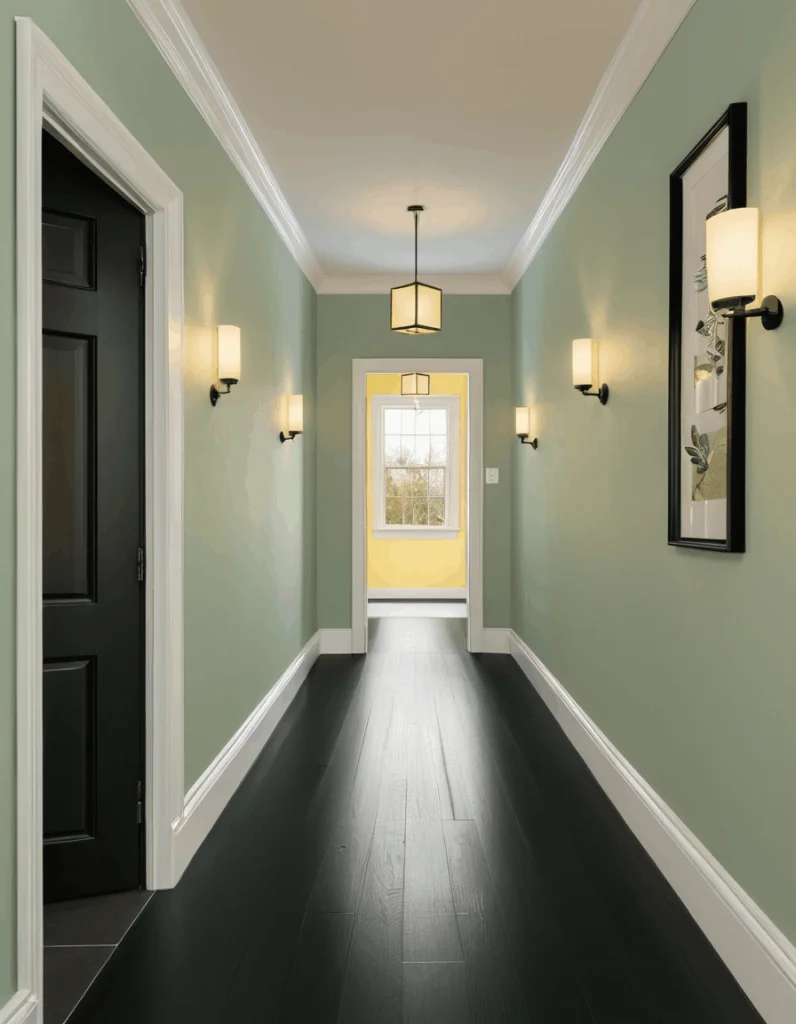
Before you touch a single piece of furniture, look at your walls. Most hallway decorating tips lists bury paint near the bottom, but it should be first — it’s the cheapest change with the biggest payoff.
Light colors bounce whatever light you have around the room, which matters because most hallways don’t have much of it to begin with. Painting closed-off, dark hallways a light color helps reflect light and creates the illusion of more space, while an extremely dark color can make a small hallway feel more cozy instead. So the real question isn’t “light or dark” — it’s what mood you’re going for.
If you want drama, don’t be scared off. Earthy tones and playful primary colors are trending for hallways this year, adding warmth without overwhelming the space. A soft taupe or pale green keeps things calm. A deep olive or wine red on the woodwork adds character.
One trick worth stealing from professional designers: paint only the bottom half of the wall, roughly to waist height, then leave the top lighter. It breaks up a long corridor visually and frames the space instead of letting it feel like a tunnel. Also, don’t forget your trim — painting it to match the wall (rather than stark white) can actually add height and make the ceiling feel taller.
Narrow Hallway Design Ideas That Actually Work
Narrow hallway design ideas usually come down to one goal: tricking the eye into seeing more space than there is. This is where a lot of hallway decorating tips actually earn their keep.
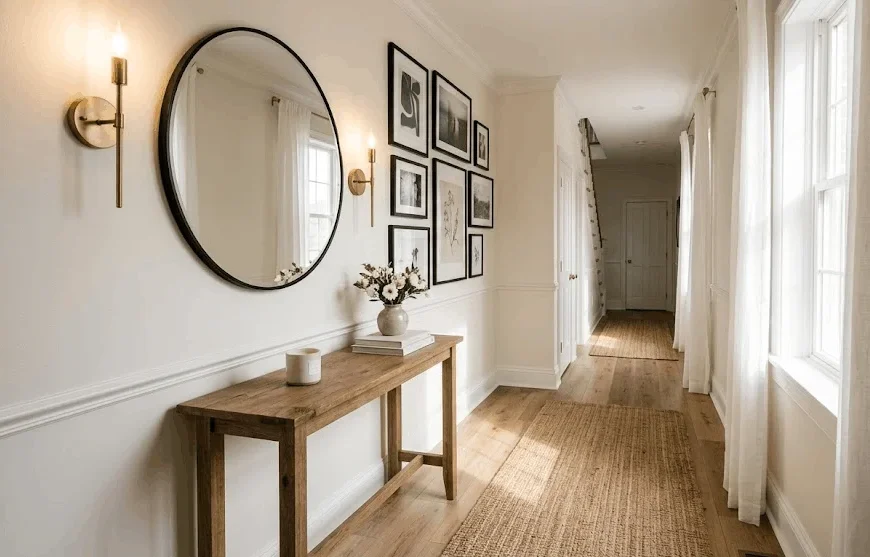
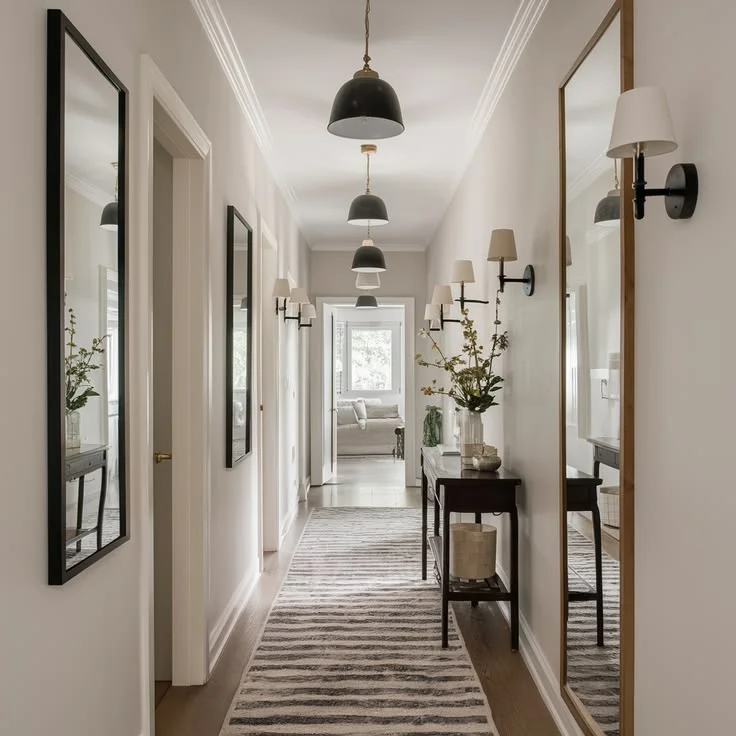
Mirrors are the classic move, and for good reason. Mirrors can be enhanced further by adding smaller reflective accents throughout the hallway, like glossy surfaces or metallic finishes that catch and throw light around the space. A single large mirror at the end of a corridor, or opposite a window, does a lot of heavy lifting.
Furniture placement matters just as much. Stick to one side of the hallway only — furnishing both walls closes in your sight line and makes the space feel like a bowling alley. Choose pieces that are flush to the wall or floating shelves instead of freestanding tables, since every inch of floor space you keep clear reads as extra square footage.
Runners help too, but pay attention to the pattern. Vertical stripes elongate a hallway; horizontal ones shorten it visually. If you’re using patterned tile instead, diagonal lines create a similar lengthening effect.
Texture matters just as much as pattern direction. A flatweave or low-pile runner keeps the floor feeling open, while thick, plush rugs can visually “shrink” a narrow path underfoot. Color also plays a role here — a runner that’s close in tone to your flooring blends in and stretches the space, while a high-contrast rug draws a hard visual line down the middle.
Among all the hallway decorating tips people overlook, flooring choice is one of the most underrated ways to change how long or wide a corridor feels.
Hallway Lighting Solutions For Dark, Windowless Spaces
Most hallways don’t have windows, which is exactly why hallway lighting solutions deserve their own section instead of an afterthought.
Layering is the key word here. A single overhead fixture leaves corners dark and flat. Instead, combine a ceiling fixture with wall sconces along the length of the hall, and if you’ve got a staircase involved, add small step lights to guide the path upward. Layered lighting that includes step lights to guide movement, along with ceiling fixtures and light from nearby rooms, makes a corridor feel connected rather than isolated.
Warm bulbs matter more in a hallway than almost anywhere else in the house, since this is a transitional space — you want it to feel inviting, not clinical. A statement lamp on a console table or a pair of brass sconces can do more for the mood than a bright overhead fixture ever will.
Stick to bulbs in the 2700K to 3000K range if you want that warm, golden glow instead of the harsh blue-white light that makes a corridor feel like an office hallway. Dimmer switches are worth the small investment too, since they let you shift the mood from bright and functional in the morning to soft and cozy at night.
If you’re short on outlets, battery-powered wireless sconces have gotten good enough to use as a real lighting layer, not just a backup. Out of all the hallway decorating tips that get skipped, bulb temperature is one of the easiest fixes with the biggest visual payoff.
Corridor Storage Ideas That Don’t Eat Up Space
A hallway is prime real estate for storage, but only if you’re smart about it. The best corridor storage ideas add function without stealing walking room.
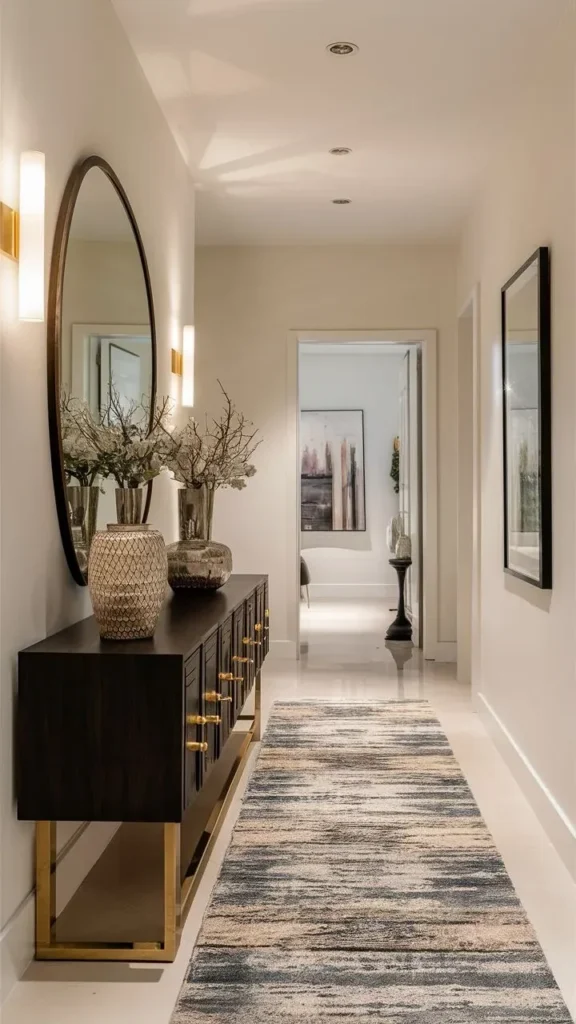
Skip full-sized furniture entirely. Built-in bookcases and skinny console tables work better in a hallway than bulky furniture, and narrow wall shelves can display decor as long as they don’t cut into the walking space.
Floating shelves and wall-mounted consoles are your best friends here — they give you a spot for keys, mail, and small decor without a single leg or base taking up floor space. If you need more serious storage, look into opening up the wall between the studs for recessed shelving. It’s a bigger project, but it adds storage that takes up zero visual or physical footprint. Just get an electrician or contractor to check for wiring or plumbing first.
Baskets on floating shelves are another easy win — they hide clutter like gloves, dog leashes, or mismatched mail while still looking styled instead of stuffed. If your hallway leads to a mudroom-style entry, a row of slim wall hooks placed at two different heights works well for both kids and adults without crowding the wall.
Vertical storage almost always beats horizontal in a hallway, since climbing up a wall costs you nothing in floor space. Of all the hallway decorating tips worth prioritizing, storage that lives on the wall instead of the floor is the one that pays off daily.
Hallway Wall Art Arrangement Ideas Worth Copying
Walls are basically all you have in a hallway, so hallway wall art arrangement deserves real thought instead of a few mismatched frames.
Odd numbers and varied heights tend to look more intentional than a rigid grid. If you’re building a gallery wall, keep the frames in a consistent color — all black, all white, or all wood — so the whole thing reads as one unit rather than a scattered mess.
Here’s a detail people miss: leave breathing room around the cluster. Empty wall space around a gallery arrangement actually makes the hallway feel less busy and more spacious, while filling every section of wall with pictures can make a narrow space feel closed in. For a longer wall, one oversized piece of art can sometimes do more than ten small frames.
Hang your gallery at eye level, roughly 57 to 60 inches from the floor to the center of the frames, so it feels intentional rather than randomly placed. If you’re nervous about spacing, lay the arrangement out on the floor first or trace it on kraft paper before a single nail goes into the wall. Mixing frame sizes within a single color family keeps things cohesive without looking too matchy or too chaotic.
Among all the hallway decorating tips for walls specifically, restraint around a gallery cluster is the one that separates a styled hallway from a cluttered one.
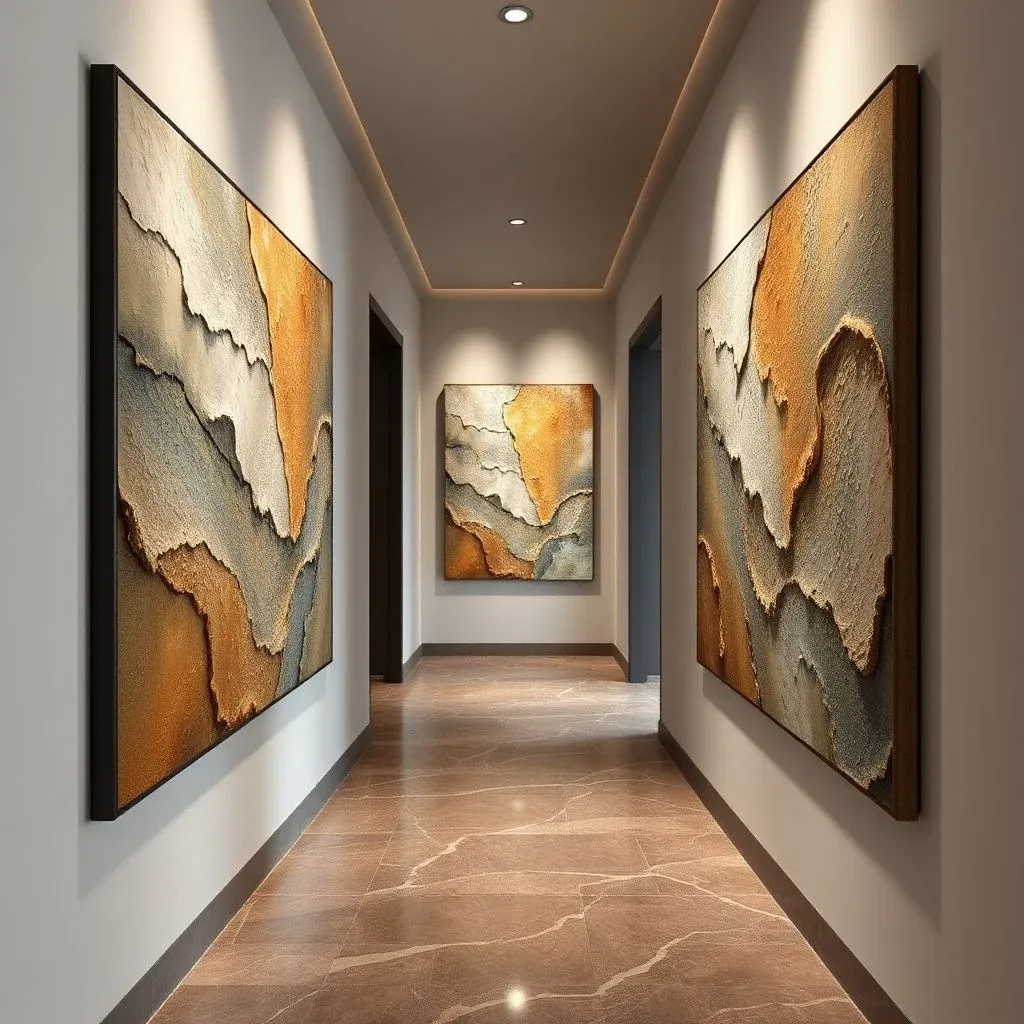
Entryway Wall Decor and Home Entrance Decor
If your hallway doubles as your entryway, the rules shift slightly. Entryway wall decor needs to greet people, not just decorate a pass-through, and home entrance decor sets the tone for your whole house before a guest even steps further inside.
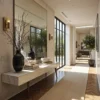
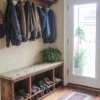
A console table near the door, even a slim 8-inch one, gives you a drop zone for keys and mail. Add a hook rail above it for coats and bags. If space allows, a bench with hidden storage underneath solves the shoe pile-up problem that plagues most entryways.
Don’t skip a scent or texture element either — a diffuser, a small plant, or a soft runner underfoot makes the first few steps into your home feel considered rather than accidental.
A reed diffuser or a small candle on the console table adds a signature scent that guests notice before they even see the rest of your home. Faux plants work just as well as real ones in a low-light entryway, so don’t feel pressured to keep something alive if your hallway doesn’t get natural light.
Layering in a soft throw basket or a textured ceramic bowl for keys adds tactile warmth that a bare console table just can’t match. Of all the hallway decorating tips people treat as optional, this sensory layer is often what makes a hallway feel finished instead of just functional.
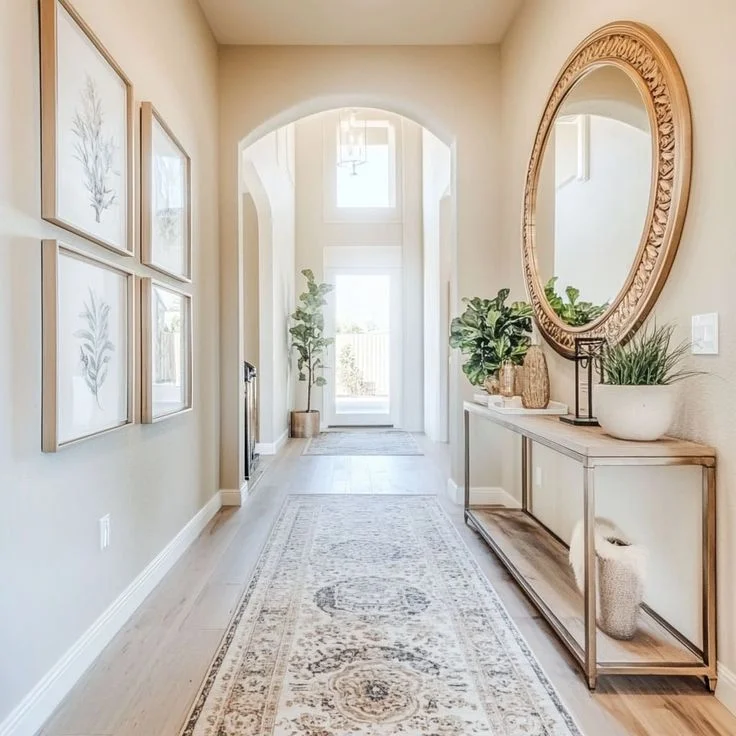
Foyer Decorating Inspiration for Small Entry Halls
Foyer decorating inspiration and hallway decorating tips overlap a lot, but a true foyer usually has a bit more square footage to play with, even if it’s still tight.
Use that extra breathing room for one statement piece: a pendant light instead of a flush mount, an arched mirror, or a piece of furniture with real personality, like a vintage cabinet. Because a foyer is often the first thing people see, it can afford to be a little bolder than the rest of your hallway.
Seasonal touches work especially well here too — a vase of flowers in spring, a woven basket of throws in fall, string lights around the mirror at the holidays. Small, rotating details keep the space feeling alive instead of static.
A bowl of pinecones or a few branches of eucalyptus can carry a space through winter without feeling overly festive. Swapping out just one or two items each season is enough — you don’t need to redecorate the whole hallway every few months to keep it feeling fresh.
Even something as simple as rotating a table runner or throw pillow color on a bench can signal the season without much effort or cost. Out of all the hallway decorating tips worth building into a routine, this kind of small seasonal refresh is one of the easiest habits to keep up.
Long Hallway Makeover Ideas
A long hallway makeover is really about breaking up the distance so it doesn’t feel like a single endless stretch.
Zoning helps a lot here. Add a rug partway down to create a visual “stop,” or place a console table and art grouping at a midpoint to give the eye somewhere to land. A rug can visually draw together the elements in a space and give a room focus, while a contrasting focal point like a statement piece of art can distract from an awkward layout.
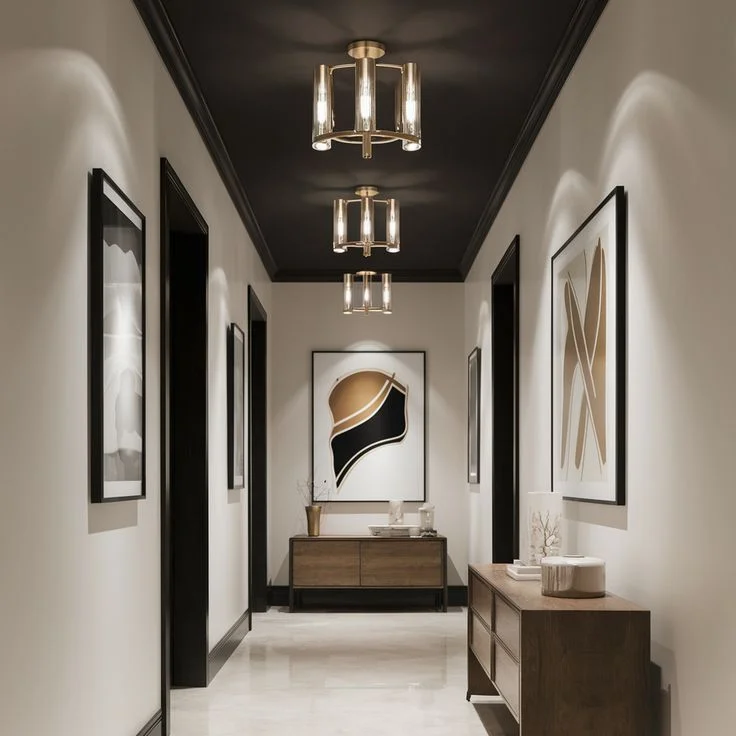
Ceilings are often the most overlooked surface in a long hallway. Wallpapering the ceiling, adding beams, or simply painting it a shade that complements the walls draws the eye upward instead of down the long corridor, which shortens the perceived distance.
A bold wallpaper pattern on the ceiling works especially well in a hallway since there’s rarely furniture blocking the view straight up, unlike in a bedroom or living room. If wallpaper feels like too big a commitment, even a single coat of high-gloss paint in the same color as your walls can create a subtle reflective effect that adds depth.
Faux beams or simple molding strips are a lower-cost way to add architectural interest without a full renovation. Among all the hallway decorating tips people save for last, the ceiling is usually the one with the most untapped visual impact.
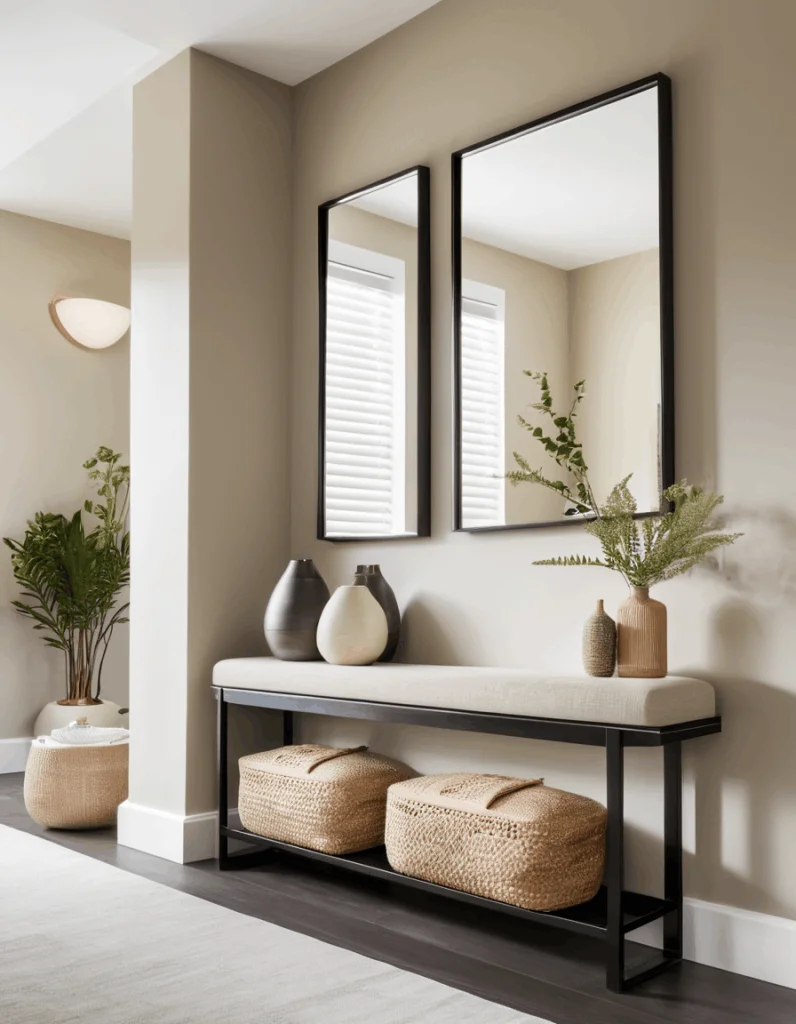
Small Space Interior Design Tricks to Remember
At the core, small space interior design in a hallway comes down to restraint. It’s tempting to fill every inch since the space is already limited, but that backfires more often than it helps.
Multi-functional pieces earn their spot faster than decorative ones. A console with a drawer beats a console without one. A mirror that also serves as wall art beats a mirror plus a separate art piece crammed nearby.
And when in doubt, edit down. Over decorating a hallway can make the small space feel even smaller, and being purposeful about every decoration matters more here than in almost any other room. Less genuinely is more in a corridor — a few well-chosen pieces will always beat a cluttered wall.
Before adding anything new, try removing one item first and see how the space feels — most hallways improve more from subtraction than addition. If you’re unsure whether a piece belongs, ask whether it serves a function or just fills space, since decorative clutter is the easiest thing to accumulate in a high-traffic area.
Walk through your hallway at a normal pace and notice what actually catches your eye versus what just blends into the noise. Of all the hallway decorating tips that are easy to forget, knowing when to stop decorating is arguably the most valuable one.
FAQs: Hallway Decorating Tips
1. What’s the cheapest way to improve a hallway?
Paint. A light, reflective color instantly makes a dark hallway feel bigger and brighter, and it costs a fraction of new furniture or lighting. Add a mirror next if your budget allows a second step.
2. How do I decorate a hallway with no windows?
Layer your lighting instead of relying on one fixture. Combine a ceiling light with wall sconces or a floor lamp, use warm bulbs, and add a mirror to bounce whatever light you do have around the space.
3. Should I hang art on both walls of a narrow hallway?
Generally, no. Hanging art on only one side keeps the opposite wall clear, which makes the hallway feel wider. These kinds of hallway decorating tips consistently point back to restraint over abundance.
4. What furniture actually works in a small hallway?
Slim consoles, floating shelves, and wall-mounted cabinets work best. Avoid anything freestanding with a wide base — it eats into your walking space and makes the corridor feel tighter than it is.
5. How do I make a long hallway feel less like a tunnel?
Break it into zones. A rug partway down, a console with art above it, or a color change on the ceiling all give the eye a place to stop, which shortens how long the hallway feels.
Conclusion
You don’t need to tackle all of these hallway decorating tips at once. Pick the one that bugs you most — maybe it’s the lighting, maybe it’s that bare wall by the front door — and start there. Small changes compound fast in a space this size, and a hallway that finally feels finished is one of the most satisfying wins in a home. Take a look at your hallway this weekend and pick just one thing to change.