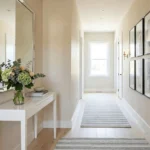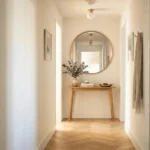
You walk through your hallway every single day — sometimes a dozen times. Yet most people treat it like a forgotten space, slap one dull ceiling bulb up there, and call it done. Sound familiar?
Here’s the thing: your hallway is the first thing guests see when they walk in. It sets the entire tone for your home. Great hallway lighting ideas don’t just chase away darkness — they make spaces feel bigger, warmer, and more intentional. Whether you’re working with a narrow corridor, a low ceiling, or absolutely zero natural light, this guide covers real, practical ideas that actually work. By the time you’re done reading, you’ll know exactly what to change and why.
Why Hallway Lighting Ideas Matter More Than You Think
Most people spend thousands on living room furniture and kitchen renovations but give their hallway a single fixture as an afterthought. That’s a mistake. Good hallway lighting ideas can visually double the width of a narrow passage, make a low ceiling feel taller, and guide people through your home with a warm, welcoming glow.
According to the U.S. Department of Energy, hallways are among the highest-traffic areas for lighting use — which means they need to be both functional and efficient. The goal isn’t just brightness. It’s the right brightness, in the right places, from the right type of fixture. That’s what separates a hallway that feels like a maintenance corridor from one that feels like part of a beautifully designed home.
Think about it in layers. Great home interior lighting design tips almost always start with this principle: overhead light is your base, wall light adds warmth, and accent light adds personality. Apply all three to a hallway and the transformation is genuinely striking.
1. Start With Recessed Ceiling Lights for a Clean Foundation
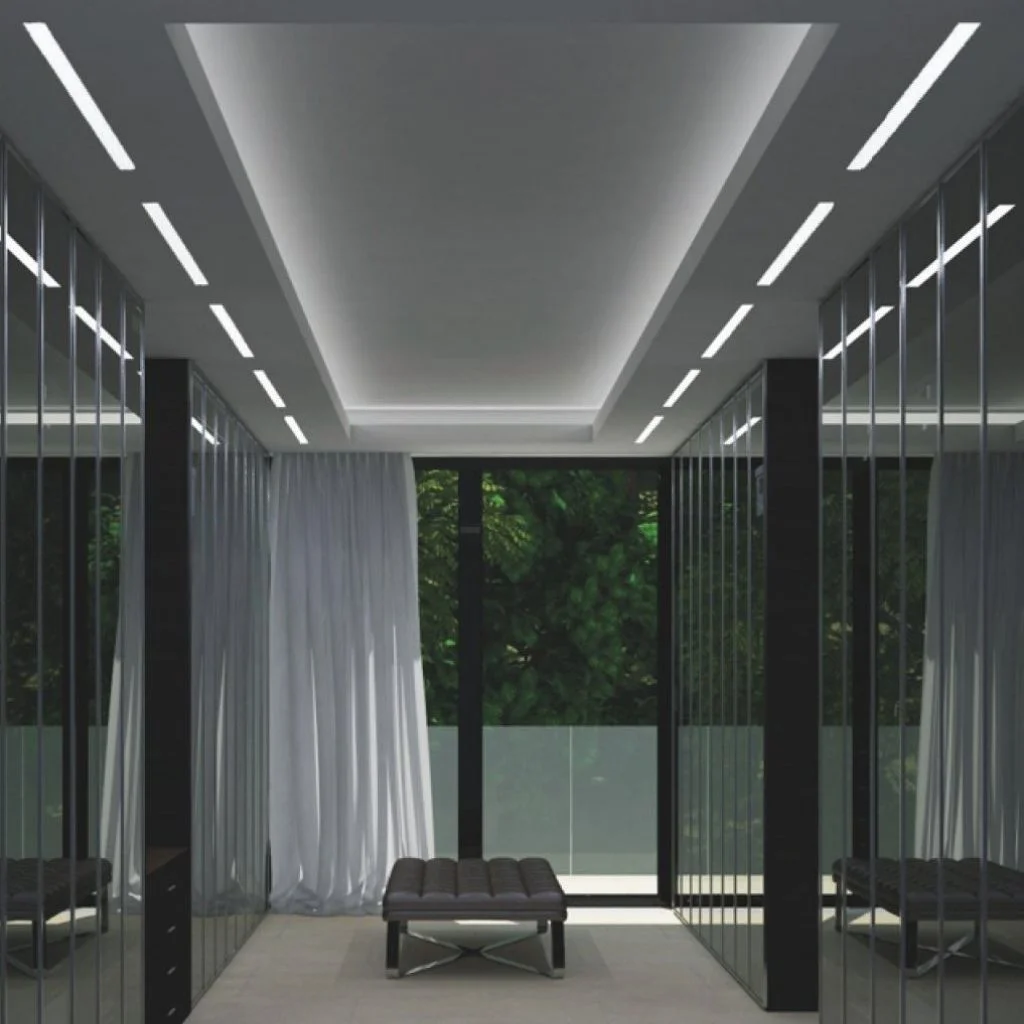
If you’re starting from scratch or doing a renovation, recessed ceiling lights for hallways are the most versatile option you can choose. They sit flush with the ceiling, which means no visual clutter, no dangling fixtures, and no headroom issues in tight corridors.
The trick most people miss is spacing. Place recessed lights roughly 6 to 8 feet apart along the length of the hallway. If you space them too far apart, you’ll get patchy dark spots between pools of light. Too close, and it starts feeling like an operating theater.
For a wall-wash effect — where light fans out across the wall surface rather than pointing straight down — aim the fixtures at a slight angle toward one wall. This adds visual depth, makes the hallway appear wider, and highlights any texture in your paint or wallpaper. It’s one of those home interior lighting design tips that sounds subtle but makes a dramatic difference in person.
2. Use Wall Sconce Lighting to Add Warmth and Depth
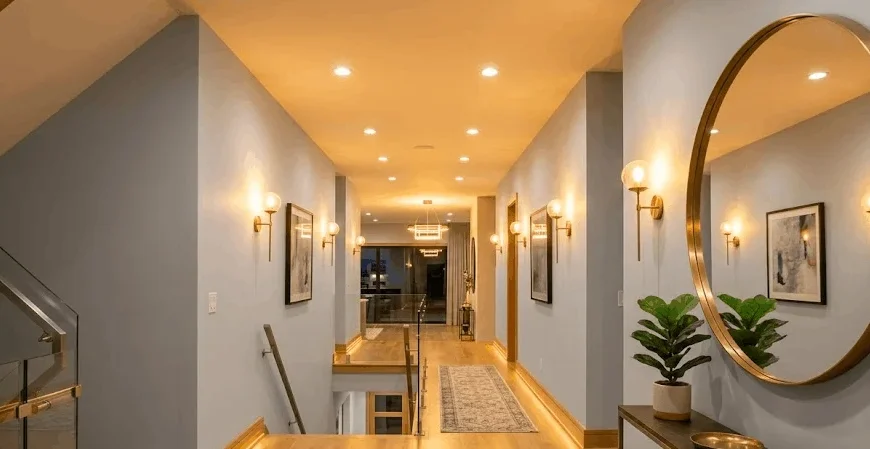
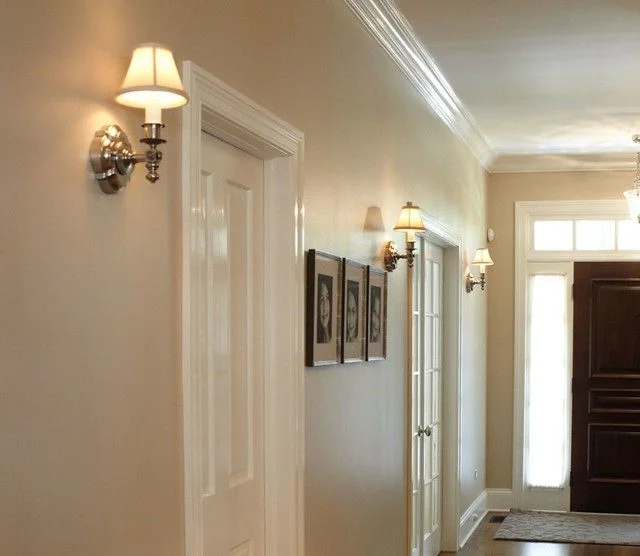
Wall sconce lighting is genuinely underused in hallways, and that’s a shame. A well-placed sconce does two things at once: it adds a layer of warm, ambient light that softens the harshness of overhead fixtures, and it adds a decorative element that makes the space feel finished.
For narrow hallway lighting ideas, sconces are especially smart. They don’t take up ceiling or floor space, and because they throw light sideways and outward, they create the illusion of width. Place them at around eye height — roughly 5 to 5.5 feet from the floor — and space them symmetrically if you have a longer corridor.
Style-wise, you’ve got plenty to work with. Matte black sconces give a clean, modern edge. Brushed brass has a warm, slightly vintage feel that suits traditional homes beautifully. Frosted glass diffusers soften the light and reduce glare, which is ideal for nighttime navigation when you don’t want to be blinded walking to the bathroom.
3. Try Corridor Pendant Lights for High-Ceiling Hallways
If your hallway has ceiling height to spare — say 9 feet or more — corridor pendant lights are a chance to make a real statement. A row of matching pendants spaced evenly down a long hallway creates a gallery-like rhythm that feels intentional and elevated.
The key to great hallway lighting ideas is proportion. Oversized pendants in a narrow space will feel overwhelming. Go with slimmer profiles — cylindrical shapes, minimal hardware, clear or smoked glass — and make sure the bottom of the pendant hangs at least 7 feet above the floor. Anything lower than that and you’ll have people ducking.
In 2026, geometric and asymmetrical pendant designs are trending for corridors, particularly in homes with a modern or Scandinavian aesthetic. Multiple small pendants in a cluster often work better than a single large one in a long hallway — they distribute light more evenly and look deliberately designed rather than thrown together.
4. Go Flat With Flush Mount Hallway Lights
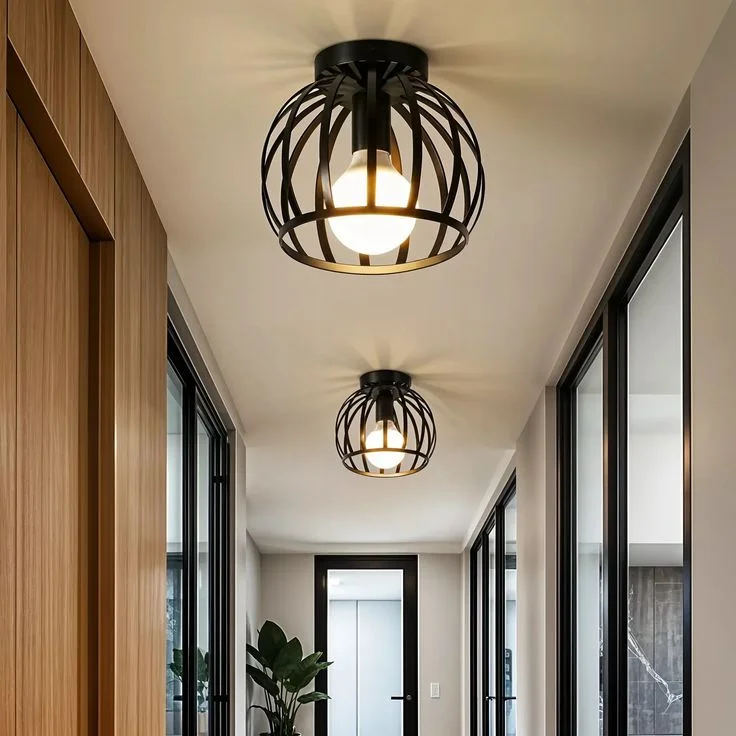
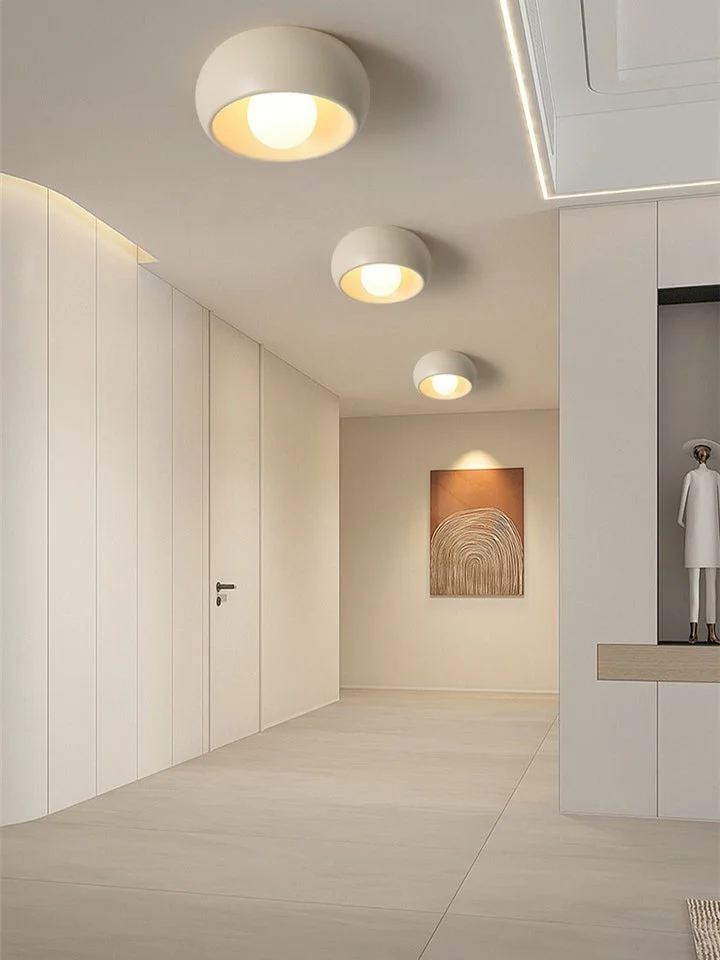
Low ceilings are one of the most common hallway challenges, and flush mount hallway lights are the answer. These fixtures sit directly against the ceiling with no gap, which preserves headroom and keeps the space from feeling cramped.
The mistake most people make with flush mounts is buying something plain and forgettable — but smart hallway lighting ideas prove your ceiling doesn’t have to limit anything interesting. That’s not true anymore. Today’s flush mounts come in beautiful designs — scalloped ceramic finishes, domed frosted glass, minimalist disc shapes in brushed nickel — that add real character without any extra depth.
For a hallway that’s 4 feet wide or less, one central flush mount every 8 to 10 feet is typically enough. Pair it with wall sconces on either side and you’ve got a layered look that punches well above its weight.
5. Install LED Strip Lights for Corridors as Accent Lighting
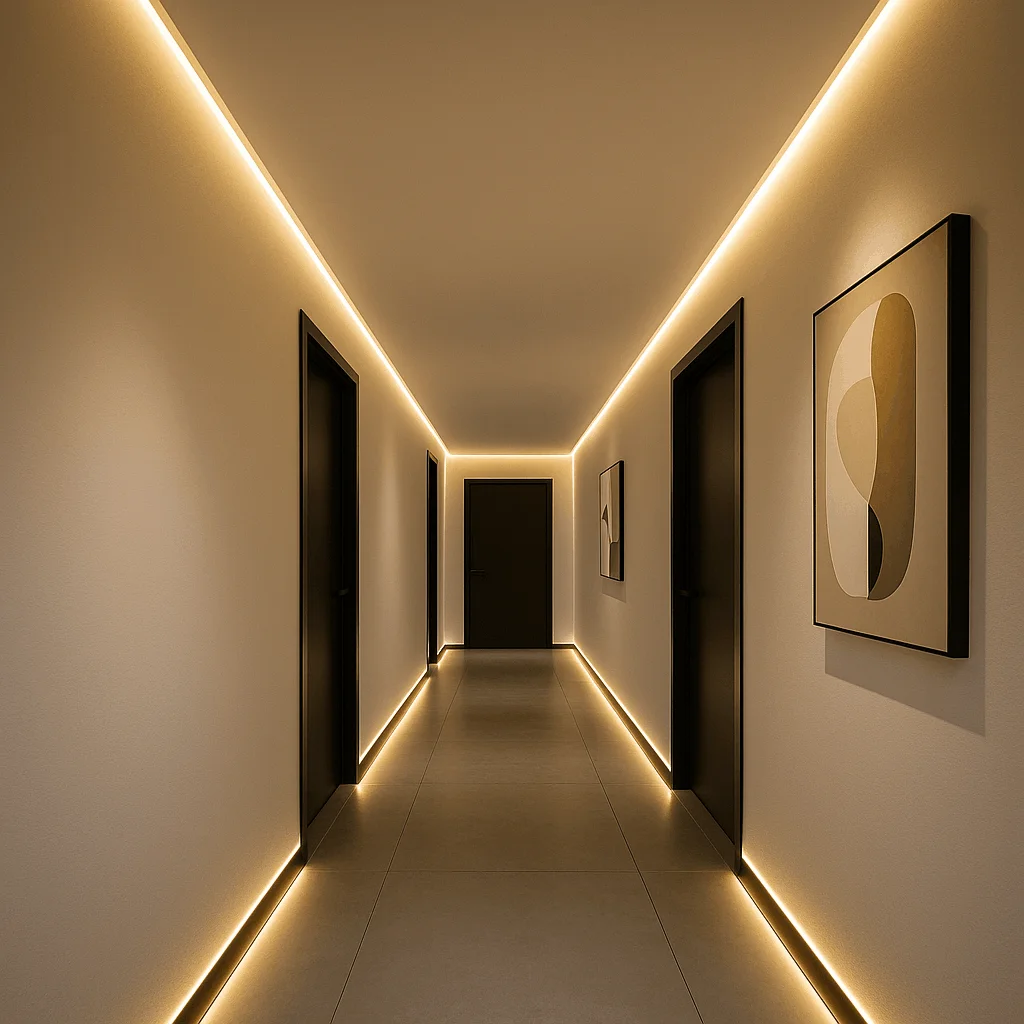
LED strip lights for corridors are one of those solutions that sounds gimmicky until you actually see it done well. Installed under a floating console table, along the top of a baseboard, inside a ceiling cove, or beneath crown molding, LED strips create a soft, indirect glow that adds serious atmosphere.
The difference between tacky and tasteful comes down to two things: placement and color temperature. Always hide the strip itself — you should see the glow, not the strip. And choose a warm white (2700K to 3000K) rather than a cool white or — please — color-changing RGB unless you’re going for something very specific.
LED strips are also remarkably energy efficient. Modern LEDs use up to 90% less energy than old incandescent bulbs and last up to 25 times longer. For a space like a hallway that’s often lit for hours daily, that adds up to serious savings over time.
6. Add Motion Sensor Hallway Lighting for Convenience
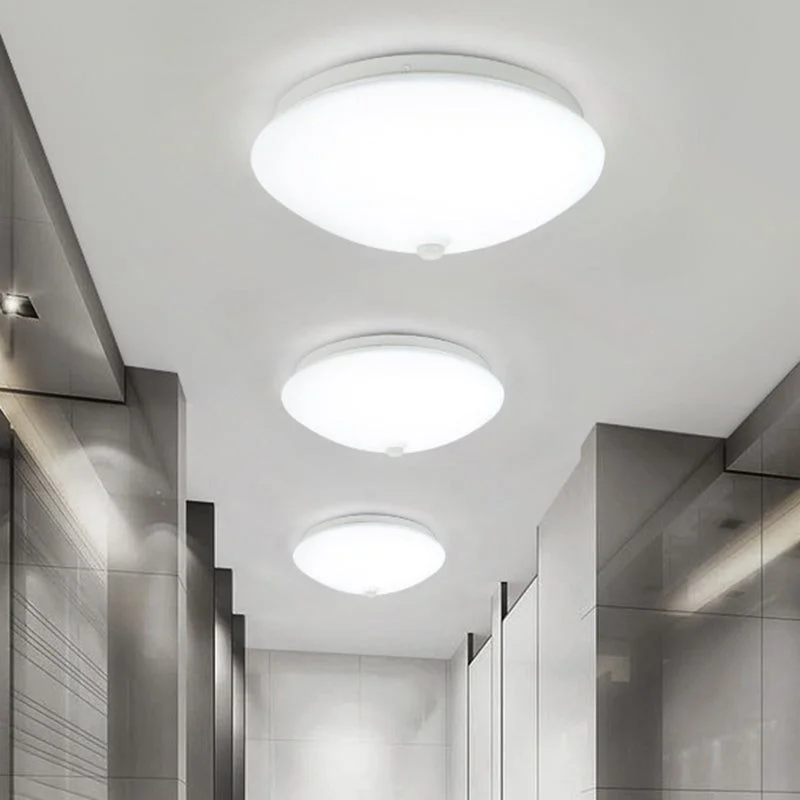
Hallway lighting ideas like motion sensor lighting solve a problem that almost everyone has but not everyone talks about: the late-night hallway fumble. Whether you’re getting up at 2am for a glass of water or your kids are navigating to the bathroom in the dark, motion-activated lights make life noticeably easier.
Modern motion sensors are far more refined than the clunky ones from a decade ago. You can set the sensitivity, the time-delay before switching off, and even the brightness level. Many smart LED bulbs and fixtures now include motion sensing built in, so you don’t need to rewire anything — just swap the bulb and configure it from an app.
From an energy perspective, motion sensors mean your lights are only on when someone is actually in the hallway. For a space that’s lit briefly and frequently throughout the day, that can cut your lighting energy use significantly.
7. Go Bright and Open With Entryway Lighting Fixtures
The entryway is technically its own space, but in most homes it blends directly into the hallway — which means your entryway lighting fixtures set the tone for everything that follows.
A strong entryway light should do three things as part of your overall hallway lighting ideas: greet people warmly, provide enough practical brightness to see shoes, keys, and mail clearly, and connect visually to the rest of the hallway. A pendant chandelier or a bold semi-flush fixture directly above the front door area is the classic move here.
Mirrors are your secret weapon at the entryway. A large mirror placed opposite a light source — whether that’s a window, a wall sconce, or a ceiling pendant — bounces light back into the space and immediately makes the hallway feel more open and airy.
8. Solve Narrow Hallway Lighting Challenges With These Tricks
Narrow hallway lighting solutions are all about creating the illusion of space rather than fighting the physical dimensions. Here’s what actually works:
- Vertical light: Sconces and tall floor lamps draw the eye upward, making ceilings feel higher.
- Light-colored walls: Pale walls reflect more light, which visually expands a tight corridor.
- Recessed fixtures over surface mounts: Anything that protrudes into the space makes it feel smaller. Flush and recessed options keep sightlines clear.
- Mirrors: Place a mirror on a short wall at the end of the hallway. It doubles the perceived depth immediately.
- Avoid dark lampshades: In narrow spaces, dark shades absorb light. Stick with white, cream, or frosted glass to maximize spread.
These narrow hallway lighting solutions work even in the tightest spaces — apartments, older terraced houses, and retrofitted corridors all benefit from the same principles.
9. Layer Your Ambient Lighting for Passageways
Here’s something almost every online guide about hallway lighting gets wrong: they talk about fixture types but skip the concept of layering. Ambient lighting for passageways isn’t just one light — it’s a combination of sources working together.
Think of it in three tiers:
Base layer: General overhead lighting (recessed lights or a central ceiling fixture) that gives the whole space a foundational brightness.
Mid layer: Wall sconces or LED strips that soften shadows and add warmth at eye level.
Accent layer: Picture lights, uplights, or small spotlights that highlight artwork, plants, architectural features, or a decorative table.
When you combine all three, these hallway lighting ideas stop looking like a utility corridor experiment and start creating a considered, genuinely designed space. This layered approach is the single most transformative thing you can do with your hallway — and it doesn’t require expensive fixtures to pull off.
10. Match Your Fixtures to Your Home’s Interior Style
Your hallway lighting shouldn’t look like it came from a different house. Here’s a quick style-matching guide to help:
Modern/minimalist: Recessed LEDs, slim cylindrical pendants, matte black or brushed silver sconces. Keep it clean and clutter-free.
Traditional/classic: Lantern-style pendants, brass or antique bronze wall sconces, chandeliers with warm Edison bulbs.
Industrial: Cage-style ceiling lights, exposed bulb sconces, matte black fixtures with raw materials like concrete or wood nearby.
Scandinavian: Simple flush mounts, neutral tones, warm white LED strips, natural materials paired with the fixtures.
Eclectic/bohemian: Layered lighting, rattan pendants, coloured glass sconces, and motion sensor lighting hidden in LED strips.
These home interior lighting design tips aren’t rigid rules — they’re starting points. The best hallway lighting feels like a natural extension of the rest of your home.
11. Choose the Right Color Temperature
This one step changes everything, and it’s almost never mentioned. Color temperature — measured in Kelvins — controls whether your light feels warm and cozy or bright and clinical.
For hallways, aim for 2700K to 3000K (warm white). This is the same warmth as traditional incandescent bulbs — it feels welcoming without being dim. Go too cool (4000K+) and your hallway starts to feel like a supermarket aisle.
If you want flexibility, look for tunable white LED fixtures that let you adjust color temperature via an app or a dimmer. This is especially useful if your hallway transitions between daytime wayfinding and nighttime mood lighting. Tunable whites are honestly one of the smartest hallway lighting ideas you can invest in — because your corridor doesn’t serve the same purpose at 7am as it does at 10pm. In the morning, a cooler, brighter tone keeps you alert and helps you find your keys without squinting.
Come evening, dial it back to a warm amber glow and the same hallway feels like a completely different — and far more relaxing — space to walk through. One fixture, one switch, two totally different atmospheres — that’s the kind of versatility most people don’t realize is even possible in a hallway.
12. Don’t Overlook Dimmers
A dimmer switch is probably the cheapest upgrade you can make to any hallway and it delivers a completely disproportionate improvement. Full brightness for mornings when you’re rushing out the door. Half brightness for evenings. 10% for nighttime navigation.
Make sure your LED bulbs are dimmer-compatible — not all are. Look for packaging that says “dimmable” and pair them with a trailing-edge dimmer for smooth, flicker-free performance. This small upgrade is one of the most overlooked hallway lighting ideas that delivers an outsized impact on how your corridor feels at every hour of the day.
A dimmer gives you full control — bright and energizing in the morning rush, soft and calm in the evening wind-down, and barely-there during late-night trips through the corridor. Think of it less as a lighting accessory and more as a mood dial for your entire hallway.
FAQs: Hallway Lighting Ideas
Q1: What is the best type of lighting for a hallway?
A layered approach works best — combine recessed ceiling lights for general brightness with wall sconces for warmth and LED strip lights for accent depth. No single fixture type does everything well on its own. The combination of hallway lighting ideas creates a space that’s both functional and welcoming throughout the day.
Q2: How many lumens do I need for a hallway?
A general rule is 10 to 15 lumens per square foot for hallways. For a 4×12 foot corridor, that’s roughly 500 to 720 lumens total. Spread across two or three fixtures, that gives you even, comfortable light without harsh bright spots or dark corners between fixtures.
Q3: How do I make a dark, narrow hallway feel bigger with lighting?
Use recessed or flush mount lights to avoid cluttering the visual space, add wall sconces to create width, place a large mirror at the end of the corridor to double perceived depth, and choose warm white LED bulbs. These narrow hallway lighting solutions work even in the tightest spaces without requiring structural changes.
Q4: Are LED strip lights a good idea for hallways?
Absolutely, when used as accent lighting rather than a primary source. Install LED strip lights for corridors under furniture, along baseboards, or inside ceiling coves for an indirect, atmospheric glow. Choose warm white (2700K–3000K) and ensure the strip itself is hidden — you want to see the light, not the hardware.
Q5: What color temperature should I use for hallway lighting?
Stick to 2700K to 3000K (warm white) for most hallways. This creates a welcoming, cozy atmosphere that complements entryway lighting fixtures and wall sconces well. Avoid cool whites above 4000K unless the hallway connects to a very modern, minimalist space where a crisper tone is intentional.
Conclusion
Your hallway doesn’t need a massive budget or a full renovation to look genuinely great. The best hallway lighting ideas are about working smarter — layering your light sources, picking the right fixture for your ceiling height, choosing warm color temperatures, and letting motion sensors and dimmers do the heavy lifting for convenience.
Start small if you need to. Swap out one harsh overhead bulb for a warm dimmable LED. Add a single wall sconce. Stick an LED strip under a console table. Each small change stacks up into something that completely transforms how the space feels — both for you every day, and for every guest who walks through your front door.
This weekend, stand in your hallway and ask yourself: is this space doing justice to the rest of your home? If the answer is no, you now know exactly where to start.