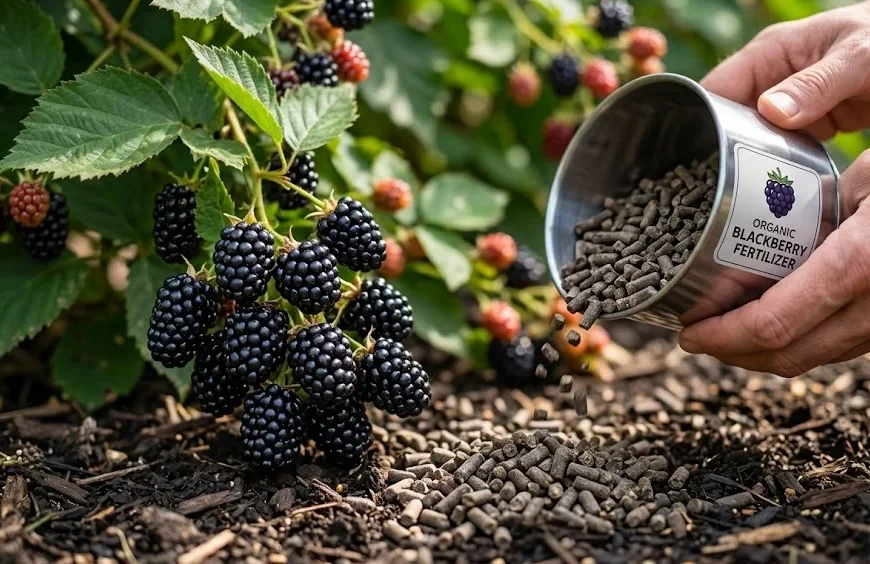
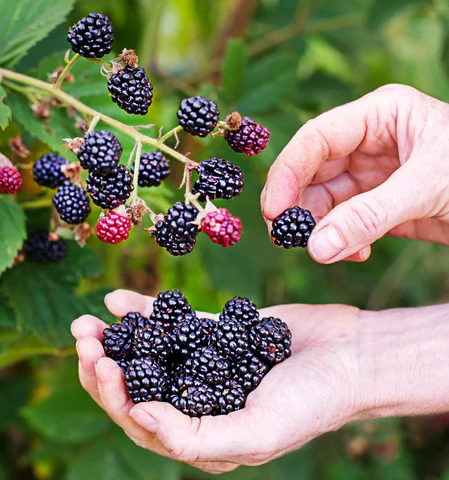
There’s something genuinely satisfying about walking out to a row of blackberry bushes in late summer and picking fruit that’s heavy, dark, and sweet enough to eat straight off the cane. But that kind of harvest doesn’t happen by accident. It starts months earlier — with what you put into the soil.
Most gardeners who struggle with blackberries aren’t doing anything dramatically wrong. They’re just slightly off in one of three ways: feeding too much, feeding too little, or reaching for a synthetic product when the plant would actually respond far better to something slower and more soil-friendly.
Using blackberry fertilizer organic methods isn’t just a trend or a marketing label. It’s a smarter, longer-term approach to berry gardening — one that builds soil health, supports beneficial microbes, and produces fruit you can feel genuinely good about eating. This guide covers everything from understanding what blackberries need at each growth stage, to the best organic products available, to building a feeding schedule that actually works in your specific conditions.
What Blackberry Plants Actually Need to Thrive
Before spending a dollar on any product, it helps to understand what’s happening underground. Blackberry bushes are heavy feeders compared to many other garden plants. Every growing season, they push out entirely new primocanes from the crown, flower on second-year floricanes, swell fruit, and quietly rebuild root reserves for the following year — all at the same time.
That kind of biological workload requires a steady, balanced nutrient supply. The three primary macronutrients each carry a specific job:
- Nitrogen (N) drives leafy, vigorous cane growth. When it runs short, older leaves turn yellow first and new growth comes in thin and weak.
- Phosphorus (P) supports root development and flower formation. Plants short on phosphorus often look fine until bloom — and then fruit set disappoints.
- Potassium (K) builds structural strength in the canes, improves berry quality, and helps the plant handle heat, drought, and disease pressure.
A typical organic berry fertilizer NPK ratio that works well for blackberries in early spring sits around 10-10-10, or a slightly nitrogen-forward blend like 12-6-6. As the season shifts toward flowering and fruit development, the balance should shift too — less nitrogen, more phosphorus and potassium.
Secondary nutrients fill in the gaps that NPK alone doesn’t cover. Calcium keeps cane tissue firm and resistant to splitting. Magnesium sits at the center of every chlorophyll molecule — without it, leaves gradually lose their color even when nitrogen levels are adequate. Iron, zinc, and manganese appear in trace amounts in quality organic amendments and prevent the subtle mid-season decline that many growers mistakenly attribute to a watering problem.
Why Go Organic? The Real Difference It Makes in the Soil
Synthetic fertilizer works — that’s not in dispute. But for a home grower or small-scale operation, the comparison between synthetic and blackberry fertilizer organic approaches looks very different when you zoom out past a single season.
Synthetic fertilizers:
- Deliver nutrients quickly but don’t build soil structure.
- Can burn roots when applied incorrectly.
- Leach out fast — especially nitrogen — in rainy conditions.
- Don’t support mycorrhizal fungi, which blackberry roots rely on for efficient phosphorus uptake.
Organic fertilizers:
- Release nutrients slowly through microbial activity, staying available across weeks rather than days.
- Steadily improve soil texture, drainage, and water retention over multiple seasons.
- Feed the entire soil ecosystem — bacteria, fungi, earthworms — which in turn feeds the plant.
- Carry minimal risk of root burn even when application rates aren’t perfectly precise.
The compounding effect over multiple seasons is where blackberry fertilizer organic methods truly prove their value. A planting managed organically for three or four years typically shows noticeably darker, richer soil, stronger cane growth, and far less disease pressure than one relying entirely on synthetic inputs.
Research from Oregon State University and North Carolina State University — both recognized centers for small fruit research — has noted clear connections between organic soil management and improved Brix scores (a measure of sugar content) in berry crops. The flavor improvement in year one may be subtle. By year three or four, it’s usually unmistakable.
The Best Types of Organic Fertilizer for Blackberry Bushes
When selecting the right organic fertilizer for blackberry bushes, no single product handles every situation. Different amendments serve different purposes, and the most effective programs typically combine two or three sources rather than relying on just one.
Compost — The Foundation of Everything
Compost doesn’t carry dramatic NPK numbers. It won’t produce an overnight transformation. What it does is build the kind of soil that makes every other amendment perform better — and that’s ultimately what separates a productive blackberry patch from a struggling one.
Apply compost for blackberry plants twice yearly — early spring before new canes push, and again in late fall after the last harvest. Spread 2–3 inches across the root zone and work it lightly into the surface. Blackberry feeder roots run shallow, so there’s no need to dig deep.
If you have access to worm castings, treat them as a valuable supplement. They carry concentrated plant-available nutrients, beneficial microbial populations, and naturally occurring growth compounds. A cup or two per plant worked in at spring feeding time gives young bushes a noticeably stronger early start.
Blood Meal and Feather Meal — Targeted Nitrogen Sources
When plants come out of winter looking pale and thin, the issue is almost always nitrogen. Blood meal (approximately 12-0-0) is the fastest-acting organic nitrogen source — nutrients become available within one to two weeks rather than months. Feather meal carries a similar analysis but releases more gradually, making it better suited as a season-long nitrogen contribution.
The critical caution with both is timing. Organic nitrogen fertilizer for berries should be applied in spring and pulled back entirely as summer progresses. Nitrogen pushed into the plant in late July or August produces exactly the kind of soft, lush growth that’s most vulnerable to winter damage and fungal infection — two of the most common causes of cane loss in home gardens.
Bone Meal and Rock Phosphate — Phosphorus Sources
Bone meal (roughly 3-15-0) is the most practical organic phosphorus source for home growers. It works best when soil pH sits between 6.0 and 7.0 — below 5.5, phosphorus availability drops sharply regardless of how much product is physically present in the soil.
Rock phosphate releases more slowly and suits new plantings particularly well. Worked into the soil at planting time, it continues feeding the root zone for multiple seasons without reapplication — a genuine set-it-and-forget-it phosphorus investment.
Kelp Meal and Greensand — Micronutrients and Potassium
These two amendments are consistently underused in home berry gardens. Kelp meal is modest in NPK but rich in trace elements, natural cytokinins (plant growth hormones), and compounds that measurably improve plant resilience under heat and drought. The difference shows less in the leaves and more in the quality and keeping time of the actual fruit.
Greensand is a mined mineral product from ancient seabed deposits. It provides slow-release potassium along with iron and a range of trace minerals. Think of it as a long-term soil conditioner rather than a seasonal fertilizer — applied every two or three years, it quietly builds mineral reserves that standard products don’t address.
Granular Organic Blends — The Convenient Choice
For growers who prefer simplicity, several companies produce dedicated chemical-free blackberry plant food blends that combine feather meal, bone meal, kelp, and mineral sources into a single granular product. NPK values typically fall in the 4-4-4 to 6-3-4 range. These blends are reliable and easy to manage. The trade-off is less flexibility for targeted corrections when a specific nutrient is running low.
Blackberry Fertilizer Organic: Seasonal Feeding Schedule
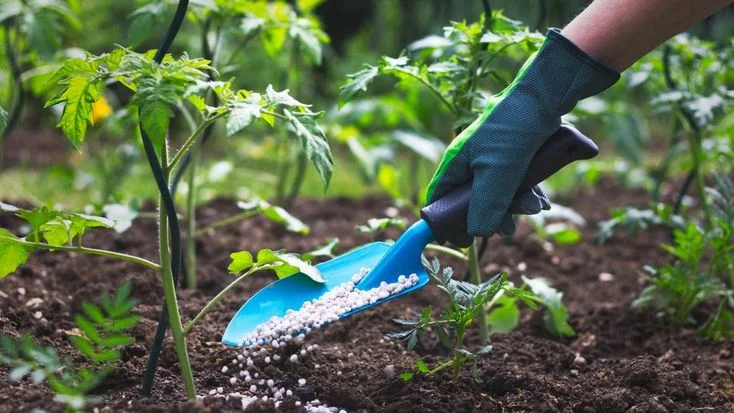
Consistency matters more than any individual product. A thoughtful blackberry bush feeding schedule organic approach — timed to match the plant’s actual growth stages — will consistently outperform occasional heavy applications.
Early Spring (March–April)
This is the highest-priority feeding window of the entire year. As soil temperatures climb above 50°F and new canes begin pushing from the crown, the plant’s nutrient demand increases sharply.
Apply a granular blackberry fertilizer organic blend in the 6-4-4 to 10-10-10 range at roughly ½ to 1 cup per plant, adjusted for plant size. Water thoroughly after application. This feeding supports the surge in cane growth and begins building the floricanes that will carry next season’s fruit.
Late Spring / Pre-Bloom (May)
As flower buds become visible, scale back nitrogen and shift emphasis toward phosphorus and potassium. A kelp meal application or diluted compost tea works well at this stage. If using a granular product, switch to something bloom-supportive — bone meal or a 2-8-4 formulation — to support fruit set rather than pushing more vegetative growth.
Post-Harvest (July–August)
After the last berries come off, give the planting a modest feeding to help primocanes build density and stored carbohydrates before fall. A light application of a balanced blackberry fertilizer organic blend paired with a fresh compost top-dressing is typically enough. This is not the time for aggressive nitrogen.
Fall (October–November)
Nitrogen applications stop entirely by early fall. Any new growth stimulated at this point will be soft and undeveloped, unlikely to survive the first hard frost. Use this window for soil building instead — compost, greensand, and a soil test to plan the following spring.
How to Read Your Soil Before You Fertilize
One of the most consistent errors in home berry gardening is applying fertilizer based on assumption rather than actual information. You can follow every recommendation in this guide and still see mediocre results if your soil pH is significantly off or if you’re adding a nutrient that’s already excessive.
A basic soil test through a county extension office or private lab typically costs between $15 and $30 and returns data on:
- Current pH level.
- Existing N, P, K, and secondary nutrient levels.
- Organic matter percentage.
- Specific amendment recommendations for your crops.
Blackberries grow best in soils with a pH between 5.5 and 6.5. Outside this range — particularly below 5.5 — phosphorus, calcium, and several micronutrients become chemically unavailable to the plant regardless of how much is physically present. Low pH is corrected with agricultural or dolomitic lime. High pH responds to elemental sulfur or acidifying organic materials like pine bark.
Getting pH right before choosing your blackberry fertilizer organic product is the single highest-leverage action most gardeners can take. It doesn’t cost much, it’s not complicated, and it makes every other input more effective from the first application.
Natural Soil Amendments Worth Adding to Your Berry Garden
Beyond standard fertilizers, certain natural soil amendments for blackberry gardens address the physical and biological structure of the soil itself — and that matters just as much over time as nutrient levels.
| Amendment | Primary Benefit | Application Rate | Frequency |
|---|---|---|---|
| Aged compost | Organic matter, microbial life | 2–3 inches top-dressed | Spring & Fall |
| Worm castings | Concentrated nutrients, biology | ½–1 cup per plant | Spring |
| Biochar | Water retention, microbial habitat | 1–2 lbs per plant | Once, at planting |
| Mycorrhizal inoculant | Phosphorus uptake, root expansion | Per package directions | At planting |
| Greensand | Potassium, trace minerals | 1 lb per plant | Every 2–3 years |
| Pine bark mulch | pH management, moisture retention | 3–4 inch layer | Annually |
Biochar is one amendment that most home gardeners overlook entirely. When mixed with finished compost before application — a process called “charging” — biochar creates a stable, long-lasting pore structure in the soil that holds water, reduces nutrient leaching, and provides a favorable habitat for the microbial communities that make any blackberry fertilizer organic program actually work. Applied once at planting, it continues delivering benefit for a decade or more.
How to Fertilize Blackberries Organically: Step-by-Step
Whether you’re starting a new planting or transitioning an established one to organic management, a clear sequence keeps things straightforward:
- Test your soil first. Get pH and baseline nutrient readings before anything else.
- Correct pH if needed. Apply lime or sulfur 4–6 weeks before planting to allow proper equilibration.
- Amend the planting zone generously. A full bucket of finished compost per hole, bone meal, and biochar if available — all worked into the top 10–12 inches.
- Inoculate at planting. Dust bare roots or transplant root zones with mycorrhizal inoculant. It colonizes quickly and improves phosphorus uptake from the very first season.
- Mulch immediately. Three to four inches of wood chips, pine bark, or straw conserves moisture, moderates soil temperature, and slowly feeds the soil biology as it breaks down.
- Follow the seasonal feeding calendar. Start with modest rates in year one and increase gradually as the planting matures.
- Observe the plants regularly. Leaf color, cane vigor, and fruit set all communicate something. Let the plants guide adjustments between scheduled applications.
Common Mistakes That Undercut Organic Blackberry Fertilizer Programs
Even experienced growers fall into patterns that quietly reduce results. These are the ones worth knowing:
Over-applying nitrogen late in the season. Soft, fast-growing canes produced in August don’t develop the cell wall density needed to survive winter. Cane blight and winter kill follow. This single timing error causes more blackberry losses than almost anything else in home gardens.
Adding amendments while ignoring pH. All the blackberry plant nutrients organic products available won’t perform properly if the soil pH sits at 4.8 or 7.5. Nutrient availability is fundamentally a soil chemistry problem, and pH is the controlling variable.
Skipping the soil test. Guessing at deficiencies is unreliable and sometimes counterproductive. Excess phosphorus in the soil actively blocks zinc and iron uptake — adding more phosphorus to a struggling plant may actually make things worse.
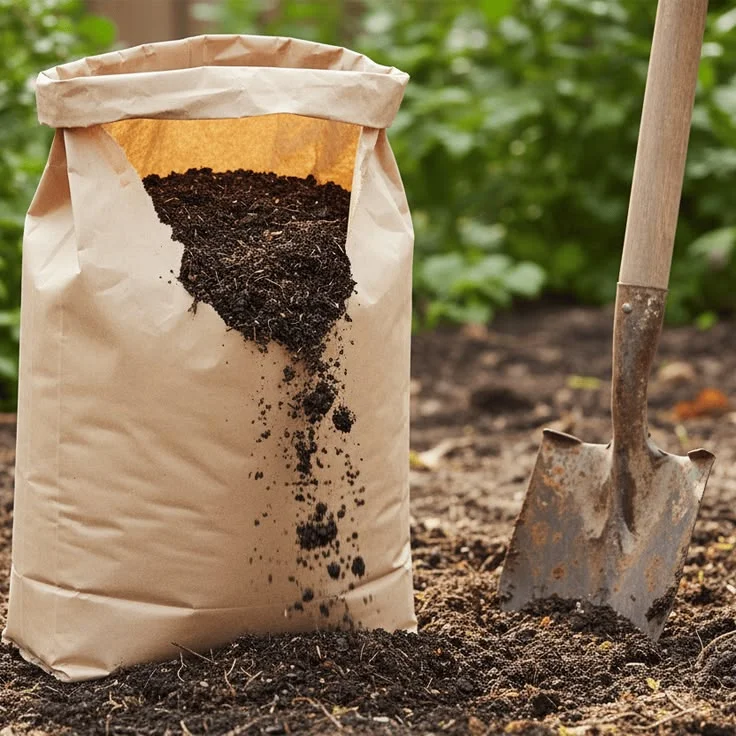
Using immature compost. Compost that hasn’t fully finished the hot composting process can introduce pathogens, tie up available nitrogen during breakdown, and damage root tissue. Finished compost is dark, crumbly, and smells like clean earth — not like the original material it came from.
Not watering in dry amendments. Granular organic products depend on soil moisture and microbial activity to begin releasing nutrients. Spread on dry soil and left unwatered, they simply sit there. Always apply before expected rain or water in immediately after spreading.
FAQ: Blackberry Fertilizer Organic
Q: What is the best blackberry fertilizer organic option for home gardens?
A: A balanced granular organic blend with an NPK around 6-4-4 or 10-10-10, paired with compost top-dressing and kelp meal, covers most blackberry nutritional needs reliably across the growing season.
Q: How often should I apply blackberry fertilizer organic products?
A: Two to three targeted applications per season — early spring, pre-bloom in late spring, and a light post-harvest feeding — works well for most established plantings. New plantings benefit from an additional fall soil-building application in their first year.
Q: Can I use compost as my only blackberry fertilizer organic source?
A: In very rich, well-developed soils, compost alone can sustain a mature planting reasonably well. For most home gardens, combining compost with targeted amendments like blood meal or bone meal produces noticeably better cane growth and fruit yield.
Q: What NPK ratio works best for blackberry fertilizer organic programs?
A: For spring cane growth, a balanced or slightly nitrogen-forward ratio — 10-10-10 or 12-6-6 — works well. Moving into flowering and fruiting, shift toward lower nitrogen and higher phosphorus and potassium, such as a 4-8-4 blend.
Q: Is chicken manure a good blackberry fertilizer organic choice?
A: Aged or fully composted chicken manure is an excellent high-nitrogen organic amendment for blackberries. Fresh or raw manure should never be applied — it’s too concentrated, can burn roots, and carries pathogen risk.
Q: When should I stop applying blackberry fertilizer organic products in fall?
A: Stop all nitrogen-containing applications by early September in most climates. Growth stimulated after that point won’t harden before frost and is particularly vulnerable to cold damage and fungal disease.
Q: How do I know if my plants need more blackberry fertilizer organic feeding?
A: Key signals include yellowing of older leaves (nitrogen deficiency), purple-tinged foliage (phosphorus deficiency), weak or thin new canes, and disappointing fruit set. A soil test remains the most accurate diagnostic tool available.
Conclusion
Growing blackberries well is, at its core, a soil management project. The fruit is the visible reward — but everything that makes it possible, including strong canes, reliable fruit set, consistent yields, and natural disease resistance, happens underground in the quality of the root environment you build season after season.
Using blackberry fertilizer organic methods won’t deliver dramatic results in the first week. That’s simply not how organic soil programs work, and growers who expect immediate change often give up too soon. What it builds instead is something far more durable: a soil ecosystem that improves progressively, plants that grow measurably stronger, and harvests that reflect years of consistent, thoughtful care.
Start with a soil test. Match your amendments to what the soil and the plant actually need. Follow a seasonal feeding calendar rather than guessing. And give the process the time it deserves — because the cumulative effect of a well-managed blackberry fertilizer organic program is one of the most rewarding things a gardener can watch develop across a few growing seasons.
The plants will show you when you’ve got it right.