Why Phosphorus Free Fertilizers Are Getting So Much Attention
There’s a moment most gardeners recognize — you’ve done everything right, followed the schedule, applied the recommended rates, and yet the plants still look off. Growth is slow. Leaves are pale. Something isn’t working. In many cases, the problem isn’t what’s missing from the soil. It’s what’s already there in excess.
Phosphorus builds up quietly over years of regular fertilization. It binds to soil particles, resists leaching, and accumulates season after season. By the time a soil test confirms the excess, you may have been adding phosphorus your garden didn’t need for a long time.
Phosphorus free fertilizers address this directly. They supply nitrogen and potassium — the nutrients that genuinely deplete — while leaving phosphorus out of the equation entirely. What started as a specialty solution for hydroponic growers has steadily become standard practice for lawn managers, organic gardeners, and anyone farming near water. The shift is happening for practical reasons, environmental reasons, and increasingly, legal ones.
What Exactly Are Phosphorus Free Fertilizers?
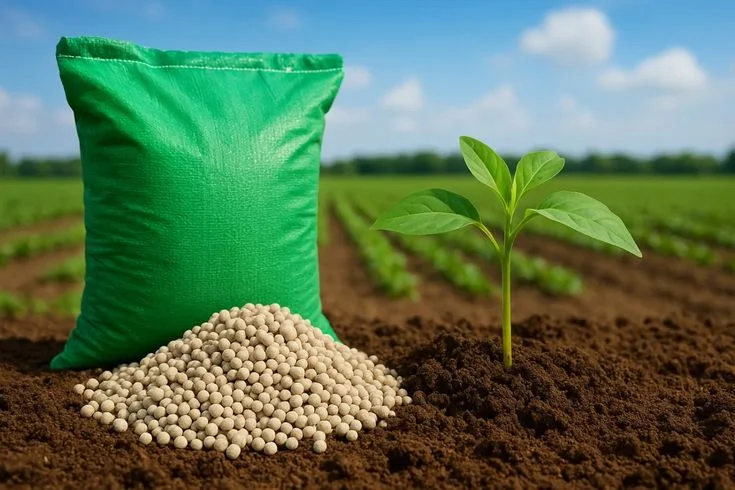
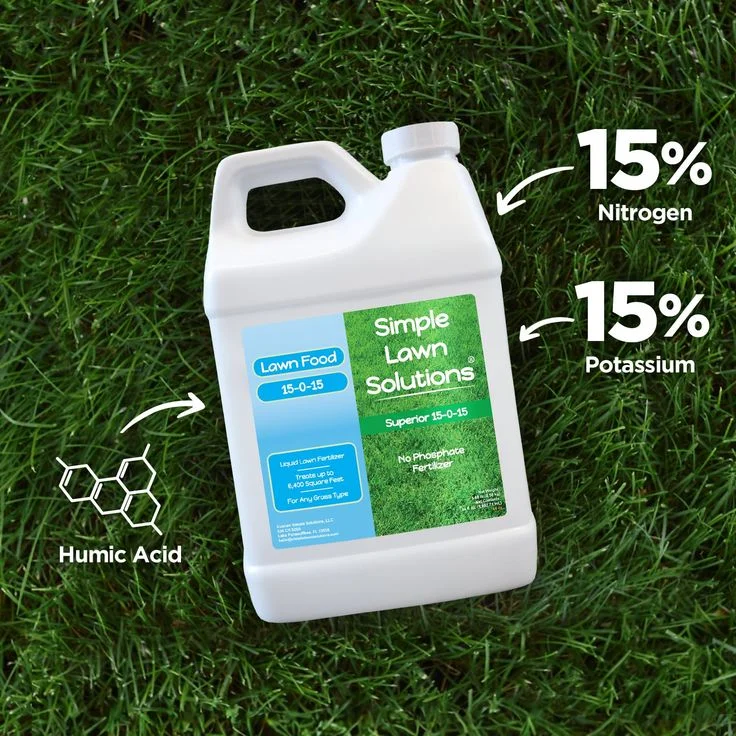
Simply put, phosphorus free fertilizers are nutrient formulas containing nitrogen (N) and potassium (K) with zero phosphorus (P). On a product label, this shows up as an NPK ratio with a “0” in the middle — common examples include 10-0-10, 15-0-15, and 20-0-20.
Phosphorus is always the middle number in an NPK ratio. When that number is zero, the product contains no phosphate compounds — no monoammonium phosphate, no diammonium phosphate, no superphosphate. None of the standard phosphorus carriers you’d find in a conventional blend.
What’s Still Inside a P-Free Formula?
Removing phosphorus doesn’t mean removing nutrition. A properly formulated phosphorus free fertilizers still delivers a full nutritional package:
- Nitrogen — available in fast-release, slow-release, or split delivery forms.
- Potassium — typically supplied as potassium sulfate, potassium chloride, or potassium nitrate.
- Secondary nutrients — calcium, magnesium, and sulfur.
- Micronutrients — iron, zinc, manganese, boron, copper, and molybdenum.
- Biostimulants — premium formulas often include humic acid, kelp extract, or amino acids for enhanced uptake.
The purpose is straightforward: give plants what they’re actually short on, without adding to an imbalance that’s already there.
When Does Your Soil Actually Need Phosphorus Free Fertilizers?
This is the question that separates informed growers from those just following the bag directions. Soil chemistry varies from property to property, and buying fertilizer based on habit rather than data is one of the most common — and costly — mistakes in plant care.
Signs Your Soil Has Too Much Phosphorus
A formal soil test gives you the clearest picture, but certain patterns show up before you ever send a sample to a lab:
- Iron and zinc deficiency symptoms appearing despite regular applications of those nutrients.
- Stunted root systems in plants that are otherwise getting adequate care.
- Weak mycorrhizal activity — high phosphorus is known to suppress the beneficial fungi that support root health.
- Soil test readings above 50–75 ppm for phosphorus, which most agronomists consider excessive.
Situations Where P-Free Products Make the Most Sense
1. Phosphorus-Saturated Lawns Decades of standard lawn fertilization leave phosphorus behind. The nitrogen feeds the grass and disappears. The potassium leaches away with rainfall. The phosphorus stays. Most established residential lawns have more than enough, and switching to a phosphorus free lawn fertilizer lets you maintain turf quality without pushing levels higher.
2. Hydroponic Systems Recirculating systems don’t flush phosphorus the way soil does. In deep water culture or nutrient film setups, it builds up in the reservoir over time. A zero phosphorus fertilizer for hydroponics gives growers the ability to top up nitrogen and potassium during maintenance cycles without compounding an existing imbalance.
3. Waterway-Adjacent Properties Phosphorus is the primary fuel for algal blooms in freshwater. If your property borders a lake, stream, or drains toward one, using a phosphorus restricted fertilizer for waterways isn’t just a good idea — in many municipalities, it’s now a legal requirement.
4. Organic-Rich Garden Beds Years of compost, manure, and organic amendment applications tend to leave phosphorus well above adequate levels. A fertilizer for phosphorus-rich soil skips what’s already abundant and focuses energy on nitrogen and potassium — the two nutrients that actually turn over.
Nitrogen and Potassium: What They Actually Do
Understanding the role of nitrogen and potassium helps you use phosphorus free fertilizers more effectively, rather than just trusting that the product will sort things out.
Nitrogen — The Growth Engine
Nitrogen is responsible for vegetative growth, chlorophyll production, and protein synthesis. It’s the nutrient plants consume fastest, and it’s the one most easily lost — through leaching, volatilization, and microbial activity. When nitrogen drops, plants yellow from the oldest leaves first, growth slows, and overall vigor declines.
In a well-designed nitrogen and potassium only fertilizer, nitrogen comes from several possible sources:
| Nitrogen Source | Release Type | Best Use |
|---|---|---|
| Urea | Fast | Quick green-up, lawns |
| Ammonium sulfate | Medium | Acidic soils, lawns |
| Polymer-coated urea | Slow | Long-season crops, turf |
| Calcium nitrate | Fast | Vegetables, hydroponics |
| Organic nitrogen (feather meal, blood meal) | Slow | Gardens, organic systems |
Potassium — The Quality Nutrient
Potassium doesn’t build structure visibly the way nitrogen does, but it quietly regulates nearly every plant process — water use efficiency, disease resistance, sugar transport, drought tolerance, and fruit quality. Its deficiency is often mistaken for disease: brown leaf margins, weak stems, fruit that drops early or develops poorly.
In a potassium and nitrogen fertilizer blend, potassium sulfate is the preferred choice for sensitive crops like tomatoes, strawberries, and peppers. Potassium chloride works fine for lawns and many field crops, but the chloride can accumulate in container soil and cause problems at higher rates.
How to Read Labels on Phosphorus Free Fertilizers
Label reading is a skill, and it’s one of the most practical things you can develop as a grower. Here’s the core framework:
NPK Ratio at a Glance
| NPK Label | Nitrogen | Phosphorus | Potassium |
|---|---|---|---|
| 10-10-10 | 10% | 10% | 10% |
| 15-0-15 | 15% | 0% | 15% |
| 20-0-20 | 20% | 0% | 20% |
| 30-0-10 | 30% | 0% | 10% |
Zero in the middle means no phosphorus — that one rule covers most of what you need to know at the shelf.
Watch the Fine Print
Some products are marketed as “low phosphorus” while still containing 1–3% phosphate. For applications where zero really means zero — regulated waterway zones, phosphorus-critical soil management programs — confirm the middle number isn’t just low, but absent.
Phosphorus Free Fertilizers for Lawns: A Practical Breakdown
Lawn care represents the largest practical market for phosphorus free fertilizers, and the reasoning is straightforward once you understand the history. Most established lawns in North America and Europe have been fertilized repeatedly for years, sometimes decades. Every standard application contributed nitrogen, potassium, and phosphorus. The nitrogen fed the grass and depleted quickly. The potassium leached. The phosphorus stayed — year after year, layer after layer.
At this point, the average suburban lawn doesn’t need phosphorus. It needs nitrogen to grow and potassium to stay resilient. That’s exactly what a phosphorus free lawn fertilizer program delivers.
A Year-Round P-Free Lawn Schedule
| Season | Suggested Formula | Purpose |
|---|---|---|
| Early spring | 32-0-10 | Stimulate growth after dormancy |
| Late spring | 20-0-20 + iron | Sustain color and density |
| Summer | 25-0-12 slow-release | Stress resistance during heat |
| Fall | 10-0-20 | Root strengthening before winter |
| Late fall | 13-0-46 (diluted) | Potassium loading for winter hardiness |
Turf managed on this kind of schedule typically looks just as healthy — often healthier — than turf receiving standard NPK. Many professional sports fields and golf courses have run P-free programs for years with no visible quality loss.
Eco-Friendly Fertilizer With No Phosphorus: The Environmental Angle
The environmental argument for phosphorus free fertilizers is well-supported by decades of water quality research. Phosphorus runoff is the leading driver of eutrophication — a process where nutrient-rich water triggers explosive algae growth. When those algal blooms die off, decomposing bacteria consume dissolved oxygen in the water, creating hypoxic “dead zones” where aquatic life cannot survive.
The Gulf of Mexico dead zone, the recurring algal problems in Lake Erie, and the long-running degradation of the Chesapeake Bay are among the most documented examples. Agricultural runoff carries much of the load, but residential lawn fertilization is a meaningful contributor — particularly in densely populated watersheds.
The Regulatory Shift
The policy response has been concrete. States including Minnesota, Michigan, Wisconsin, New York, and New Jersey have passed restrictions on phosphorus-containing lawn fertilizers for residential use. In practical terms, this means homeowners in regulated areas must use an eco-friendly fertilizer with no phosphorus unless a soil test demonstrates an actual deficiency.
The direction is clear. Restrictions on residential phosphorus applications are expanding, not contracting, and growers who build P-free programs now are already ahead of where regulations are heading.
Low Phosphorus Plant Food for Indoor and Container Gardening
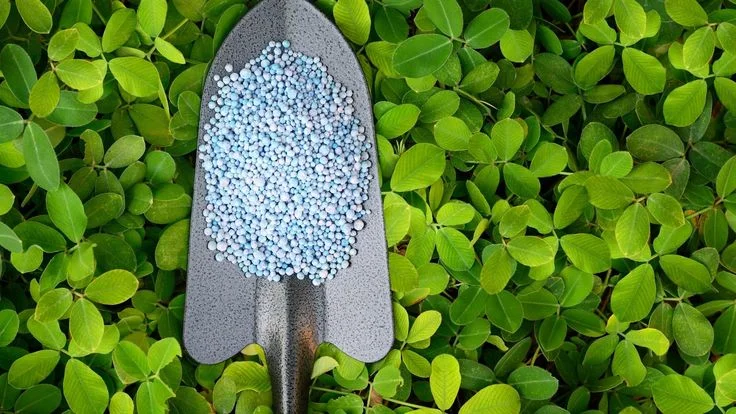
Container gardening creates a phosphorus problem that’s easy to overlook. Unlike in-ground soil, potting mix has limited buffering capacity. Phosphorus added through regular fertilization doesn’t move or leach effectively — it accumulates in a confined space, and the buildup happens faster than most growers expect.
Low phosphorus plant food is a smart choice for:
- Houseplants that have been fertilized consistently for more than one season.
- Container herbs and vegetables using potting mix that’s more than a year old.
- Succulents and cacti, which are particularly sensitive to excess phosphorus.
- Orchids, which are well-known for responding poorly to high-phosphorus formulas.
A liquid phosphorus free fertilizer applied at half the label rate, every ten to fourteen days, tends to produce better long-term results than a slow-release high-P granule for these plants. The precision of liquid feeding also allows you to adjust as plants respond.
Fertilizers Without Phosphate in Hydroponics
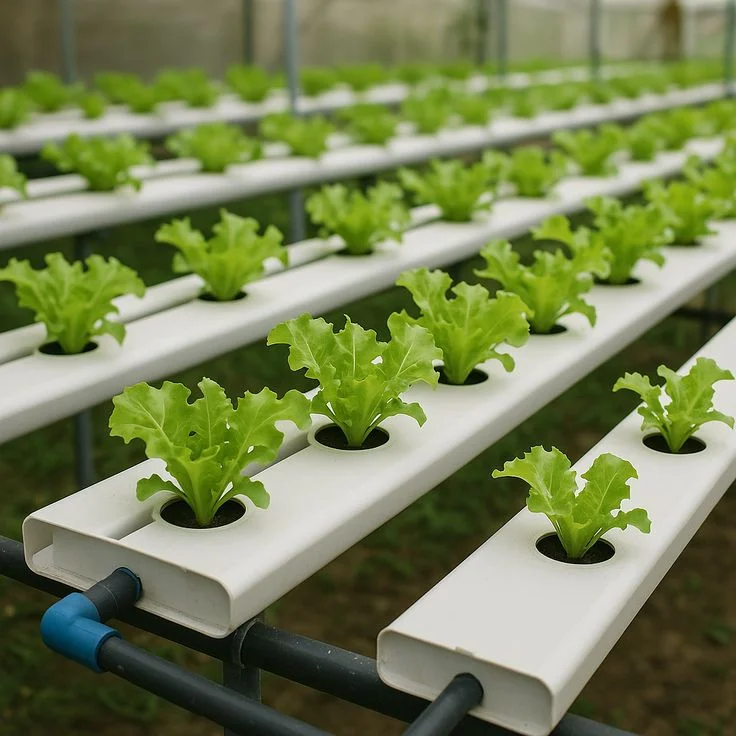
Hydroponic growers have understood the value of fertilizers without phosphate for longer than most soil gardeners. The mechanics of a recirculating system make phosphorus accumulation almost inevitable. In deep water culture (DWC) or nutrient film technique (NFT) setups, phosphorus stays dissolved in the reservoir rather than binding to soil particles. Without periodic full reservoir changes, levels climb — and elevated phosphorus in a reservoir suppresses iron and zinc uptake even when those elements are present.
Using a zero phosphorus fertilizer for hydroponics during top-up cycles or maintenance feeding is a practical way to keep the N and K ratios correct without adding to an already elevated P level.
What to Look for in Hydroponic P-Free Formulas
- Chelated iron and zinc — essential when phosphorus is being managed down, since deficiency symptoms can appear quickly.
- Calcium nitrate as the primary nitrogen source for stable, clean delivery.
- Potassium silicate for cell wall strength and disease resistance.
- Low or zero chloride to avoid ion toxicity buildup in sensitive reservoir systems.
NPK Fertilizer Without P: Choosing the Right Formula
The range of available NPK fertilizer without P products has grown considerably as demand has increased. Choosing the right one comes down to your growing environment and how you plan to apply it.
Formula Selection by Environment
| Environment | Suggested N-P-K | Key Consideration |
|---|---|---|
| Established lawn | 30-0-10 or 20-0-20 | Add supplemental iron for color |
| Vegetable garden | 10-0-10 or 15-0-15 | Always test soil first |
| Hydroponic system | 8-0-8 or custom blend | Prioritize chelated micronutrients |
| Container plants | 10-0-10 liquid | Apply at half the label rate |
| Waterway buffer zone | Any zero-P formula | Verify local compliance requirements |
Granular vs. Liquid: Which Works Better?
Granular phosphorus free fertilizers are the practical choice for large areas — established lawns, field borders, expansive garden beds. They’re efficient to apply, cost-effective, and release nutrients over a useful timeframe.
Liquid formulas suit precision applications — containers, hydroponic reservoirs, foliar feeding, or targeted spot treatments where quick uptake is the priority. Neither format is universally superior; the decision depends on what you’re growing and how you’re managing it.
Common Mistakes When Switching to Phosphorus Free Fertilizers
The transition to a P-free program is straightforward in principle, but a few consistent mistakes tend to trip growers up early on.
Skipping the Soil Test This is the most important step and the one most frequently bypassed. Without a baseline soil test, you’re assuming high phosphorus rather than confirming it. Some soils genuinely are deficient, and applying a P-free product in that situation will do real harm. Test first, then decide.
Underfeeding Nitrogen When switching programs, some growers pull back on nitrogen out of general caution about nutrient excess. Nitrogen is not the problem — phosphorus is. Nitrogen still depletes quickly and still needs to be replaced. Don’t cut it short.
Overlooking Micronutrients One of the effects of chronic high phosphorus is micronutrient suppression — particularly iron, zinc, and manganese. Once you reduce phosphorus inputs, those elements become more bioavailable. Plants that adapted to deficiency may show unexpected responses. Monitor closely during the first season of transition.
Expecting Fast Soil Change Phosphorus is chemically persistent. It bonds to soil particles and releases slowly. Even after eliminating all P inputs, soil test levels will take two to four growing seasons to show meaningful reductions. The program works — it just works gradually.
FAQ: Phosphorus Free Fertilizers
Q: Can I use phosphorus free fertilizers on seedlings and new transplants?
In most cases, no. Young plants and new transplants benefit from phosphorus during the establishment phase — it supports root development and early growth. P-free products are better suited to established plants in phosphorus-rich soil. If you’re starting in depleted or unknown soil, use a balanced formula until the plant is established, then reassess.
Q: Are phosphorus free fertilizers more expensive than standard products?
Generally not. Most granular P-free lawn products — 15-0-15, 20-0-20, and similar ratios — are priced comparably to standard NPK blends and are widely available at garden centers. Specialty hydroponic formulas may cost more, but for most home applications, the price difference is minimal.
Q: Will my lawn decline without added phosphorus?
If your soil already has adequate phosphorus levels — which most established lawns do — a phosphorus free lawn fertilizer will maintain quality just as effectively as a standard product. Phosphorus is not what makes lawns green or dense. Nitrogen does that. Many professionally managed turf programs have run without phosphorus additions for years without visible decline.
Q: How often should I retest my soil when using a P-free program?
Once per year is reasonable for home gardeners. If you’re managing a larger turf area or making aggressive changes, twice a year gives you better data to work with. Soil testing is the only reliable way to know whether your phosphorus management is actually achieving results.
Q: Are there organic versions of phosphorus free fertilizers?
Yes. Blood meal and feather meal supply nitrogen without phosphorus, and potassium sulfate provides potassium cleanly. These can be combined into an effective organic phosphorus free fertilizer blend. Some certified organic products are specifically formulated and labeled as P-free, which is useful for properties in regulated waterway zones.
Q: Should I avoid bone meal in a phosphorus-rich garden?
Completely. Bone meal is very high in phosphorus — it’s one of the most concentrated organic phosphorus sources available. Adding it to soil that’s already above adequate levels makes the imbalance worse and works directly against what a P-free program is trying to accomplish.
Q: Do phosphorus free fertilizers work across all crop types?
They work well for most established crops and all turf situations. Fruiting crops like tomatoes, peppers, and squash do benefit from some phosphorus during the flowering stage — but if your soil already contains adequate levels, additional applications aren’t necessary and may actually interfere with micronutrient uptake.
Conclusion
Switching to phosphorus free fertilizers isn’t about following a trend. It’s about paying closer attention to what your soil actually contains and responding to that, rather than applying the same product year after year out of routine.
For most established gardens, lawns, and growing systems, phosphorus is already present in sufficient — often excessive — amounts. The nutrients that genuinely cycle through and deplete are nitrogen and potassium. A P-free program reflects that reality and feeds accordingly.
The benefits accumulate in more than one direction. Your plants get what they need without the suppression effects that come from excess phosphorus. Your micronutrient availability improves over time. And if you’re near any natural water system, you’re contributing meaningfully to protecting it.
Start with a soil test. That one step turns a general concept into a specific, actionable plan. From there, choosing the right phosphorus free fertilizer — whether for your lawn, your containers, your hydroponic setup, or your garden beds — becomes a straightforward decision based on real data rather than guesswork.
Good fertilization has always been about understanding your soil first. P-free programs just make that principle harder to ignore.