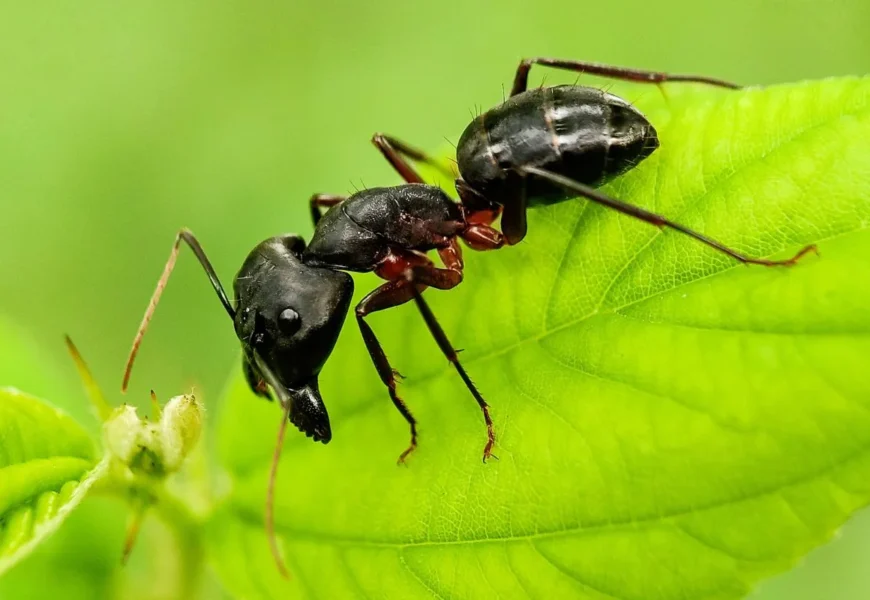
Most people notice ants before they ever think about them. A thin line of black workers crossing a garden path, disappearing beneath a paving slab, or circling the base of a rose bush — it seems ordinary until the colony is the size of a small city underground. The black garden ant (Lasius niger) is one of the most successful insect species across Europe, Central Asia, and North America, and the secret to that success lies almost entirely in how well it chooses and builds its black garden ant habitat.
These aren’t opportunistic insects making do with whatever space is available. Every nest location is the result of extensive scouting, environmental assessment, and precise conditions being met. Understanding those conditions — whether you’re a gardener, a pest control professional, or someone who simply wants to know what’s happening beneath their feet — changes how you see these creatures entirely.
This guide goes well beyond the basics. From soil chemistry and burrow architecture to queen behavior and urban ecology, everything you need to understand about where and how black garden ants live is covered here in genuine depth.
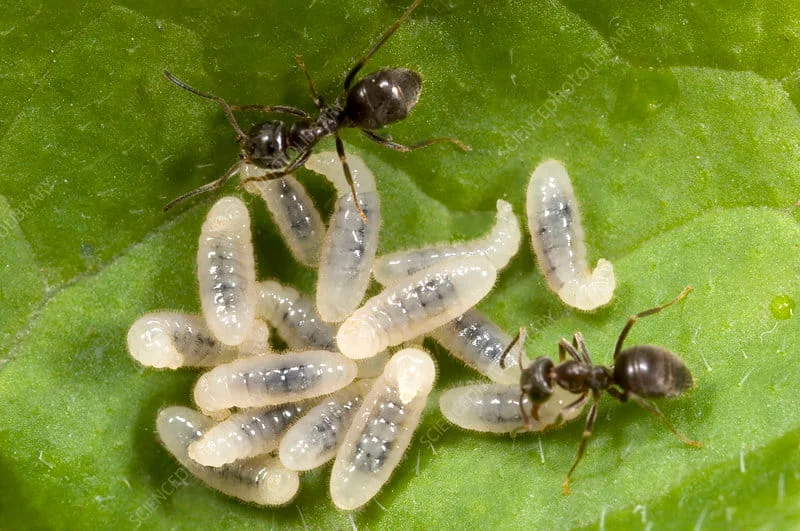
What Makes a Black Garden Ant Habitat Ideal?
Not every patch of garden soil qualifies as a suitable black garden ant habitat. Lasius niger workers scout potential sites carefully before a founding queen ever commits to a location. The criteria they’re working with are specific, and understanding them explains why the same garden corner gets colonized repeatedly, year after year, even after removal efforts.
The conditions these ants look for include:
- Warmth and consistent sun exposure — South-facing slopes, sunny patios, and garden beds that catch morning sun are among the most attractive sites.
- Moderate moisture levels — Soil that is neither waterlogged nor bone dry; enough humidity to keep eggs viable without risking fungal growth.
- Loose, workable soil — Sandy loam or mixed garden soil that workers can excavate efficiently.
- Low disturbance — Ground that sees minimal foot traffic and isn’t regularly turned over.
- Nearby food sources — Aphid colonies on ornamental plants, fallen fruit, organic kitchen waste, and other sugar-rich materials within foraging range.
What makes this selection process genuinely interesting is its intelligence. Scout workers spend days exploring before a queen is established. That’s why, when you clear one colony and leave the conditions intact, another appears within a season or two.
Temperature regulation sits at the center of how the black garden ant habitat functions. Workers move brood up toward warmer surface layers in spring, then shift everything deeper as autumn sets in. The soil essentially acts as a living thermostat for the colony, and the ants manage it with real precision.
Lasius Niger Nesting Sites: The Most Common Locations
When it comes to Lasius niger nesting sites, variety is a defining trait of this species. Unlike more specialized ants that depend on specific vegetation or geology, Lasius niger is a genuine generalist. It builds successful colonies across a wide range of environments — which is a big part of why it’s so widespread.
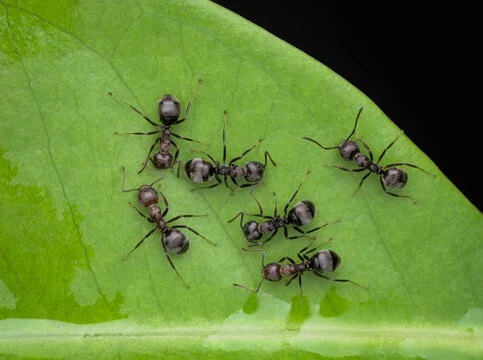
Here are the most commonly documented nesting locations:
1. Under Paving Slabs and Driveways
The black ant nest under paving slabs is probably the most familiar sight in any suburban garden. The reason ants favor this location comes down to simple thermal physics — concrete and stone absorb heat throughout the day and radiate it downward through the night. The result is a stable, warm microhabitat that stays several degrees warmer than open soil.
The fine, granular soil that appears pushed up through cracks between pavers isn’t random debris. It’s excavated material from active tunneling below, and its presence is one of the clearest early signs of an established nest beneath the surface. Over time, extensive tunneling can quietly undermine paving stability.
2. Garden Borders and Flower Beds
Well-drained, sun-facing garden borders represent a prime black garden ant habitat. The soil in established flower beds tends to be aerated and loose from regular planting, which makes excavation far easier for worker ants. The presence of aphid-colonized plants nearby adds a reliable food source — black garden ants actively tend aphid colonies, protecting them from predators in exchange for honeydew secretions.
3. Lawn Edges and Grass Margins
The transition zone between lawn and hard paving is a particularly attractive nesting area. Grass above insulates the nest from rapid temperature swings, while the hard surface nearby stores and reflects heat. This combination of insulation and warmth is difficult to find elsewhere in a typical garden.
4. Tree Roots and Rotting Wood
Exposed root systems and partially decayed stumps offer a ready-made structural framework for tunnel networks. The organic material in decomposing wood retains warmth and moisture at steady levels, and the existing cavities reduce the excavation effort required.
5. Walls and Building Foundations
In urban settings, the black garden ant habitat regularly extends to the base of brick walls and older stone structures where mortar gaps provide entry points. Buildings generate background heat year-round, and the shelter from rain and wind makes these sites especially stable.
Garden Ant Underground Nest: How Deep Do They Really Go?
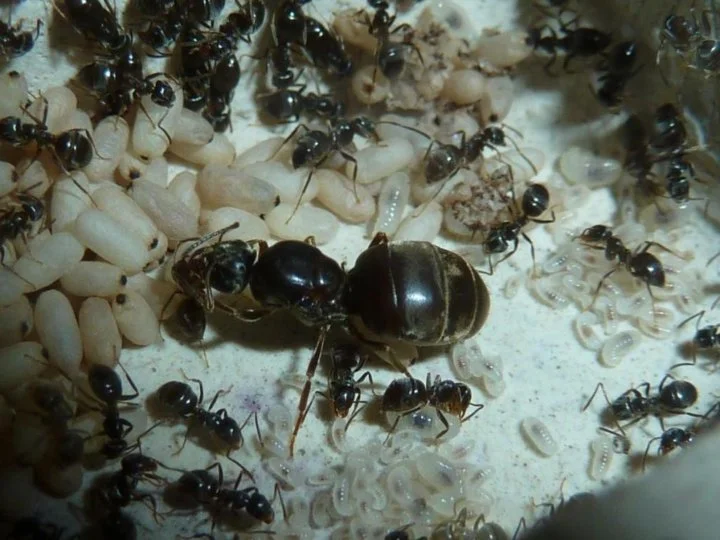
There’s a common assumption that ant nests are shallow — a few centimeters of tunnels just below the surface. The reality of the garden ant underground nest is considerably more involved, and the depth these colonies reach often surprises people.
A mature Lasius niger colony can push tunnels to depths of 60–90 cm, roughly two to three feet below ground. In sandy soils or warmer climates, documented nests have exceeded one meter in depth. These aren’t simple burrows — they’re structured underground systems with distinct functional zones.
| Zone | Depth | Function |
|---|---|---|
| Surface entrance | 0–5 cm | Entry/exit, ventilation |
| Nursery chambers | 5–20 cm | Egg, larval, and pupal care |
| Worker quarters | 20–45 cm | Resting workers, food storage |
| Queen’s chamber | 40–70 cm | Queen residence, egg laying |
| Winter retreat | 60–90 cm+ | Cold-season dormancy |
The positioning of the queen’s chamber at depth isn’t accidental — it places her safely below the frost line while remaining accessible to the workers above. When winter sets in and surface temperatures drop, the entire colony retreats to the deepest chambers, where soil temperature stays reliably above freezing even during hard frosts.
Black Ant Soil Preferences: Not All Ground Is Equal
Black ant soil preferences follow a clear logic once you understand what the colony actually needs from its substrate. It’s not simply about ease of digging — soil type affects temperature retention, structural stability, moisture levels, and ultimately how long a colony can survive in a location.
Soil conditions these ants favor:
- Sandy loam or light clay mix — Easy enough to excavate while structurally sound enough to hold tunnel shapes without constant reinforcement.
- pH range of 6.0–7.5 — The neutral to slightly acidic range typical of most garden soils.
- Low to moderate organic matter — Highly organic compost-rich soil retains too much moisture.
- Good drainage — Waterlogged ground is avoided entirely; standing water collapses tunnels and destroys brood.
- Thermal mass — Darker, denser soils that absorb and hold heat are noticeably preferred over pale, reflective substrates.
Heavy clay is generally avoided — it’s hard to excavate and holds water. Pure sand is workable but structurally unstable, requiring constant maintenance of tunnel walls. The ideal falls between these extremes.
When thinking about the black garden ant habitat in terms of soil, it helps to think of it the way a builder thinks about a construction site. The material has to work with what the colony needs over years, not just months.
Black Garden Ant Burrow Depth and Tunnel Architecture
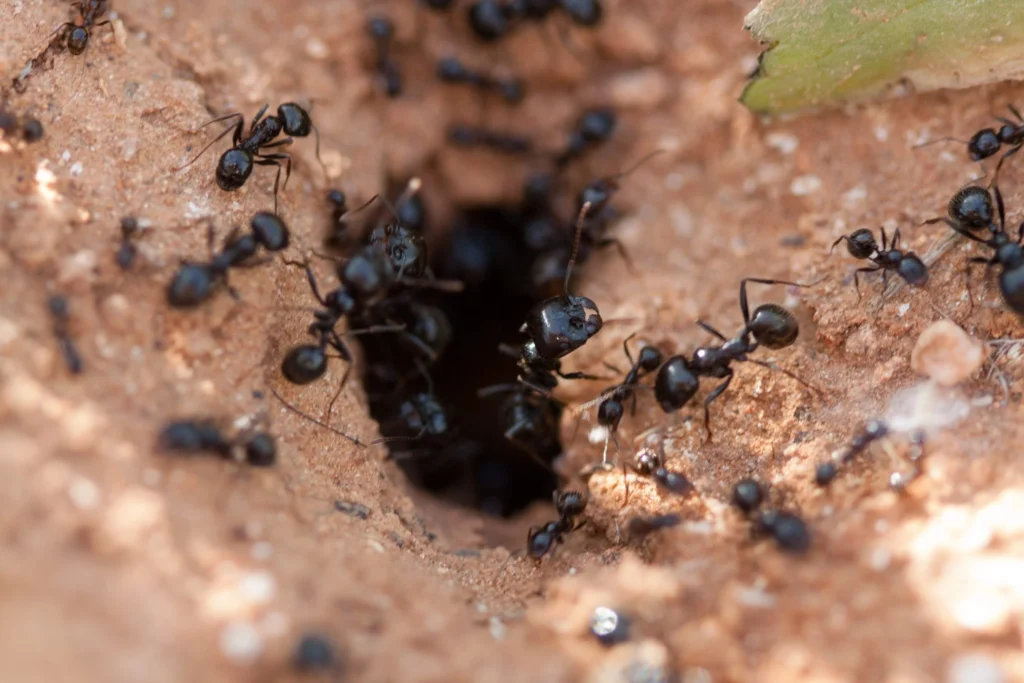
The black garden ant burrow depth isn’t fixed — it shifts with the seasons, the age of the colony, and the specific soil conditions at the nesting site. A colony established by a single founding queen begins within the top 10–15 cm of soil. As worker numbers grow over the following years, excavation extends progressively deeper.
A well-established colony of 5,000–15,000 workers — a normal size for Lasius niger — creates an underground network with genuine structural complexity:
- Multiple entry and exit points spread across a surface area that can span several square meters.
- Ventilation shafts that manage CO₂ levels and airflow through the nest.
- Brood chambers held at temperatures around 25–28°C for optimal larval development.
- Food storage areas containing seeds, insect remains, and honeydew.
- Refuse chambers designated for dead ants and waste, kept physically separate to reduce disease risk.
The tunnel architecture reflects real engineering logic. Wider corridors connect smaller chambers, structural soil pillars support the roof of larger spaces, and weak points are continuously reinforced by workers. Mature nests that have been carefully excavated for study often reveal construction that is genuinely difficult to disrupt without deliberately destroying it.
Common Black Ant Living Environment: Beyond the Garden
The common black ant living environment stretches far beyond the suburban garden where most people encounter this species. Lasius niger has shown remarkable flexibility in adapting to different landscapes, and its presence in so many different settings speaks to how well-suited its biology is to varied conditions.
Habitat types where black garden ants are commonly found:
- Suburban gardens — The most familiar environment; reliable food sources and relatively undisturbed soil.
- Agricultural land margins — Hedgerows, field edges, and the grassy borders of crop land.
- Woodland edges — Where open, sun-exposed ground meets the shelter of tree cover.
- Urban parks and green spaces — Mature parks with mixed ground cover and large trees.
- Coastal grasslands — Sandy substrates and warm microhabitats near the coast.
- Building surrounds — The residual warmth of structures creates year-round habitable conditions.
One aspect of the black garden ant habitat that often gets overlooked is the role of what sits above the nest. Ground cover plants, rock features, paved surfaces, and even shade patterns affect how suitable a site is for long-term occupation. The above-ground environment shapes the below-ground one more than most people realize.
Garden Ant Queen Habitat: The Most Protected Space in the Colony
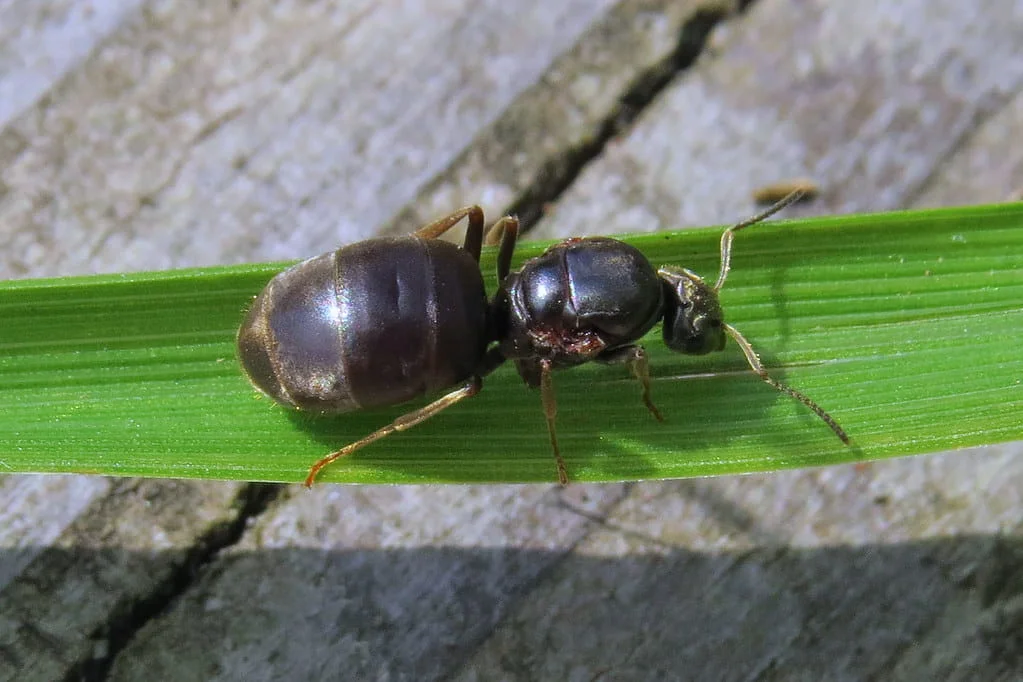
To understand the garden ant queen habitat, you first have to appreciate what the queen means to the colony. A Lasius niger queen can live for up to 15 years — one of the longest recorded lifespans among ant queens anywhere. The colony depends entirely on her continued survival for reproduction, which is why her living conditions are managed with far more care than any other part of the nest.
Her chamber sits at the deepest reachable point during warm months and shifts to the deepest frost-free depth as winter approaches. Workers respond to temperature changes in real time — if conditions in the queen’s current chamber shift outside acceptable parameters, workers physically relocate her to a better-positioned space.
The conditions maintained inside the queen’s chamber are notably specific:
- Temperature held between 25–30°C through the active season.
- Humidity maintained at around 60–70% to prevent egg desiccation.
- Continuous guard presence at all access points.
- Regular food delivery from foraging workers.
- Structural reinforcement of walls and ceiling to resist collapse.
The story of how that chamber first comes to exist is worth knowing. After flying ant day, a newly mated queen lands, sheds her wings, and excavates a tiny sealed chamber just a few centimeters underground — entirely alone. She raises the first generation of workers without eating, drawing entirely on fat reserves and the nutrients released from her metabolized wing muscles. That founding phase, often overlooked, is what makes the entire future black garden ant habitat possible.
Black Ant Foraging Range: How Far from the Nest?
The black ant foraging range has direct practical relevance for anyone trying to understand or manage a garden colony. Workers cover far more ground than most people expect, and the extent of that range shapes where colonies can realistically survive.
Key figures from documented Lasius niger foraging studies:
- Typical daily range: 10–50 meters from the nest entrance.
- Maximum recorded range: Up to 100 meters when food sources are limited.
- Trail marking: Foraging routes are chemically marked with pheromones, creating persistent trails that workers follow repeatedly across days and weeks.
Foraging behavior also determines habitat selection in the first place. A colony won’t survive long in an area where adequate food isn’t available within reasonable travel distance. The presence of aphid-colonized plants, fruit-bearing trees, compost heaps, and accessible kitchen waste all contribute to whether a location remains viable over time.
Temperature shapes foraging schedules too. On warm summer days, workers are most active in early morning and late afternoon, reducing activity during peak heat. In spring, when temperatures are milder, midday foraging is more common. These aren’t rigid patterns — they shift with actual conditions, which is another sign of how adaptable this species is.
Urban Garden Ant Distribution: A Species Thriving in Cities
Urban garden ant distribution research has consistently shown something that surprises many people: Lasius niger doesn’t just tolerate cities — it does better in them than in many rural environments. Several interconnected factors explain this outcome.
- Urban heat island effect — City environments run 2–5°C warmer than surrounding countryside, extending the active season and improving overwintering survival.
- Reduced natural predators — Hedgehogs, ground beetles, and certain bird species that prey on ants are less common in dense urban settings.
- Reliable food availability — Human food waste, ornamental gardens, and aphid-heavy plants create year-round food access.
- Stable nesting sites — Permanent built structures provide consistent, undisturbed nesting conditions across decades.
Population studies tracking ants across urban-to-rural gradients have found Lasius niger densities that are measurably higher in urban gardens than in agricultural land. The black garden ant habitat in a city is, in many ways, a more stable and resource-rich environment than open countryside.
This matters for anyone dealing with garden ant management. Colony populations in urban settings are not declining, and surface-level treatments rarely reach the depth or complexity of a mature nest. Understanding the urban advantage these ants hold is the first step toward realistic management expectations.
Seasonal Behavior and Habitat Changes
The black garden ant habitat shifts through the year in response to temperature, daylight, and colony needs. These seasonal adjustments are deliberate and consistent across all colonies of this species.
Spring (March–May): Workers resume surface activity as soil temperatures rise. Brood is moved upward into shallower, warmer chambers. Foraging begins again in earnest after months of minimal activity.
Summer (June–August): Peak colony activity. Flying ant day — typically triggered by warm, humid conditions in July or August — sees winged males and new queens taking to the air for mating flights. The nest reaches its maximum population during this period.
Autumn (September–November): Surface entrances are progressively sealed. Brood is moved deeper. Food storage activity increases noticeably as workers prepare the colony for winter.
Winter (December–February): The colony enters a period of reduced activity in deep chambers. Surface movement becomes rare. The queen reduces egg-laying significantly, conserving resources until conditions improve.
How to Identify a Black Garden Ant Habitat in Your Garden
Recognizing the signs of an established black garden ant habitat early makes a real difference. A young colony is far easier to address than one that has been developing underground for several years.
Look for these indicators:
- Soil mounds — Small piles of granular, excavated earth near paving edges, plant bases, or lawn margins.
- Persistent foraging trails — Visible columns of workers moving between a fixed point and a food source.
- Fine debris between paving cracks — Excavated material pushed up from below.
- Aphid colonies on plants — Ants actively protecting and tending aphids is a reliable sign of nearby nesting activity.
- Worker activity near wall bases — Workers disappearing into gaps in mortar or the base of brickwork.
Catching these signs early — before a colony reaches tens of thousands of workers — gives you the most realistic options for management.
Comparison: Black Garden Ant Habitat vs. Other Common Garden Ants
| Feature | Black Garden Ant (Lasius niger) | Red Ant (Myrmica rubra) | Yellow Meadow Ant (Lasius flavus) |
|---|---|---|---|
| Nest depth | Up to 90 cm | 15–30 cm | 30–60 cm |
| Preferred soil | Sandy loam | Moist clay | Grassland turf |
| Urban tolerance | Very high | Moderate | Low |
| Colony size | 5,000–15,000 | 100–300 | 5,000–100,000 |
| Foraging range | Up to 100 m | Up to 20 m | Up to 15 m |
| Sting/bite | Bite only | Sting | No sting |
FAQ: Black Garden Ant Habitat
Q: Where do black garden ants prefer to build their nests?
They prefer warm, well-drained soil in sunny locations — under paving slabs, along wall bases, in garden borders, and at lawn edges. Any location offering consistent warmth and minimal ground disturbance is attractive to them.
Q: How deep is a typical black garden ant nest?
Mature colonies reach depths of 60–90 cm. The queen’s chamber sits at the deepest point, while nursery chambers for eggs and larvae are kept at shallower, warmer depths closer to the surface.
Q: Why do black garden ants nest under paving slabs?
Paving absorbs solar heat during the day and radiates it downward through the night. This creates a stable, warm microhabitat that stays warmer than open soil — close to ideal conditions for brood development.
Q: How far do black garden ants travel from their nest?
Workers typically forage between 10 and 50 meters from the nest entrance. In areas where food is limited, ranges of up to 100 meters have been recorded.
Q: What soil type do black garden ants prefer?
Sandy loam or light, well-drained soil with a neutral to slightly acidic pH. Heavy clay and waterlogged ground are avoided because they collapse tunnels and put brood at risk.
Q: How long does a black garden ant colony last in one location?
A colony with a healthy queen can occupy the same site for up to 15 years — matching the maximum recorded lifespan of a Lasius niger queen.
Q: Are black garden ants more common in cities or rural areas?
Research indicates they are often more numerous in urban environments. The heat island effect, reduced natural predators, and consistent food availability from human activity all contribute to higher urban population densities.
Conclusion
There’s something worth respecting about a creature that has quietly colonized almost every garden, park, and city street across three continents. The black garden ant habitat is not a simple thing — it’s a carefully selected, actively managed, and seasonally adjusted living system that reflects genuine biological intelligence.
Understanding where these ants choose to live, how deep they build, what soil conditions they require, and how far their workers travel doesn’t just satisfy curiosity. It gives gardeners, ecologists, and pest professionals a more honest picture of what they’re actually dealing with. Surface-level thinking rarely works with a species that operates 90 cm underground.
Whether you’re watching a foraging trail cross your garden path or dealing with an established colony beneath your patio, the black garden ant habitat deserves to be understood properly — not underestimated. These colonies can persist for over a decade in the right conditions, and that kind of longevity doesn’t happen by accident. It happens because Lasius niger is genuinely very good at what it does.