If you have ever watched a tomato plant slowly decline in a container that was simply too small, you already understand how much the right size matters. The roots have nowhere to go, the plant starts showing stress, watering turns into a constant worry, and by harvest time, the results are disappointing. Picking the best size grow bag for tomatoes is not a complicated decision once you know what the plant genuinely needs — but an uninformed choice early on can quietly affect everything that follows.
This guide covers the full picture: gallon sizes, fabric quality, plant variety differences, root space requirements, and the practical gap between grow bags that produce well and those that fall short.
Why Grow Bags Work Better Than Traditional Pots for Tomatoes
It helps to understand why so many growers have moved away from traditional pots before getting into specific sizes.
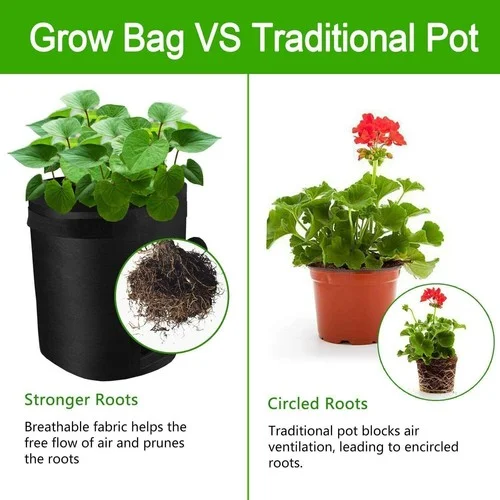
Standard plastic containers trap moisture in ways that are not always good for plant health. When roots reach the wall of a plastic pot, they begin circling and wrapping around themselves — a condition called root binding. That tangled root structure limits how efficiently the plant absorbs water and nutrients, and tomatoes are among the most nutrient-hungry plants you can grow.
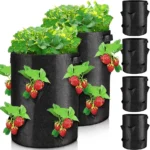
Fabric grow bags behave differently, and this is precisely why choosing the best size grow bag for tomatoes in a breathable fabric material makes such a meaningful difference. When a root tip reaches the edge of a breathable fabric pot, the exposed air naturally stops its growth. The tip dries out, growth halts, and the plant responds by developing more branching roots deeper in the soil.
Gardeners and horticulturists refer to this as air pruning — one of the most compelling reasons why fabric is the preferred material when selecting the best size grow bag for tomatoes. Over a full season, the result is a denser, more active root network that feeds the plant far more efficiently than a circling root system ever could.
Stronger root development leads to better fruit set, more consistent growth, and an overall healthier plant. That said, none of these advantages apply if the bag itself is undersized for the variety you are growing.
The Best Size Grow Bag for Tomatoes: A Direct Answer
The best size grow bag for tomatoes is not a single number. It changes based on the variety, the growing conditions, and how much space you are working with. Here is a practical reference to start with:
| Tomato Type | Minimum Bag Size | Recommended Bag Size |
|---|---|---|
| Cherry Tomatoes | 5 gallon | 7–10 gallon |
| Patio / Dwarf Varieties | 5 gallon | 7 gallon |
| Bush / Determinate | 7 gallon | 10 gallon |
| Indeterminate / Beefsteak | 10 gallon | 15–20 gallon |
| Large Heirloom Varieties | 15 gallon | 20–25 gallon |
For most home gardeners growing standard determinate or semi-determinate varieties, a 10-gallon grow bag hits the right balance. It gives the roots adequate space, holds moisture well between waterings, and stays manageable if you need to reposition containers.
For indeterminate types — Beefsteak, Roma, long-season heirlooms — 15 gallons should be the starting point. These plants grow vigorously throughout the season, and their root systems expand considerably as the weeks progress.
Ideal Grow Bag Gallon Size for Tomatoes: Breaking It Down
5-Gallon Grow Bags
The 5-gallon bag is widely sold and often described as a tomato-friendly option. It can work, but only under the right circumstances.
It makes sense for:
- Compact cherry tomato varieties like Tumbling Tom or Tiny Tim
- Patio tomatoes specifically developed for small containers
- Balcony or rooftop setups where weight and footprint are real constraints
When evaluating the best size grow bag for tomatoes, the honest limitation of a 5-gallon bag is moisture. During warm summer weather, this size can dry out completely within a single day — a reality that quickly reminds growers why size selection matters so much. That kind of repeated moisture stress triggers blossom drop, creates uneven fruit development, and often leads to blossom-end rot. Without twice-daily watering and consistent feeding, a 5-gallon bag is a compromise — and for anyone serious about finding the best size grow bag for tomatoes, that compromise often shows up painfully clear in the final harvest.
10-Gallon Grow Bags
This is where most experienced container growers land, and it is easy to see why. A 10-gallon bag typically offers around 12–14 inches of depth and 13–14 inches of diameter — enough root space to support most tomato varieties through a full growing season without the bag becoming difficult to manage.
Over a standard season, a well-filled 10-gallon bag provides:
- Steadier moisture levels between waterings
- Adequate room for a healthy, branching root network
- Enough nutrient reserve to sustain consistent fruit development without running out mid-season
It is the size most container gardeners return to season after season, and that consistency says a lot.
15-Gallon and 20-Gallon Grow Bags
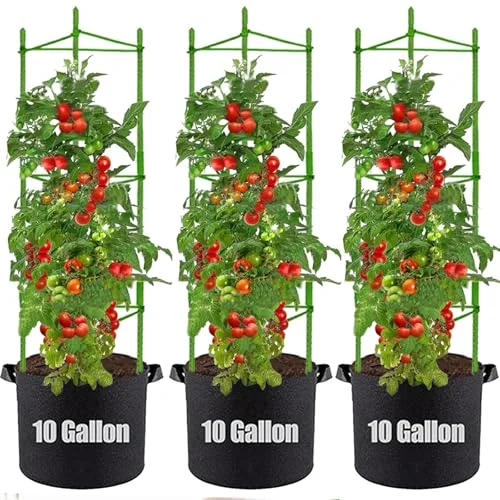
For growers focused on serious tomato production, larger bags deliver results that smaller containers simply cannot match. Indeterminate heirloom varieties that reach five, six, or even eight feet in height need root infrastructure to support that above-ground growth. A 15 or 20-gallon bag provides that foundation.
Beyond root space, the larger soil volume acts as a buffer. It holds more nutrients, resists temperature swings better, and reduces the risk of the plant drying out during a heat wave. The trade-off is weight. A fully watered 20-gallon bag can reach 80 to 100 pounds, so placement needs to be considered carefully before filling.
5-Gallon vs 10-Gallon Grow Bag Tomatoes: A Practical Comparison
This comparison comes up often, so it is worth addressing clearly.
5-gallon bags suit cherry tomatoes and compact patio varieties. They are lighter, less expensive, and easy to store between seasons. The downside is that they demand significantly more attention — more frequent watering, more regular feeding, and very little room for error if temperatures spike unexpectedly.
10-gallon bags offer measurable advantages in day-to-day management. Soil temperature stays more stable. Moisture holds longer between waterings. The plant has enough space to establish a root system that does not immediately hit its limits.
If you are working with a limited budget, understanding which is the best size grow bag for tomatoes becomes even more important before you spend a single dollar. It is worth thinking about this tradeoff carefully: three well-managed 10-gallon bags — widely considered the best size grow bag for tomatoes by experienced container growers — will almost always outperform six crowded 5-gallon bags. Total yield, fruit size, plant health, and even flavor tend to reflect the difference. Spending a little more on the right size upfront is not an extravagance — it is simply the smarter investment when every harvest counts.
Tomato Root Space Requirements in Bags: What the Plant Needs
Tomato roots are more aggressive than most people expect. In open ground under good conditions, a tomato plant’s root system can spread two to three feet wide and reach two feet deep. In a container, you are asking those same roots to work within a defined boundary.
The plant adapts — that is the function of air pruning — but there are limits to how much compression a root system can handle before plant performance declines.
To thrive in a grow bag, tomato roots need:
- Depth: A minimum of 12 inches. Fourteen to eighteen inches is better for most varieties.
- Width: At least 12 inches in diameter, with more space always being beneficial.
- Soil volume: Larger volumes buffer nutrient levels and resist temperature fluctuations.
- Oxygen access: Breathable fabric walls allow gas exchange at the root zone, which actively supports root health.
When root space is restricted, the plant shifts energy toward survival rather than production. Fruits come out smaller, yields drop, and the plant often stalls in the middle of the season without an obvious external reason.
Grow Bag Depth and Width for Tomatoes: The Numbers That Matter
Gallon labels are a useful starting point, but the actual dimensions of a bag — its depth and diameter — are what determine how well a tomato plant can grow in it.
| Bag Size | Approximate Depth | Approximate Diameter |
|---|---|---|
| 5 gallon | 10–11 inches | 10–11 inches |
| 7 gallon | 11–12 inches | 12 inches |
| 10 gallon | 12–14 inches | 13–14 inches |
| 15 gallon | 14–16 inches | 15–16 inches |
| 20 gallon | 16–18 inches | 17–18 inches |
Manufacturing is not perfectly standardized across the industry, and this is something every grower searching for the best size grow bag for tomatoes should keep in mind. A “10-gallon” bag from one supplier may hold noticeably less than a 10-gallon bag from another. Reputable brands that specialize in the best size grow bag for tomatoes typically list both the volume and the physical dimensions clearly on their packaging or product pages. When purchasing, checking both measurements is a straightforward step that prevents a frustrating mismatch — and ensures the size you are paying for is the size your tomato roots will actually grow into.
Fabric Grow Bags for Tomato Gardening: Why Material Matters
The material a grow bag is made from has a direct effect on drainage, air pruning performance, structural durability, and how many seasons it remains usable.
Non-Woven Polypropylene Felt
This is the most commonly used material across the market. It is breathable, lightweight, and available at accessible price points. Thickness is measured in grams per square meter (GSM):
- 200–300 GSM: Thinner and budget-friendly, typically lasting one to two seasons
- 300–400 GSM: Mid-range durability, suitable for two to three seasons with proper storage
- 400+ GSM: Heavy-duty construction, better shape retention, and a lifespan of four or more seasons
For tomatoes specifically, a thicker fabric is a worthwhile investment. Tomatoes grow heavy and need consistent deep watering — conditions that wear through lighter materials faster.
Recycled Fabric Bags
A growing number of manufacturers now produce grow bags using recycled PET materials, often derived from plastic bottles. These bags tend to be slightly more rigid and marginally less breathable than raw felt alternatives, but they are more environmentally responsible and often hold up well over multiple seasons.
What to Avoid
Any bag with a plastic liner or non-breathable inner coating is counterproductive for tomato growing. Air pruning cannot happen through a sealed surface, root circling returns, and drainage becomes unpredictable — which defeats the core reason for choosing fabric in the first place.
Best Grow Bags for Container Vegetable Gardening: Thinking Beyond Tomatoes
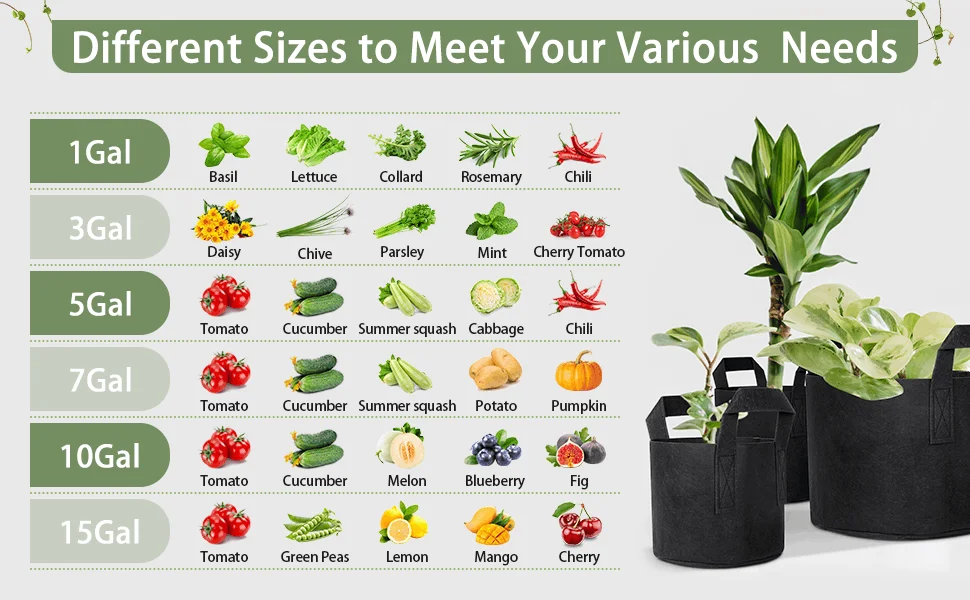
The same principles that guide tomato grow bag selection apply broadly to other fruiting and root vegetables. If you are planning a full container garden, here is a general size reference:
- Peppers: 5–7 gallon
- Cucumbers: 5–10 gallon, depending on the variety
- Eggplant: 5–7 gallon
- Zucchini / Squash: 10–15 gallon minimum
- Potatoes: 10–15 gallon, ideally with side-access flap bags designed for harvesting
Keeping consistent bag sizes across your garden also simplifies care routines. Watering schedules and fertilizing intervals can be standardized more easily when the soil volumes are similar — a practical benefit that becomes more noticeable as the garden grows.
Large Grow Bags and Tomato Yield: Does Sizing Up Actually Help?
The evidence is consistent: larger containers produce more tomatoes when other growing factors are held equal.
Comparisons between container sizes show that plants growing in 15-gallon or larger bags regularly produce significantly more fruit by weight than those in 5-gallon containers. The difference over a full growing season can range from 40 to 60 percent in total yield.
The reasoning is not complicated:
- A larger root system absorbs nutrients more effectively
- Better nutrient uptake supports more consistent fruit development
- More consistent development produces higher yields, larger individual fruits, and fewer issues like blossom-end rot
This does not mean that every grower should automatically reach for the largest available size. A 25-gallon bag on a narrow balcony creates real logistical problems. But when space genuinely allows, moving up in bag size is one of the more reliable ways to improve harvest results without changing anything else.
Common Mistakes When Choosing Grow Bag Sizes for Tomatoes
These errors appear regularly, even among gardeners with several seasons of experience:
Choosing a smaller bag to reduce cost. The upfront savings of three to five dollars rarely compensates for the yield loss that follows. The math works against this approach almost every time.
Trusting gallon labels without checking dimensions. Volume measurement practices vary between manufacturers. Always confirm actual depth and diameter, not just the stated gallon size.
Treating all tomato varieties as equivalent. A compact cherry tomato and a large-fruiting beefsteak have meaningfully different root requirements. Size the bag to the plant, not to a general category.
Overfilling bags and leaving no room for maintenance. Potting mix settles and compresses through the season. Fill bags to one to two inches below the rim to allow for topdressing with compost as the season progresses.
Using garden soil in containers. Garden soil compacts in pots, restricts drainage, and creates an environment where roots struggle to function. A quality potting mix designed specifically for containers is not optional — it is foundational.
How to Get the Most from Your Tomato Grow Bags
Finding the best size grow bag for tomatoes is an important first step, but what comes after planting determines how productive the season actually becomes.
- Prepare the bag before transplanting. Fill it with potting mix, water it thoroughly, and allow it to settle. Top it up if needed before the plant goes in so the root zone starts at the right level.
- Begin feeding from week three. Container plants have no soil reserves to draw from beyond what you provide. A balanced liquid fertilizer applied every seven to ten days during the active growing season is a reliable baseline.
- Water based on soil condition, not schedule. Push a finger two inches into the soil. Water thoroughly when it feels dry. If moisture is still present, hold off. Overwatering in fabric bags is less common than in plastic pots, but still possible in cool or overcast conditions.
- Mulch the soil surface. A one-inch layer of straw or wood chip mulch placed over the potting mix reduces surface evaporation significantly, which makes moisture management considerably easier.
- Install supports at transplant time. Stakes or cages placed at planting cause far less root disturbance than those pushed in after the plant is established and roots have spread.
FAQ: Best Size Grow Bag for Tomatoes
Q: What is the best size grow bag for tomatoes for a first-time grower?
A 10-gallon bag is the most practical starting point. It works for most standard varieties, holds moisture at a manageable level, and gives you enough margin if your watering schedule is not perfectly consistent.
Q: Can tomatoes grow in a 5-gallon grow bag?
Yes, for smaller varieties like cherry or patio types. For most standard or large-fruiting tomatoes, a 5-gallon bag will restrict root development and require very frequent watering to prevent stress.
Q: How many tomato plants should go in one grow bag?
One plant per bag, regardless of size. Tomatoes need the full volume of soil available to them. Two plants competing for the same root space will each underperform compared to plants grown individually.
Q: Do fabric grow bags lose moisture faster than plastic containers?
Somewhat, yes. Breathable walls allow a small amount of evaporation through the sides. With sensible watering habits, this is manageable, and the benefits of air pruning more than offset the slight increase in watering frequency.
Q: How many growing seasons will a fabric grow bag last?
A bag in the 300 GSM range or above typically holds up for three to five seasons when rinsed after use, dried before storage, and kept away from direct sunlight when not in use.
Q: What is the minimum depth a tomato grow bag should have?
Twelve inches of usable soil depth is the practical minimum. Indeterminate varieties and larger heirloom types will benefit from fourteen to eighteen inches.
Q: Is it worth spending more on a 15-gallon grow bag instead of a 10-gallon?
For indeterminate varieties, yes. The additional root space supports sustained growth across a long season, and the difference typically shows up clearly in total yield and fruit size by the end of summer.
Conclusion: Give Your Tomatoes the Space They Deserve
After all the charts and comparisons, it really comes down to something simple — tomatoes are generous plants. Give them room to grow, and they will reward you far beyond what you put in. Crowd them into a bag that is too small, and they will spend the whole season just trying to survive.
You do not need to overthink this. If you are just starting out, grab a 10-gallon bag, pick a variety you are excited about, and pay attention to what the plant tells you through the season. If you have grown tomatoes in containers before and felt like something was always slightly off — the yields were smaller than expected, the plant looked tired by midsummer — there is a good chance the bag was the quiet culprit all along.
Gardening teaches patience in the best way possible. Each season you learn something new — about your plants, your space, and what actually works for you. Choosing the right grow bag is just one piece of that, but it is a piece that sets everything else up for success.
So go a size bigger than you think you need, fill it with good potting mix, water it with care, and then let the plant do what it was built to do. Come harvest time, you will be glad you gave it the space.