Introduction
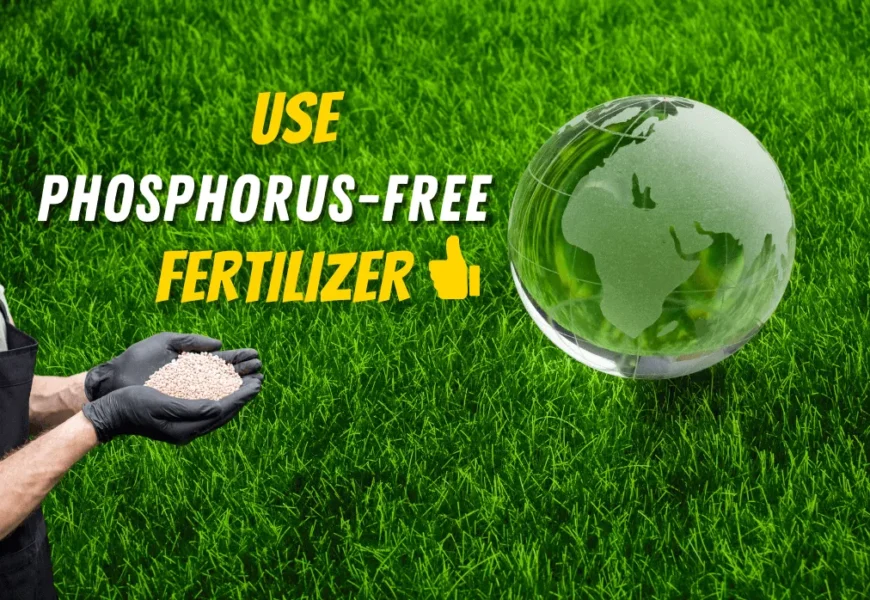
Walk through any garden center these days and you’ll notice something a little different on the fertilizer shelves. Bags marked “28-0-6” or “32-0-10” sit right alongside the traditional three-number blends — and that zero in the middle isn’t a printing error. It’s a deliberate choice. Phosphorus free lawn fertilizer has grown from a niche product into a mainstream category, and the reasons behind that shift are worth understanding before your next application season.
The core idea is straightforward: most established lawns across North America are already carrying more phosphorus in their soil than they’ll ever use. Decades of conventional fertilizing — using the same all-purpose formula year after year — have left residential soils saturated with a nutrient that grass simply doesn’t need in additional quantities. Applying more doesn’t produce a greener lawn. It produces runoff that ends up feeding algae blooms in the nearest lake or river.
Several states, including Minnesota, Wisconsin, New York, and Maryland, have moved past recommendations and made phosphorus restrictions the law. Others are close behind. Even where the rules haven’t changed yet, homeowners who’ve done their homework are making the switch voluntarily.
This guide covers everything you need to know about phosphorus free lawn fertilizer — what it actually is, when it makes sense to use it, how to decode NPK labels, which product types perform best, and what your state may require. If you manage your own lawn and want to make smarter, more informed decisions, this is a good place to start.
What Is Phosphorus Free Lawn Fertilizer?
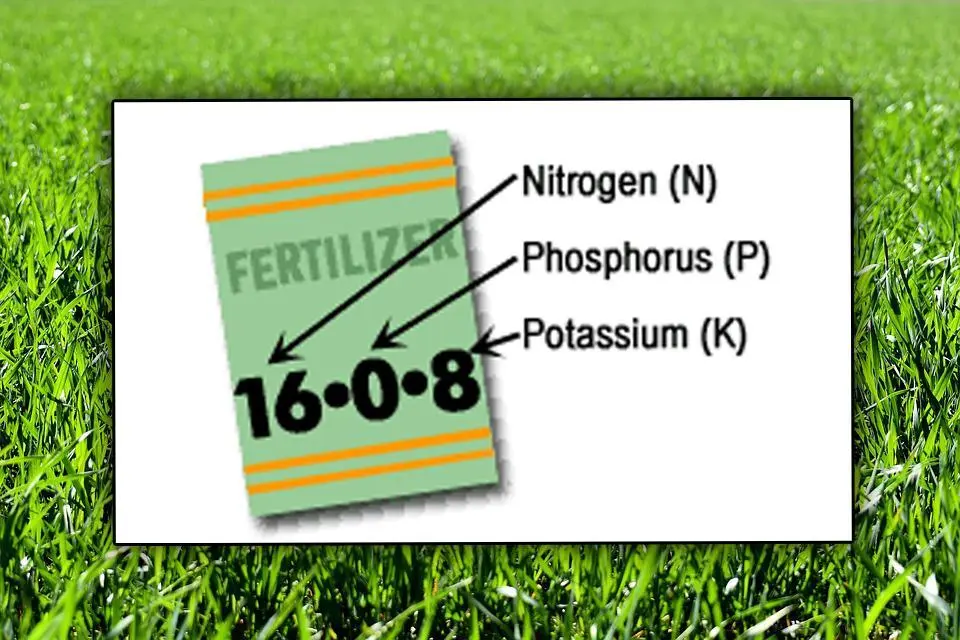
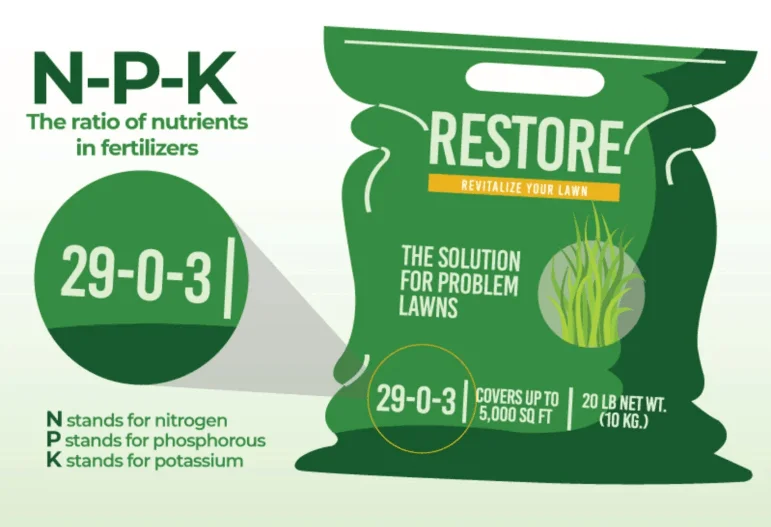
At its most basic, phosphorus free lawn fertilizer is a product formulated without any phosphorus in the nutrient mix. Every fertilizer bag sold in the U.S. displays three numbers in a specific order — N-P-K — representing nitrogen, phosphorus, and potassium, measured as a percentage of total weight. A phosphorus free product will always carry a zero in the middle position. Formulas like 28-0-6 or 32-0-10 are classic examples.
These products go by several names depending on the context:
- Nitrogen only lawn fertilizer — used when potassium is also excluded from the blend
- Low phosphorus grass fertilizer — describes products where trace phosphorus may remain from raw materials, but none is intentionally added
- Zero phosphorus turf fertilizer — a marketing phrase used by brands targeting environmentally conscious buyers
- NPK fertilizer without the middle number — the informal way most homeowners describe it when searching online
The manufacturing process itself is simple. Phosphate compounds like superphosphate or monoammonium phosphate (MAP) are left out of the formulation entirely. What remains is a nitrogen-and-potassium blend that feeds actively growing grass without adding to the phosphorus already present in the soil.
There’s one important exception worth keeping in mind: phosphorus does play a genuine role during the early stages of root development. If you’re seeding a new lawn from scratch or overseeding bare patches, phosphorus matters. For a lawn that’s already established with a healthy, developed root system, the phosphorus sitting in your soil is almost certainly doing the job on its own.
Why Your Lawn Probably Doesn’t Need Phosphorus
This tends to be the part that catches people off guard. Most homeowners assume that more nutrients equal better results. With phosphorus, that logic breaks down entirely for established turf.
A soil test — genuinely the most useful thing you can do before any fertilizer purchase — will almost always show that your lawn’s phosphorus levels are adequate or higher. Research from the University of Minnesota Extension found that more than 90% of home lawns in their state showed no phosphorus deficiency at all. Minnesota isn’t an outlier. This pattern holds across most of the country.
The reason for the surplus comes down to chemistry and history. For decades, standard lawn fertilizer formulas contained phosphorus as a matter of routine, regardless of whether individual soils needed it. Season after season, that phosphorus accumulated. Unlike nitrogen, which can escape the soil through leaching or volatilization, phosphorus binds tightly to soil particles. It doesn’t move on its own. It stays, and it builds.
Once those levels are high enough, adding more doesn’t give you anything. The grass is already well supplied. What happens instead is that rain and irrigation carry phosphorus-rich soil particles into storm drains and from there into streams, rivers, and lakes. In the water, that phosphorus triggers rapid algae growth — a process called eutrophication. The resulting blooms deplete dissolved oxygen, kill fish, generate toxic cyanobacteria, and damage water quality in ways that take years to recover from.
Runoff-safe lawn fertilizer — another way of describing phosphorus free products — addresses this problem at the source. Your lawn gets the nitrogen and potassium it actually needs. The watershed doesn’t absorb nutrients it wasn’t meant to receive.
A standard soil test through your local cooperative extension office typically costs $15 to $25. In most cases, the results confirm what extension researchers have been saying for years: you’ve been purchasing a nutrient your lawn wasn’t requesting.
Phosphorus Fertilizer Regulations by State
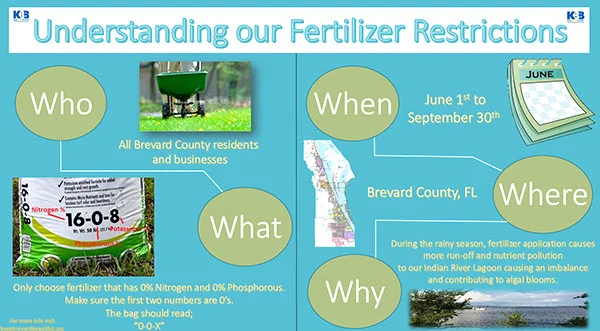
For some homeowners, switching to phosphorus free lawn fertilizer isn’t a personal preference — it’s a legal requirement. Phosphorus restricted fertilizer regulations have expanded steadily since Minnesota became the first state to enact a statewide ban in 2004. The trend has only accelerated since then.
States With Active Phosphorus Restrictions or Bans
| State | Restriction Level | Key Rule |
|---|---|---|
| Minnesota | Full ban | No phosphorus in lawn fertilizer unless a soil test documents deficiency, or the application is for new turf establishment |
| Wisconsin | Full ban | Mirrors Minnesota’s framework; new turf is excepted |
| New York | Full ban | Covers both homeowners and licensed commercial applicators |
| Maryland | Full ban | Part of the broader legislative package protecting the Chesapeake Bay |
| Illinois | Partial | Chicago and several major municipalities restrict phosphorus use |
| New Jersey | Full ban | Passed specifically to protect coastal waterways |
| Maine | Full ban | Statewide ban with allowance for documented soil deficiency |
| Michigan | Full ban | Enacted in 2010; applies to residential and commercial accounts alike |
Pennsylvania, Virginia, and Connecticut are among the states with partial restrictions or active legislation in progress. Lawn fertilizer for states with phosphorus bans has become a recognized market category, and most major brands now produce compliant formulations specifically for regulated markets.
If you’re not certain about your state’s current rules, your county cooperative extension office will have accurate, up-to-date information. State department of agriculture websites are also a reliable source.
Reading the NPK Label: What the Numbers Mean
Before you can confidently choose a phosphorus free product, you need to be comfortable reading fertilizer labels. The three numbers displayed on every bag represent the percentage by weight of three primary nutrients:
- N (Nitrogen): Fuels leaf and blade growth and gives grass its deep green color
- P (Phosphorus): Supports root development, particularly critical during germination and early establishment
- K (Potassium): Strengthens stress tolerance, helping grass hold up through heat, cold, and drought cycles
Any product showing zero in the middle position is a phosphorus free lawn fertilizer. Some common configurations and their appropriate uses:
28-0-6 — High nitrogen with modest potassium. A reliable choice for established cool-season grasses like tall fescue and Kentucky bluegrass during spring green-up.
32-0-10 — Very high nitrogen paired with meaningful potassium. Works well for warm-season grasses like Bermudagrass and Zoysia that require extra potassium support during summer heat.
18-0-18 — An equal nitrogen-to-potassium ratio. Particularly well-suited to fall applications on cool-season lawns heading into winter dormancy.
10-0-6 (slow release) — A lower-analysis formula with extended release characteristics. Many professional lawn care operators favor this type for its consistent 8–12 week feeding window and minimal burn risk.
The rule is simple: zero in the middle, no phosphorus in the bag.
Best Types of Phosphorus Free Lawn Fertilizer
Phosphorus free products aren’t all built the same way. The right choice depends on your grass type, the time of year, and what your soil test reveals about existing nutrient levels.
1. Quick-Release Nitrogen Formulas
Urea and ammonium sulfate are the most common nitrogen sources in quick-release products. Results come fast — visible greening typically within five to seven days. The tradeoff is a shorter effective window, usually four to six weeks, and a higher potential for burn if rates or timing are off.
Best for: Spring green-up, rapid recovery after drought or disease pressure, situations where visible results are needed quickly.
2. Slow-Release (Controlled-Release) Nitrogen Formulas
Slow-release phosphorus free lawn fertilizer relies on polymer-coated urea, sulfur-coated urea, or organic nitrogen sources that release nutrients gradually over eight to sixteen weeks. These formulas are far more forgiving — burn risk is low, applications stretch further apart, and grass growth stays steady rather than spiking and crashing between feedings.
Best for: Summer maintenance, homeowners who prefer fewer annual applications, any situation where burn risk needs to stay low.
3. Organic-Based Phosphorus Free Options
Fertilizers built from composted poultry manure, feather meal, blood meal, or soybean meal can deliver nitrogen without the synthetic phosphorus found in conventional blends. This category requires careful label reading — some natural fertilizers do carry measurable phosphorus as a byproduct of their organic ingredients. Truly phosphorus free options exist within the organic segment, but they take more effort to identify.
Best for: Homeowners prioritizing environmental responsibility, organic lawn care programs, properties located adjacent to sensitive waterways.
4. High-Potassium Stress Blends
Some phosphorus free fertilizer formulations weight potassium heavily over nitrogen — blends like 12-0-24 or 15-0-30 fall into this category. They’re designed for late-season applications or periods of significant heat and drought stress, when grass needs potassium for cell strength and water regulation more than it needs a nitrogen push.
Best for: Fall feeding before dormancy, lawns recovering from heat or dry-season stress, transitional zone grasses managing both cool and warm season conditions.
When to Use Phosphorus Free Lawn Fertilizer
Choosing the right product is half the equation. Applying it at the right time is the other half.
Early Spring (Soil Temperature: 50–55°F) Start conservatively. A quick-release phosphorus free formula helps grass come out of dormancy and begin green-up, but grass roots are still in rebuilding mode at this stage. Heavy early feeding encourages top growth at the expense of root development, which creates problems later in the season.
Late Spring (April–May) This is the ideal window for phosphorus free lawn fertilizer application. Grass is growing actively, roots are established and absorbing nutrients efficiently, and the heat that would complicate feeding hasn’t arrived yet. A slow-release product applied now can carry your lawn through early summer without a repeat application.
Summer (June–August) Cool-season grasses benefit from light or no feeding during peak summer heat. If you do apply, a low-nitrogen, higher-potassium phosphorus free blend — something in the 12-0-18 range — supports stress tolerance without pushing growth the plant can’t sustain in high temperatures. Warm-season grasses like Bermudagrass and Zoysia handle summer feeding better and may benefit from a full nitrogen application during their active growing period. Always water in after summer applications.
Fall (September–October) For cool-season grasses, fall is arguably the most important feeding window of the year. A high-nitrogen phosphorus free product applied in September promotes root development and carbohydrate storage before winter. Many turf professionals put their primary budget here for exactly that reason.
One consistent rule across all seasons: don’t apply phosphorus free lawn fertilizer — or any fertilizer — immediately before significant rain is forecast. Runoff washes nutrients away before the grass can absorb them, which defeats both the investment and the environmental purpose of choosing a runoff-safe product.
Comparison: Phosphorus Free vs. Standard Lawn Fertilizer
| Feature | Phosphorus Free | Standard (with Phosphorus) |
|---|---|---|
| Environmental impact | Low — meaningfully reduces runoff risk | Higher — contributes to eutrophication in waterways |
| Legal compliance | Compliant in all phosphorus-ban states | May be illegal in 8+ states |
| Effectiveness for established lawns | Equal or better — delivers what grass actually needs | Often adds a nutrient the soil already has in excess |
| Root development (new seeding) | Not ideal — phosphorus is genuinely needed at this stage | Better choice for new lawn establishment |
| Cost | Comparable to standard products | Same general price range |
| Availability | Widely stocked at major retailers | Widely available |
| Recommended by extension offices | Yes — when soil test confirms adequate phosphorus levels | Only when soil test documents a deficiency |
For established lawns, phosphorus free lawn fertilizer holds up equally well against standard formulas in every performance category that matters — and carries meaningful advantages on the environmental and legal side.
Common Mistakes When Using Phosphorus Free Fertilizer
A well-chosen product can still produce disappointing results if the application goes wrong. These are the mistakes that show up most consistently:
Skipping the Soil Test No fertilizer program works as well without a soil test behind it. Switching to phosphorus free fertilizer for the right reasons still leaves you guessing if you don’t know your soil’s nitrogen availability, potassium level, and pH. A $20 soil test eliminates most of the guesswork and makes every subsequent decision more accurate.
Applying at the Wrong Rate High-nitrogen phosphorus free products are effective precisely because nitrogen drives growth. Applying too much accelerates top growth, weakens root development, increases disease vulnerability, and can burn turf — especially in warm or dry conditions. Follow label rates, and when conditions are stressful, stay 10 to 15 percent below the maximum recommended dose.
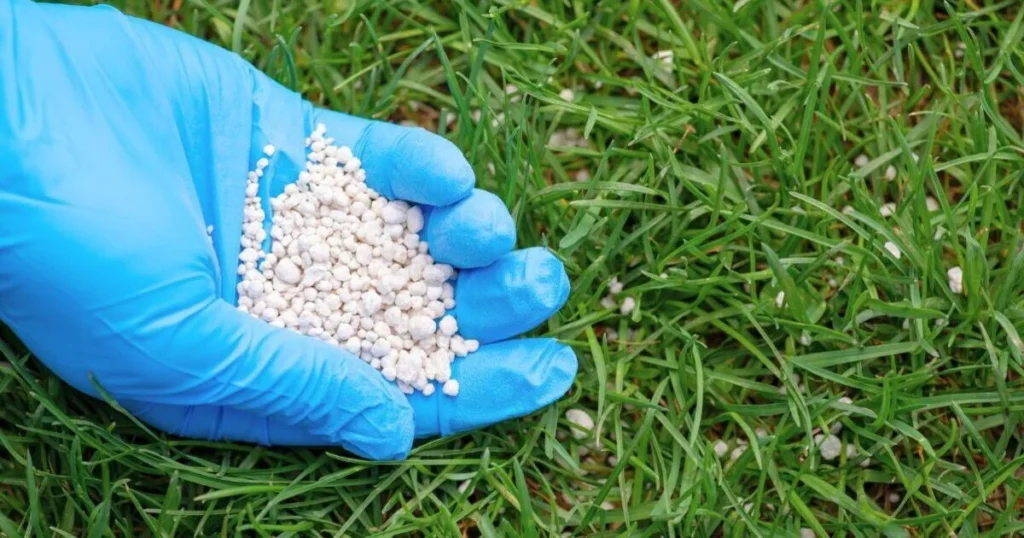
Not Watering After Application Granular phosphorus free lawn fertilizer sits on top of the soil until it’s activated. Water it in thoroughly — 20 to 30 minutes of irrigation moves the nitrogen down into the root zone where it’s accessible and reduces the chance of burn on leaf blades.
Using Phosphorus Free During New Seeding This is the one situation where phosphorus genuinely earns its place. Seedling roots are building themselves from nothing, and phosphorus supports that early development in ways no nitrogen-potassium blend can replace. Use a purpose-made starter fertilizer — typically something in the 10-18-6 range — for new seeding or bare-area overseeding, then move to phosphorus free maintenance fertilizer once the lawn is fully established.
Environmental Benefits: Why This Goes Beyond Your Lawn
Choosing phosphorus free lawn fertilizer has consequences that extend well past your property line. Phosphorus runoff from residential lawns has been documented as a significant contributor to harmful algal blooms (HABs) in lakes, rivers, and coastal waterways across the country.
EPA data indicates that more than 50% of U.S. lakes and rivers are currently impaired by nutrient pollution of some kind. Lawn fertilizer isn’t the only source, but it’s a measurable one. Applying a runoff-safe lawn fertilizer correctly and responsibly is a concrete, individual-level action with real downstream effects.
Water bodies like Lake Erie, the Chesapeake Bay, and thousands of smaller lakes with dedicated restoration programs specifically identify residential phosphorus reduction as part of their recovery strategy. Some municipalities have responded by offering rebates to homeowners who switch to phosphorus free products and provide documentation of soil testing.
There’s also a soil health dimension that often goes unmentioned. Excessive phosphorus in the soil can suppress mycorrhizal fungi — the underground network of beneficial organisms that help grass roots access water and trace nutrients. When phosphorus inputs drop to levels the soil actually needs, that microbial community recovers. The result is a lawn with better natural resilience and less dependence on repeated inputs to maintain its condition.
Frequently Asked Questions
Q: Is phosphorus free lawn fertilizer safe for pets and children?
The safety profile of phosphorus free fertilizers is essentially the same as any granular lawn fertilizer. Keep children and pets off the treated area until the product has been watered in and the lawn surface is completely dry — generally 24 to 48 hours. Check the specific product label for any additional guidance, since formulations vary.
Q: Can I use phosphorus free fertilizer if I’m seeding new grass?
For new seeding or overseeding bare areas, a starter fertilizer with phosphorus is the better choice. Phosphorus free lawn fertilizer is designed specifically for established turf where root systems are already developed. Once new grass has germinated and reached the point of its second or third mowing, transitioning to a phosphorus free maintenance formula makes sense.
Q: How do I find out if my state restricts phosphorus in lawn fertilizer?
Your county cooperative extension office is the most reliable first contact. Your state’s department of agriculture website will also carry current rule information. States with confirmed restrictions as of 2025 include Minnesota, Wisconsin, New York, New Jersey, Maryland, Maine, Michigan, and Illinois in its major municipalities.
Q: Does phosphorus free fertilizer work as well as regular fertilizer?
For established lawns, yes — and in some respects, better. When soil already contains adequate phosphorus, adding more through fertilizer has no measurable effect on the grass. You’re spending money on a nutrient the lawn isn’t using. A properly balanced nitrogen-potassium blend gives grass what it actually needs, and nothing extra.
Q: What NPK ratio should I look for in phosphorus free fertilizer?
For spring and general maintenance feeding, the 24-0-6 to 32-0-10 range covers most cool-season lawns well. Fall applications on cool-season grass benefit from a higher potassium percentage — something near 18-0-18 is a common recommendation. Warm-season grasses in summer often do well with ratios like 15-0-15 or 12-0-24.
Q: How often should I apply phosphorus free lawn fertilizer?
Slow-release products applied three to four times per year handle most cool-season lawn programs effectively. Warm-season grasses, which grow actively through a longer seasonal window, may benefit from four to six applications spread across their growing season. Soil test results and grass type will give you the most accurate answer for your specific situation.
Q: Will phosphorus free fertilizer make my lawn as green as regular fertilizer?
Yes, with no meaningful difference. Lawn color is primarily a nitrogen response. A high-nitrogen phosphorus free formula delivers the same depth of green as any standard product — sometimes faster, since the entire active portion of the formula is directed toward what grass visually responds to most.
Conclusion
Lawn care doesn’t have to be complicated, but it does reward paying attention to the details. Phosphorus free lawn fertilizer is one of those details that makes a genuine difference — not just for your grass, but for the water running off your property every time it rains.
The honest truth is that most lawns have been receiving phosphorus they never needed. Not because homeowners were careless, but because the standard bag on the shelf always included it, and nobody questioned why. Now that the science is clearer and the regulations are catching up, making a more informed choice is easier than ever.
Get a soil test done. Read the middle number on the label before you buy. Choose a formula that matches what your lawn actually needs at that point in the season. Water it in properly. These aren’t complicated steps — they’re just more deliberate ones.
A healthy, green lawn and a responsible approach to what goes into the soil aren’t competing goals. With phosphorus free lawn fertilizer, they happen at the same time. That’s a straightforward win for your yard, your local waterways, and honestly, your fertilizer budget too.
Your lawn is going to be fine without the phosphorus. It probably always was.