If you’ve ever set a cactus on your windowsill and quietly wondered whether it’s doing anything useful for the air around you — you’re asking a question more people have than you might think. It seems simple on the surface, but the answer opens up a genuinely interesting corner of plant biology.
So, do cactus produce oxygen? Yes, they do. But the how and the when are what set cacti apart from nearly every other plant you’d find at a garden center. Once you understand that difference, you’ll likely look at these low-maintenance plants with a lot more respect — and maybe start thinking about where else in your home they belong.
How Do Plants Produce Oxygen in the First Place?
To appreciate what makes cacti special, it helps to start with the basics that apply to all green plants.
Plants produce oxygen through photosynthesis — a process where they absorb sunlight, pull in carbon dioxide (CO₂) from the air, and use those two ingredients to produce glucose for energy. Oxygen comes out as a byproduct of that reaction. For the vast majority of plants, this only happens during daylight hours, when sunlight is available to power the process.
The core equation is straightforward:
CO₂ + Water + Sunlight → Glucose + Oxygen
Common houseplants — pothos, peace lilies, snake plants — all follow this same daytime pattern. They take in CO₂ during the day, release oxygen during the day, and then at night they flip into respiration mode. That means they actually consume a small amount of oxygen and release CO₂ while you sleep.
Cacti took a completely different evolutionary path.
Do Cactus Produce Oxygen the Same Way as Other Plants?
Here’s where the biology gets genuinely interesting. Do cactus produce oxygen through the same mechanism as a pothos or a fern? Not exactly — they get to the same destination through an entirely different route.
Cacti rely on a metabolic process called CAM photosynthesis, which stands for Crassulacean Acid Metabolism. This pathway developed in plants that evolved in hot, dry environments where losing water during the heat of the day could mean death.
Here’s how the process actually works:
- At night: Cacti open their stomata — the tiny pores on the plant’s surface — and pull CO₂ in from the surrounding air. That CO₂ gets stored as malic acid inside the plant’s cells, essentially held in reserve.
- During the day: The stomata close tight to prevent water loss, and the stored CO₂ is released internally to drive photosynthesis using available sunlight.
- Oxygen is produced as a result of that daytime photosynthesis — even though the plant’s pores are sealed shut on the outside.
It’s an elegant solution to a harsh environment. And when it comes to the question of do cactus produce oxygen — the answer is yes, and they do it in a way that’s smarter and more water-efficient than most plants you’d encounter.
Do Cacti Release Oxygen at Night?
This part tends to surprise people. Do cacti release oxygen at night? The answer is: to some extent, yes — and that’s exactly what makes them worth considering as bedroom plants.
When cacti open their stomata at night to draw in CO₂, the process involves some degree of gas exchange that includes a modest release of oxygen. The bulk of their oxygen production still takes place during daylight hours through photosynthesis, but the nighttime CO₂ absorption phase contributes positively to the air around them — rather than depleting it.
This is the key distinction that plant researchers and botanists point to when recommending CAM plants for sleeping spaces. Most standard houseplants work against you at night by consuming oxygen and releasing CO₂. Cacti, along with other CAM plants, do the opposite — absorbing CO₂ and contributing to the air quality while you rest.
Will a single small cactus on your nightstand make a dramatic difference? Probably not on its own. But when you understand do cactus produce oxygen through the CAM process, it becomes clear that a cactus fills a role that most other plants simply cannot. As part of a thoughtful mix of indoor plants, the real value of asking do cactus produce oxygen is not just about the amount of oxygen produced — it is about when that oxygen is produced and how that timing works in your favor while you sleep.
Cactus CAM Photosynthesis — A Deeper Look
To truly understand cactus CAM photosynthesis, it helps to think about the problem these plants were solving when they evolved this pathway.
Desert plants face a ruthless tradeoff. To photosynthesize, they need CO₂ — which means opening their stomata. But in intense daytime heat, open stomata also means rapid water loss through evaporation. For a plant in an arid environment, that’s not a sustainable situation.
Cacti solved this by separating the two steps of the process. They collect their CO₂ raw material at night when temperatures are lower and water loss is minimal, then process it during the day when sunlight is available but the stomata remain safely closed.
Here’s how cacti compare to standard plants in this regard:
| Feature | Standard Plants (C3) | Cacti (CAM) |
|---|---|---|
| Stomata open | Daytime | Nighttime |
| CO₂ absorption | Daytime | Nighttime |
| Oxygen release | Daytime | Daytime (internally driven) |
| Water efficiency | Low–Medium | Very High |
| Best environment | Humid, temperate | Arid, hot |
Other plants that share this CAM pathway include aloe vera, agave, orchids, and bromeliads. It’s one of the reasons you’ll often see cacti and succulents grouped together in plant care guides focused on bedroom air quality — they share the same core metabolic behavior.
Cactus Oxygen Production Rate — What the Numbers Say
It’s worth being straightforward about the cactus oxygen production rate compared to leafy houseplants. Cacti produce less oxygen by volume than broad-leafed plants, and the reason is simple: surface area.
Oxygen production scales with the amount of chlorophyll-rich tissue exposed to light. A cactus’s fleshy green stem does contain chlorophyll and does photosynthesize — but its total surface area is considerably smaller than a large Monstera leaf or a trailing pothos vine.
A practical comparison:
- Large Monstera or Pothos: moderate-to-high daily oxygen output.
- Large columnar cactus (Saguaro, San Pedro): moderate oxygen output.
- Small desktop cactus: low-to-modest oxygen output.
The honest takeaway is that a cactus isn’t the highest-performing oxygen producer in the room. But when people ask do cactus produce oxygen, the answer goes beyond simple volume — that’s not really its value proposition. What a cactus offers is timing — contributing to the air during periods when other plants are doing nothing useful or actively consuming oxygen.
Understanding do cactus produce oxygen in this context makes it clear that a cactus brings something genuinely useful to your indoor space, just in a smarter and more strategic way than most people expect.
Plant specialists often suggest pairing cacti with high-output plants like spider plants, snake plants, or pothos. Each covers what the other lacks, giving you a more complete indoor air system across the full day.
Indoor Cactus Air Purification — What’s Real, What’s Overstated
Indoor cactus air purification gets talked about online with varying degrees of accuracy, so it’s worth separating what the evidence actually supports from what’s been exaggerated.
What cacti genuinely contribute to indoor air:
- Absorbing carbon dioxide, particularly during nighttime hours.
- Releasing small amounts of oxygen during gas exchange.
- Taking up certain volatile organic compounds (VOCs) at low concentrations.
- Gradually reducing CO₂ levels in small, enclosed spaces over time.
What cacti realistically cannot do:
- Filter pollutants at the level of a mechanical HEPA air purifier.
- Noticeably shift oxygen levels in a large or well-ventilated room.
- Replace proper ventilation or air handling systems.
The frequently cited NASA Clean Air Study from 1989 demonstrated that plants can reduce certain indoor pollutants — but those experiments took place in sealed, controlled environments quite unlike a typical home with open windows or central air systems. Subsequent research has placed more realistic expectations on what houseplants can achieve.
That said, the psychological benefits of having plants indoors are well-supported by research — reduced stress levels, improved mood, and a sense of connection to the natural world are real and meaningful outcomes, even when the chemical air filtration is modest.
Do Desert Plants Produce Oxygen? Cacti in Their Natural Habitat
Do desert plants produce oxygen at any meaningful ecological scale? The answer is a firm yes — and desert ecosystems tend to be far more biologically active than they appear from the outside.
Saguaro cacti in the Sonoran Desert are a good example. These are keystone species — organisms that other parts of the ecosystem depend on — and they photosynthesize at significant scale over their long lifespans. A single mature Saguaro can live more than 150 years and reach heights of over 12 meters. Over that time, it processes substantial amounts of CO₂ and contributes meaningfully to the local oxygen supply.
Broader desert plant communities — cacti, agave, palo verde trees, desert grasses — collectively produce oxygen and sequester carbon even under some of the harshest conditions on Earth. Some researchers have suggested that as climate change pushes more regions toward drier conditions, CAM plants like cacti could become increasingly important contributors to global plant-based oxygen production.
This pushes back on a common misconception: that only rainforests and oceans matter for planetary oxygen. Every plant ecosystem, including deserts, plays a part.
Do Succulents Improve Air Quality? The Cactus Connection
Since cacti are technically succulents, the question “do succulents improve air quality” applies directly to them. And the answer carries the same nuances we’ve been discussing throughout.
Most succulents — Echeveria, Haworthia, Aloe Vera, Sedum — share the CAM photosynthesis pathway with cacti, which means they all participate in that same nighttime CO₂ absorption cycle. They’re united by biology, not just by appearance.
Aloe Vera deserves a specific mention here. While many plant lovers focus on the question of do cactus produce oxygen, it is worth knowing that closely related succulents like Aloe Vera offer their own impressive air quality benefits. It is one of the more thoroughly studied succulents, and research has shown it can absorb formaldehyde and benzene at low concentrations — both of which are common indoor pollutants released by paints, cleaning products, and synthetic furniture materials.
This connection matters because when you understand do cactus produce oxygen and how the broader succulent family contributes to cleaner indoor air, you begin to see these plants not just as decoration but as a genuinely practical addition to any living space.
If you’re putting together an indoor plant strategy with air quality in mind, a thoughtful combination works better than any single plant:
- Aloe Vera — succulent with documented air-filtering properties.
- Snake Plant — CAM-adapted, strong nighttime performance.
- Small Cacti — nighttime CO₂ absorption, low maintenance.
- Pothos or Spider Plant — strong daytime oxygen producers.
Together, this kind of plant grouping covers the full 24-hour cycle in a way no individual plant can manage alone.
Best Indoor Cacti for Oxygen and Air Quality
Not every cactus behaves the same way in an indoor setting. Some are better suited to small spaces, others perform better where there’s more light and room to grow. Here are five strong choices from the cactus family for oxygen production and indoor air benefits:
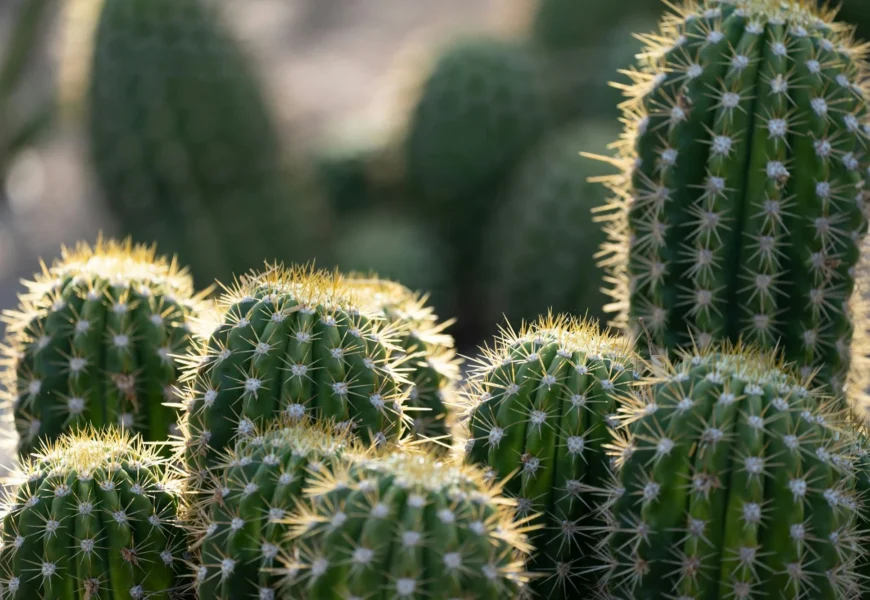
1. Cereus Hildmannianus (Column Cactus) Its tall, columnar shape provides more surface area than compact varieties, making it one of the stronger CAM performers for nighttime CO₂ absorption indoors.
2. Echinopsis (Sea Urchin Cactus) A compact and practical option that produces flowers and maintains solid photosynthetic activity relative to its size — a good choice for desks or shelves.
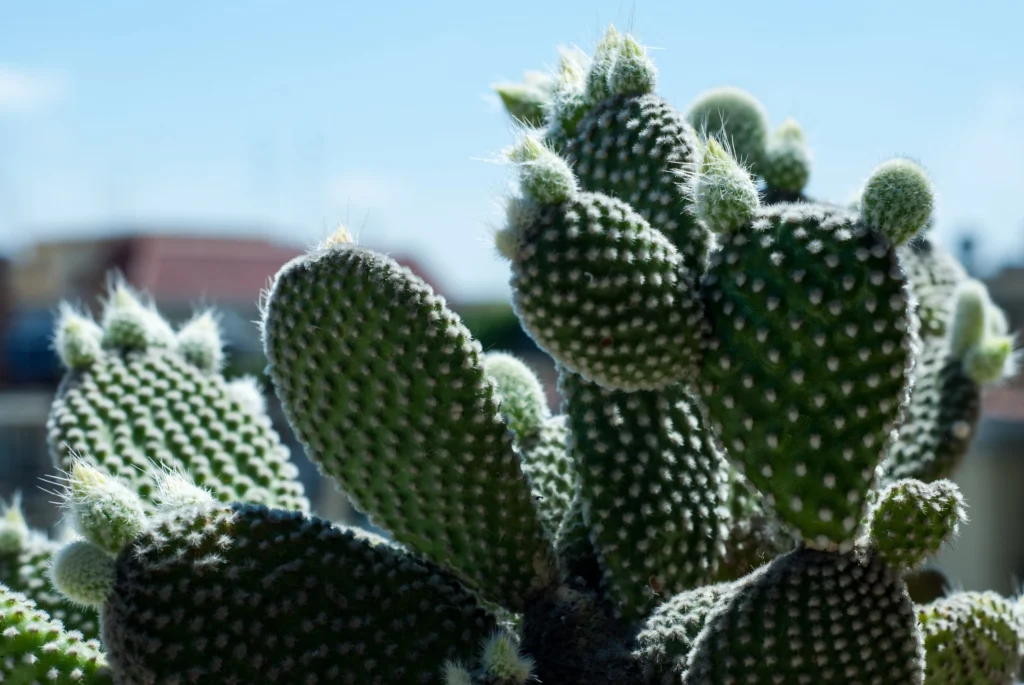
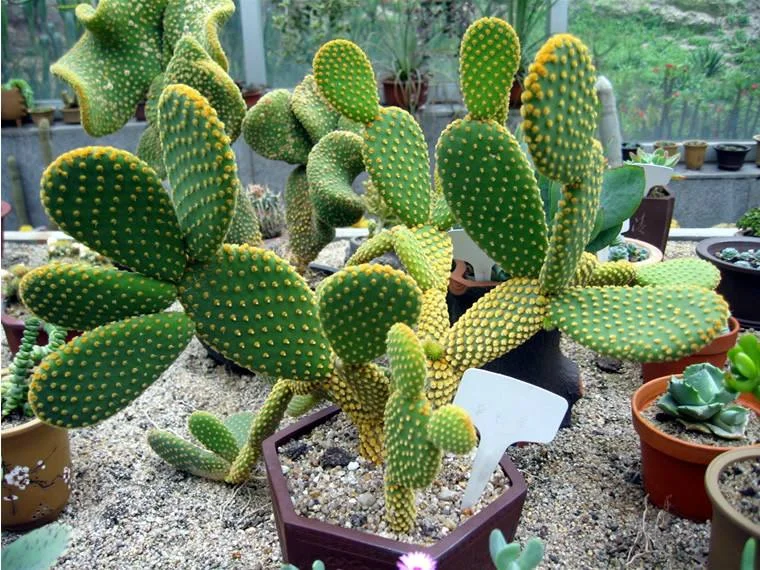
3. Opuntia (Prickly Pear) Its flat, paddle-shaped pads capture light efficiently, and it has one of the stronger photosynthesis rates among common indoor cactus varieties. A functional and visually interesting choice.
4. Schlumbergera (Christmas Cactus) This one behaves somewhat differently from desert cacti — it originated in forest environments — but it retains CAM adaptations and is well-suited to indoor conditions, particularly in lower light.
5. Mammillaria (Pincushion Cactus) Small, undemanding, and easy to maintain. A practical option for anyone who wants the air benefits of a CAM plant without dedicating significant space.
Each of these will confirm that do cactus produce oxygen isn’t just a theoretical question — it’s something you can observe in practice when these plants are given adequate light and appropriate care.
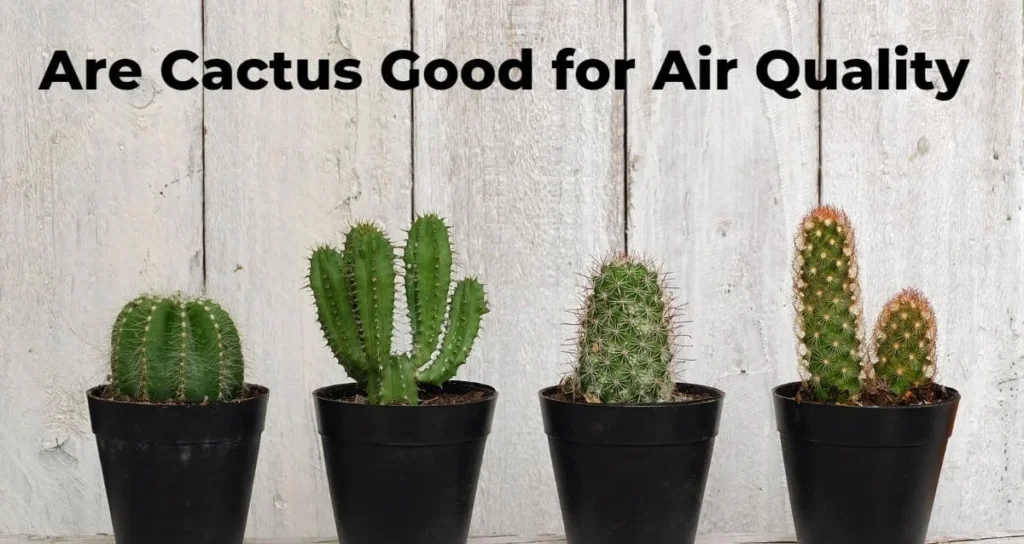
Cactus Carbon Dioxide Absorption — Why It Matters Indoors
The other side of the oxygen equation is cactus carbon dioxide absorption — and this is arguably where cacti offer their most practical benefit as indoor plants.
CO₂ levels in closed bedrooms rise noticeably overnight, simply from the natural process of human breathing. Research has linked elevated indoor CO₂ to a range of unpleasant effects:
- Reduced cognitive function.
- Poorer quality sleep.
- Morning headaches and a groggy feeling upon waking.
- Difficulty concentrating the following day.
A plant that actively absorbs CO₂ during the night addresses this problem at exactly the right time. Many people ask do cactus produce oxygen at night, and the answer is yes — cacti and other CAM plants are among the only common houseplants that do this. One small cactus won’t reverse the CO₂ buildup from a night of breathing in a sealed room — but a group of three to five medium-sized CAM plants can make a measurable difference in overnight CO₂ concentration in a smaller bedroom, according to small-scale controlled studies on indoor plant respiration.
So if you have ever wondered do cactus produce oxygen while you sleep, the evidence suggests they genuinely contribute to healthier nighttime air in a quiet, passive way.
It’s a modest but real benefit, and it happens passively while you sleep.
Cactus Benefits for Indoor Air — Summary of Real Advantages
Bringing it all together, here’s what the available evidence genuinely supports about cactus benefits for indoor air:
- Absorb CO₂ at night through CAM photosynthesis.
- Release oxygen during daytime photosynthesis.
- Contribute to gas exchange with minor oxygen release at night.
- Some species absorb low levels of VOCs like formaldehyde and benzene.
- Biophilic benefits including reduced stress and improved mood.
- Extremely low maintenance — they don’t need daily watering or attention.
- Long-lived plants, making them a practical long-term indoor air strategy.
The answer to do cactus produce oxygen in ways that matter indoors is clearly yes — especially at night, and especially when combined with complementary houseplants as part of a broader approach to indoor air quality.
FAQ Section
Q1: Do cactus produce oxygen at night?
Yes. Through CAM photosynthesis, cacti absorb CO₂ at night and release a small amount of oxygen during the nighttime gas exchange phase. This makes them more suitable as bedroom plants than most standard houseplants.
Q2: How much oxygen does a cactus produce daily?
Output depends on the size of the cactus and how much light it receives. Smaller varieties produce modest amounts, while larger columnar types produce more. The key advantage is the timing — they contribute to the air during overnight hours when most plants do not.
Q3: Is a cactus good for a bedroom?
Yes. Because cacti use CAM photosynthesis, they absorb carbon dioxide at night rather than competing with you for oxygen. One or a few placed in your bedroom can contribute to healthier overnight air in a small space.
Q4: Do succulents and cacti produce more oxygen than regular plants?
Not necessarily more in total volume, but more usefully — including during nighttime hours, which most common houseplants don’t do.
Q5: Can cacti clean indoor air like an air purifier?
Not to the same degree as a mechanical unit. However, cacti offer genuine, modest air quality benefits — particularly around nighttime CO₂ reduction — that work well alongside other air quality strategies.
Q6: Which cactus is best for indoor oxygen production?
Larger varieties with more surface area, such as Cereus or Opuntia, perform best overall. For small spaces, Echinopsis or Mammillaria are practical and manageable choices.
Q7: Do desert plants produce oxygen the same way as tropical plants?
No. Desert plants like cacti use CAM photosynthesis, which operates on a different timing cycle and is far more water-efficient than the standard photosynthesis pathway used by tropical houseplants.
Conclusion
People often underestimate cacti. They get treated as decorative objects — something to fill a corner or sit on a desk — without much thought given to what they’re actually doing biologically. But as this article has hopefully shown, there’s real substance behind the question of do cactus produce oxygen.
Yes, cacti produce oxygen. They do it through CAM photosynthesis, a highly efficient and uniquely timed process that evolved specifically to handle the demands of arid, harsh environments. That same efficiency is what makes them valuable indoors — not because they outperform leafy tropical plants in sheer oxygen volume, but because they work during hours when other plants don’t.
If you’re thinking about improving the air quality in your bedroom or living space, a cactus won’t single-handedly solve the problem. But it will contribute something genuine, something consistent, and something that requires almost no effort from you in return. Combined with other houseplants, it becomes part of a practical, low-effort strategy that works around the clock.
Sometimes the most reliable solution is also the simplest one — and in this case, it comes with spines.