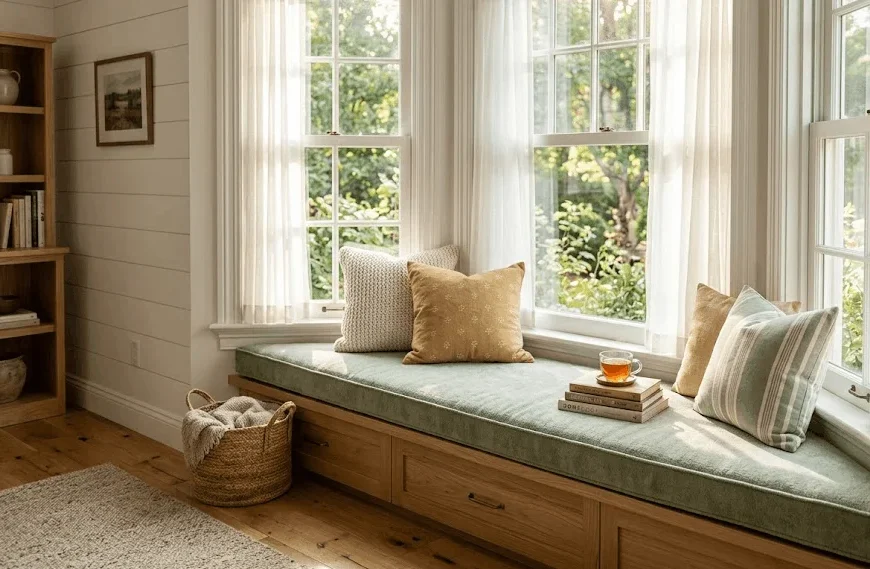
You know that spot in your house — the one under a window where you dump laundry, or where a plant sits looking sad because nobody quite knows what else to put there? That’s exactly where good window seat ideas come in. A window seat takes up almost no floor space, but it can completely change how a room feels.
I’ve spent years looking at homes where a single bench transformed an awkward corner into the coziest spot in the house. Whether you’ve got a full bay window or just a plain wall with natural light, there’s a version of this that fits. By the end of this, you’ll know exactly which window seat ideas work for your space, your budget, and how you actually plan to use it.
Why Window Seat Ideas Work in Almost Any Room
Here’s the thing about window seat ideas — they solve two problems at once. You get extra seating without buying another couch, and you get storage without adding a bulky cabinet. That combination is hard to beat, especially in smaller homes where every square foot counts.
Think about it this way: a plain wall under a window is basically wasted real estate. You can’t put a bookshelf directly in front of glass, and most furniture looks awkward jammed against a windowsill. A built-in bench, though, fits the space perfectly because it’s designed around the window itself. That’s why window seat ideas keep showing up in renovation shows and design blogs — they’re one of the few upgrades that add both function and charm without eating into your living space.
On top of that, a window seat naturally becomes the spot people gravitate toward. There’s something about sitting near natural light with a view outside that makes a room feel more inviting. It doesn’t matter if it’s a bay window in the living room or a plain double-hung window in a hallway — the effect is the same.
Even guests notice it first when they walk into a room. There’s a reason real estate photos love showing off a bench tucked under a window — it signals warmth without saying a word. That’s part of why window seat ideas keep trending in home renovation circles year after year, even as other design trends come and go. People aren’t just looking for a place to sit; they’re looking for a reason to slow down for five minutes with a coffee or a book.
Bay Window Seating Designs for a Classic Look
If you’ve got a bay window, you’re already halfway there. Bay window seating designs are probably the most requested window seat ideas out there, and for good reason — the curved or angled shape naturally creates a built-in nook.
The trick with bay windows is following the shape rather than fighting it. A custom-built bench that curves or angles with the window looks intentional, while a straight bench jammed into a curved space looks like an afterthought. Add a deep cushion, a couple of throw pillows, and maybe a Roman shade for light control, and you’ve got a spot that feels like it was always meant to be there.
For bay windows, aim for a depth of 18 to 24 inches if you want room to stretch out, or 16 to 20 inches if the space is tighter. That range shows up again and again in expert guides because it balances comfort with practicality — enough room to sit back, but not so deep it eats your floor space.
Width matters just as much as depth when you’re working with bay windows. Most bay window seating designs run anywhere from 3 to 8 feet wide, depending on how many panes the bay has and how far it juts out from the wall. If you’re short on width, don’t force a bench across the whole span — a smaller centered seat with side shelving often looks more balanced. This is one of those window seat ideas where measuring twice really does save you from an awkward, oversized build later.
Window Seat Bench With Storage: The Practical Favorite
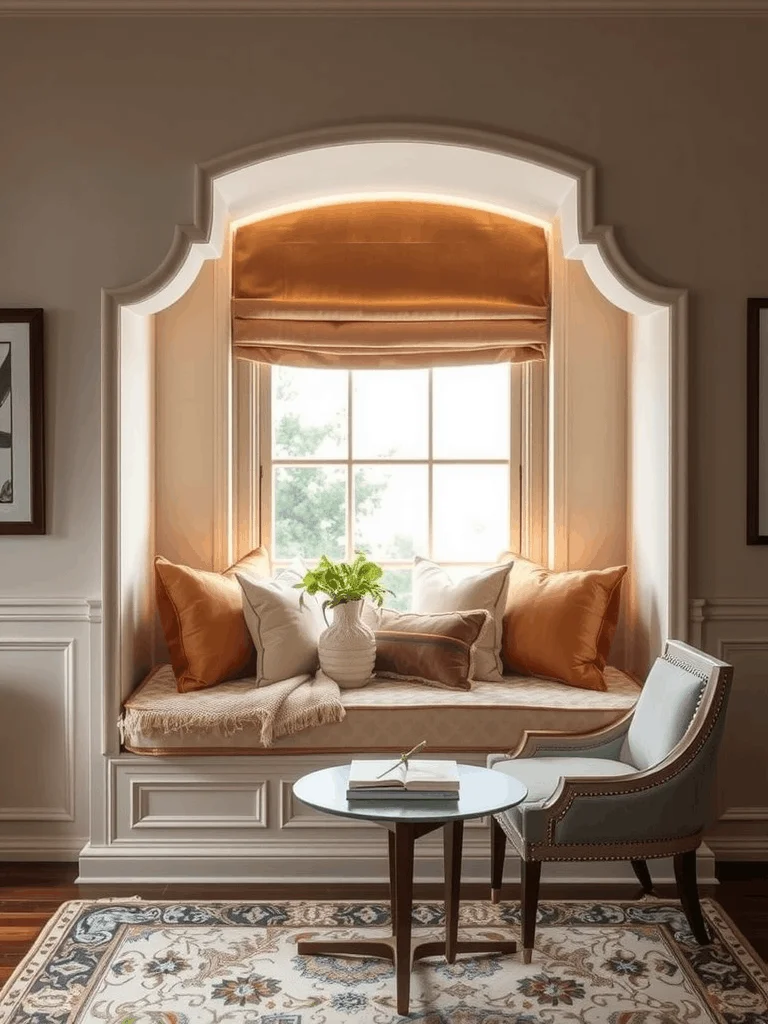
If you only take one thing from this list of window seat ideas, make it this one. A window seat bench with storage solves the “where do I put this stuff” problem that every small room has.
Underneath the seat, you can add drawers, a lift-top lid, or open cubbies — whatever fits how you actually live. Got kids? Cubbies for toys work great since they’re easy to grab from and quick to toss things into. Prefer a cleaner look? Drawers with soft-close hinges hide everything and keep the bench looking tidy from the outside.
Here’s why this matters: storage depth affects usability just as much as comfort does. A depth of 18 to 24 inches gives you enough internal volume for drawers or lift-top compartments without making the seat too deep to sit on comfortably. Go much deeper than that, and you’ll find yourself reaching awkwardly to grab things from the back.
Full-extension drawer slides are worth the small upcharge here, since they let you pull the drawer all the way out instead of only reaching the front third. If you’re going the lift-top route instead, make sure the hinges support the weight of the lid on their own — nobody wants to hold a heavy top open with one hand while digging through blankets with the other. This is one of those window seat ideas where the hardware you choose matters just as much as the woodwork itself. Skimp here, and even the best-looking bench will feel clunky every time you actually use the storage.
DIY Window Seat Cushion Options That Don’t Break the Bank
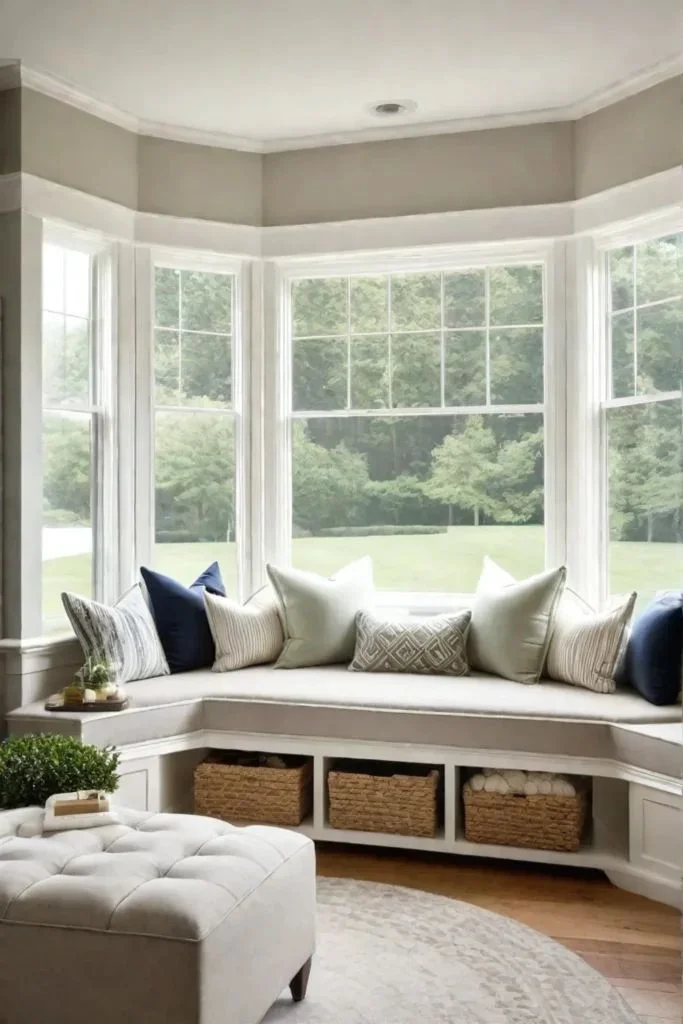
Not ready for a full carpentry project? Start smaller. A DIY window seat cushion is one of the easiest window seat ideas to try this weekend, and it doesn’t require touching a saw.
You’ll need foam that’s at least 3 to 4 inches thick — thinner than that, and you’ll feel the bench underneath after ten minutes of sitting. High-density foam holds up better over time, especially if the seat gets daily use. Wrap it in a durable outdoor fabric if the spot gets a lot of sun, since regular upholstery fades fast under direct light.
For the cover, a simple boxed cushion with a zipper closure means you can swap fabrics later without starting from scratch. Pair it with two or three throw pillows and you’ve got a finished look for under a hundred dollars in most cases.
If you’re handy with a sewing machine, cutting your own cover is a weekend project at most, and it lets you match the fabric exactly to your room instead of settling for whatever’s in stock. Prefer to skip the sewing altogether? Plenty of online shops sell pre-made boxed cushion covers in standard bench sizes, so you just need accurate measurements before ordering.
Either way, this is one of the more budget-friendly window seat ideas on this list, since the bulk of the cost goes into foam rather than labor. Once you’ve got the base cushion sorted, everything else — pillow colors, patterns, textures — is easy to change whenever you want a refresh.
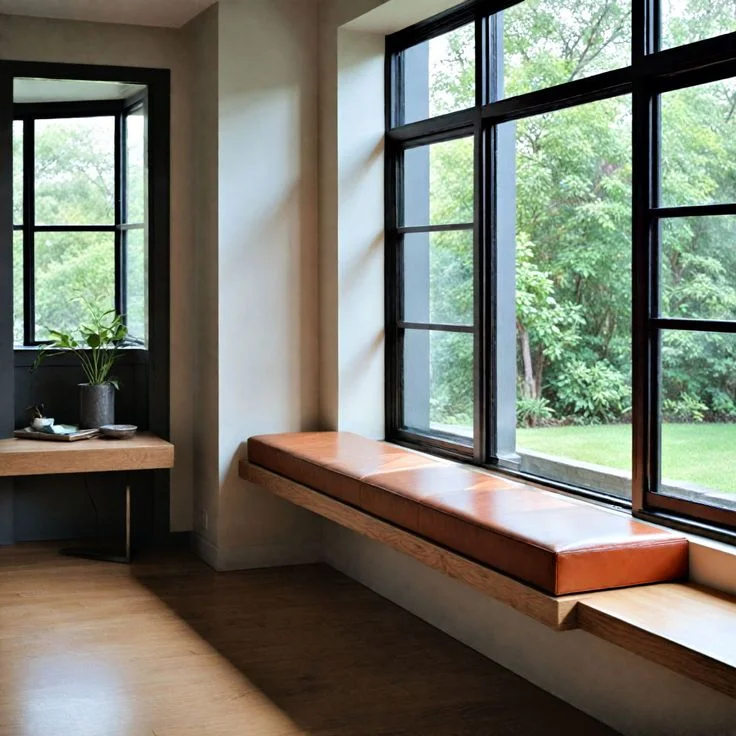
Built-In Window Seat Bookshelf Combos for Book Lovers
There’s a reason built-in window seat bookshelf setups show up in nearly every “dream reading nook” photo online. Flanking a window seat with shelving on either side does double duty — it frames the bench visually and gives you a spot to store the books you’re actually going to read there.
This is one of those window seat ideas that works especially well in home offices, libraries, or a quiet corner of a living room. Keep the shelf depth shallower than the seat itself, around 8 to 12 inches, so it doesn’t crowd the space or block the window’s natural light.
A soft reading lamp clipped to one of the shelves finishes the look and makes the spot usable after sunset, not just during the day.
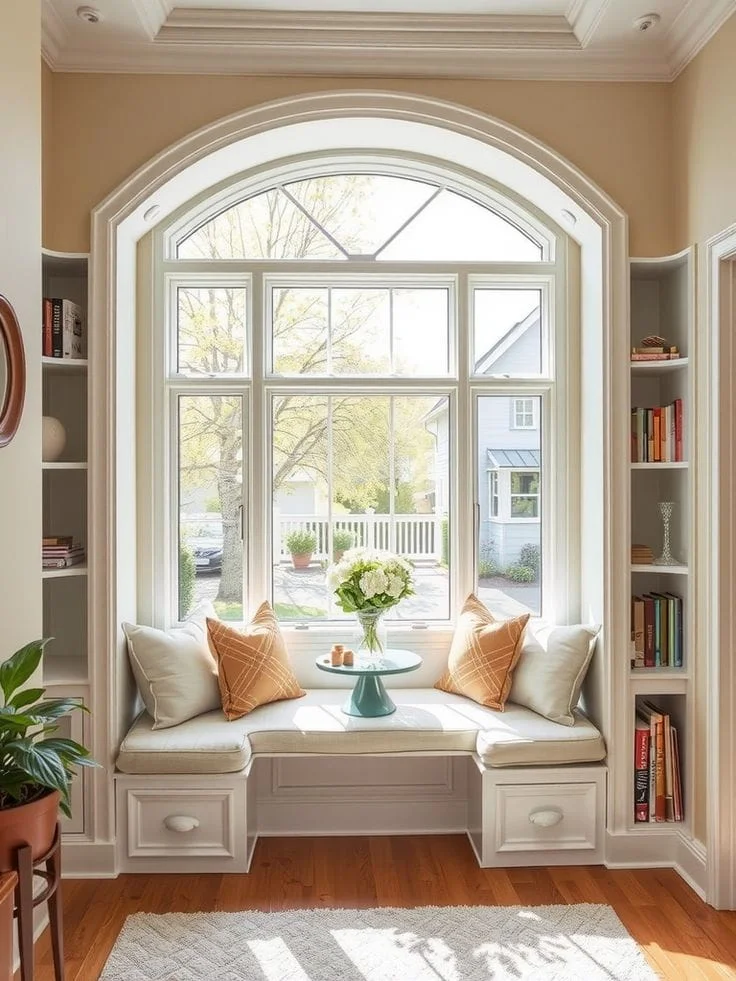
Reading Nook Window Seat Setups for Total Relaxation
A reading nook window seat is really just a window seat idea taken to its cozy extreme. The goal here isn’t just a place to sit — it’s a place you don’t want to leave.
Go deeper on this one. If you plan to curl up sideways with your knees bent, aim for a seat depth of 24 to 30 inches. That extra room lets you fully tuck your legs in rather than perching on the edge. Layer in a thick cushion, a soft throw blanket, and pillows stacked against one wall so you’ve got something to lean back into.
Lighting matters more here than in most other window seat ideas. A warm reading lamp beats overhead lighting every time, since it creates that low, calm glow that actually makes you want to sit and stay a while.
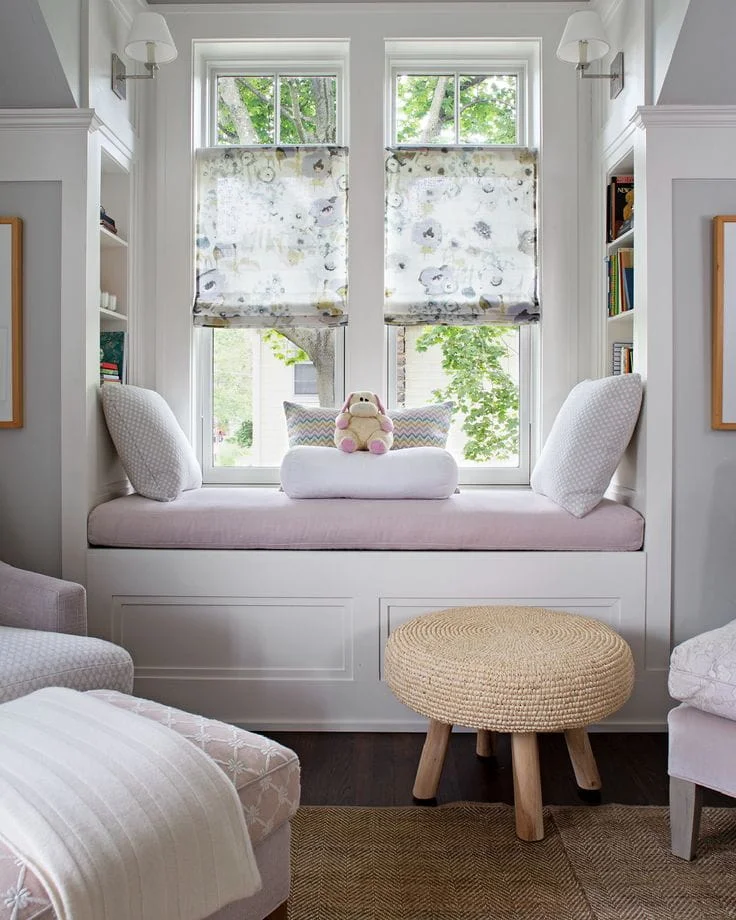
Window Seat With Drawers vs. Cubbies: Which Should You Pick?
This comes up constantly when people are comparing window seat ideas for storage. A window seat with drawers gives you a cleaner look and better protection from dust, but it costs more and needs proper slides to work smoothly long-term.
Cubbies, on the other hand, are cheaper to build and easier to access quickly — great for mudrooms or kids’ rooms where things need to go in and out fast. The tradeoff is that open cubbies show whatever’s inside, so they work best when you’re storing things that look decent on display, like folded blankets or baskets.
If you’re torn, a mix works well too — drawers on one side, open shelving on the other. That way you get the best of both without committing fully to either.
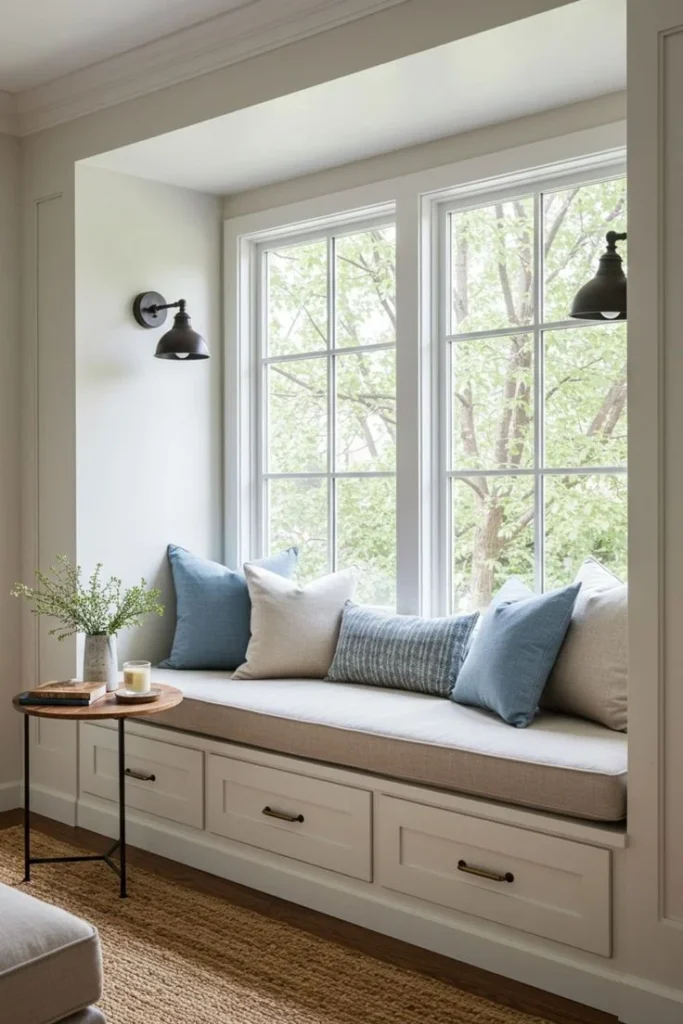
Small Bedroom Window Seat Ideas for Tight Spaces
Small bedroom window seat ideas need a slightly different approach than living room versions, mainly because floor space is already tight. Keep the depth on the shallower side — 16 to 20 inches — so the bench doesn’t eat into walking room.
A great trick here is placing the seat between two twin beds if it’s a shared kids’ room, or under a single window if it’s a primary bedroom that’s short on seating. Since bedrooms already have soft furnishings like a duvet and pillows, keep the window seat cushion in a similar tone so it doesn’t clash or compete visually with the bed.
Adding drawers underneath works especially well in bedrooms, since it gives you extra clothing or linen storage without needing a second dresser.
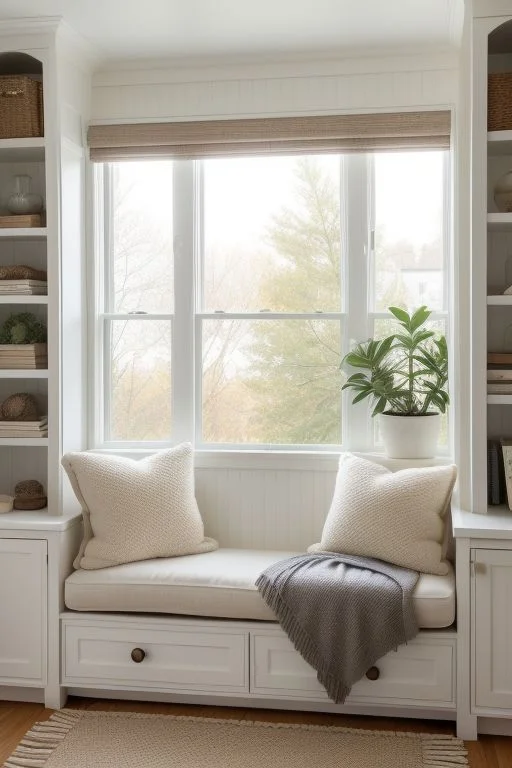
Kitchen Window Seat Nook Ideas for Casual Dining
A kitchen window seat nook turns an underused corner into a spot for morning coffee or quick meals. This is one of the more functional window seat ideas because it often replaces a full dining set, which is a win if your kitchen is on the smaller side.
Pair the bench with a simple table and one or two chairs on the opposite side for a breakfast-nook feel. Since kitchens see spills and crumbs daily, choose a wipeable or washable fabric for the cushion rather than something delicate.
Built-in storage underneath a kitchen bench is especially handy for stashing table linens, extra place settings, or seasonal serving dishes you don’t use every week.
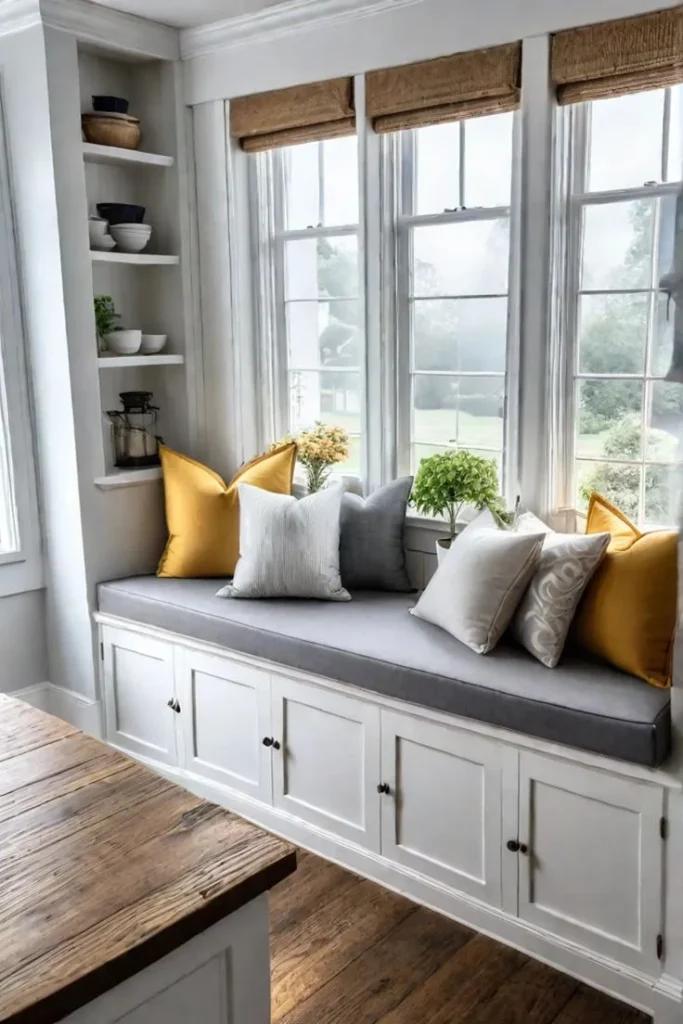
Window Seat Cushion and Pillows: Getting the Styling Right
The bench itself only does half the work — window seat cushion and pillows choices are what actually make the spot feel finished. A cushion that’s too thin looks cheap no matter how nice the woodwork underneath is, so don’t skimp here.
Stick with 3 to 5 inches of foam minimum, and go with a removable cover so you can wash or swap it seasonally. For pillows, odd numbers usually look more natural than even ones — try three in varying sizes rather than two matching ones.
If you want to change the whole feel of the room without touching the actual build, this is the cheapest way to do it. Swap the cushion cover and pillows for the season, and the entire window seat idea feels brand new.
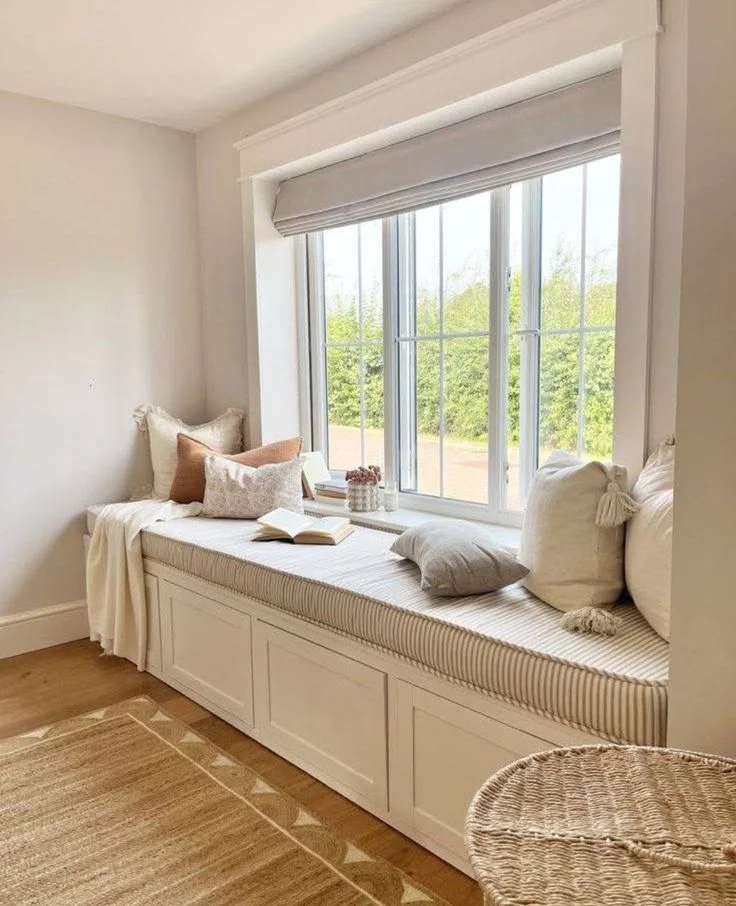
Living Room Window Bench Seating for Guests and Everyday Use
Living room window bench seating earns its keep by adding functional seating without crowding the room the way a second sofa would. It’s especially useful if you host often and need a few extra spots without permanently committing floor space to more furniture.
Aim for a bench length of at least 48 to 60 inches if you want it to comfortably seat two people. Anything shorter works fine as a single-person perch, but won’t do much for guest overflow during a gathering.
Because it’s a shared space, keep the fabric durable — something that can handle regular use without showing wear within a year.
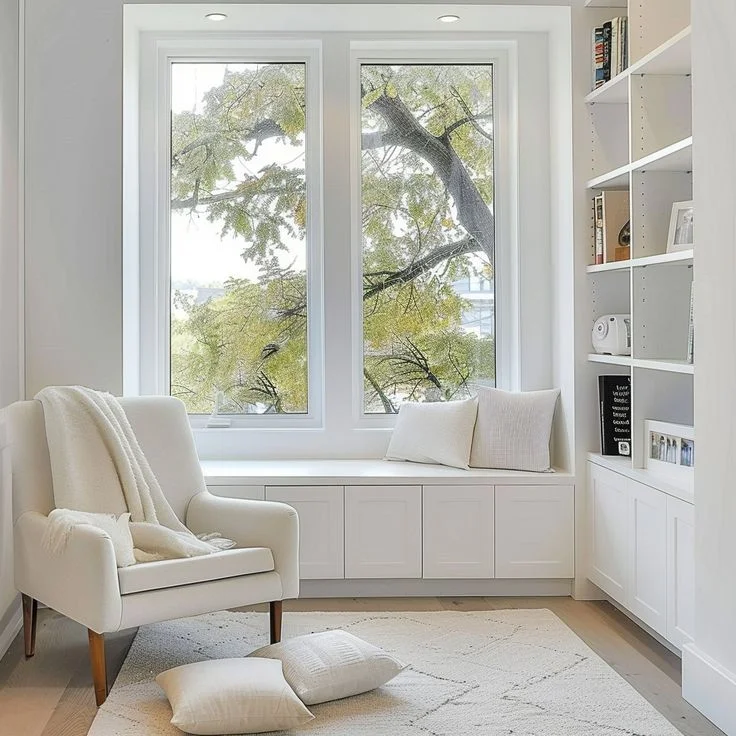
What to Check Before You Build Any Window Seat
Before you commit to any of these window seat ideas, take care of one thing first: make sure the window itself is in good shape. Drafty or damaged windows become far more expensive to fix once they’re hidden behind a built-in bench, so handle any repairs first.
Measure everything — width, depth, and the height of your windowsill — before buying materials. Sketch out your storage needs so you know if you’re going with drawers, cubbies, or open shelving from the start. Even if you’re comfortable with basic carpentry, a quick consultation with a professional can save you from costly measuring mistakes down the line.
FAQs: Window Seat Ideas
How deep should a window seat be?
Most window seats work best at 16 to 24 inches deep, depending on use. Shallower depths suit forward-facing seating, while 24 inches or more works better for lounging or storage underneath the bench.
Can I add a window seat without built-in carpentry?
Yes. A freestanding bench placed in front of a window gives you the same look without permanent construction, making it a great option for renters or anyone who wants flexibility.
What’s the best cushion thickness for a window seat?
Aim for at least 3 to 4 inches of high-density foam. Thinner cushions compress quickly and feel uncomfortable after just a short time sitting.
Do window seat ideas work in small rooms?
Definitely. Smaller rooms benefit even more since a window seat replaces a chair or side table without taking up extra floor space, especially with a shallower 16 to 20 inch depth.
Should I fix my window before building a seat around it?
Yes, always. Repairing drafts or damage becomes much harder and pricier once a built-in bench is covering the window, so handle repairs before starting construction.
Wrapping It Up
Whatever room you’re working with, there’s a version of these window seat ideas that fits your space and budget. Start small with a cushion and pillows if you’re not ready for a full build, or go all-in with storage and shelving if you’ve got the space and the itch for a weekend project. Either way, that empty corner under your window doesn’t have to stay empty. Measure your space this weekend and figure out which of these ideas fits — you might have your new favorite spot finished before the month is out.