If you’ve got a corner where two windows meet, you already know the problem. It’s not a normal wall. You can’t just push a couch against it. Furniture looks wrong there, curtains hang weird, and somehow it always ends up being the spot where nothing quite fits. That’s exactly why people search for window corner ideas — because most rooms weren’t designed with this layout in mind, and the usual decorating rules don’t apply.
Here’s the good news. A corner window is actually one of the best features a room can have, once you know how to work with it. You get light from two directions instead of one. That alone makes a small room feel bigger. The trick is figuring out what to put there — seating, storage, curtains, or nothing at all — and that’s what we’re covering.
Window Corner Ideas for Small and Awkward Spaces
Let’s start with the situation most people are actually dealing with: a tight corner, two windows, and not much floor space to work with. This is where window corner ideas matter most, because a bad choice here makes the whole room feel cramped.
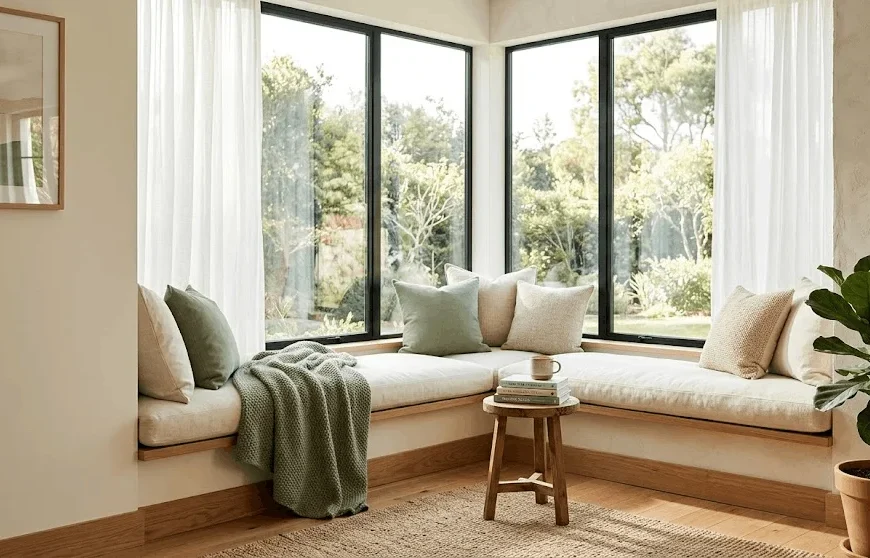
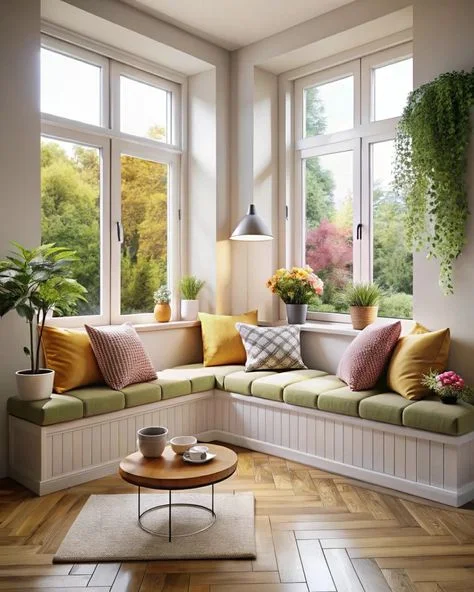
For small spaces, the best move is usually to go vertical or built-in rather than adding freestanding furniture. A slim built-in corner window bench does two jobs at once — it gives you a seat, and if you build in storage underneath, it hides all the stuff that would otherwise clutter the floor. This works especially well in bedrooms and small living rooms where every square foot counts.
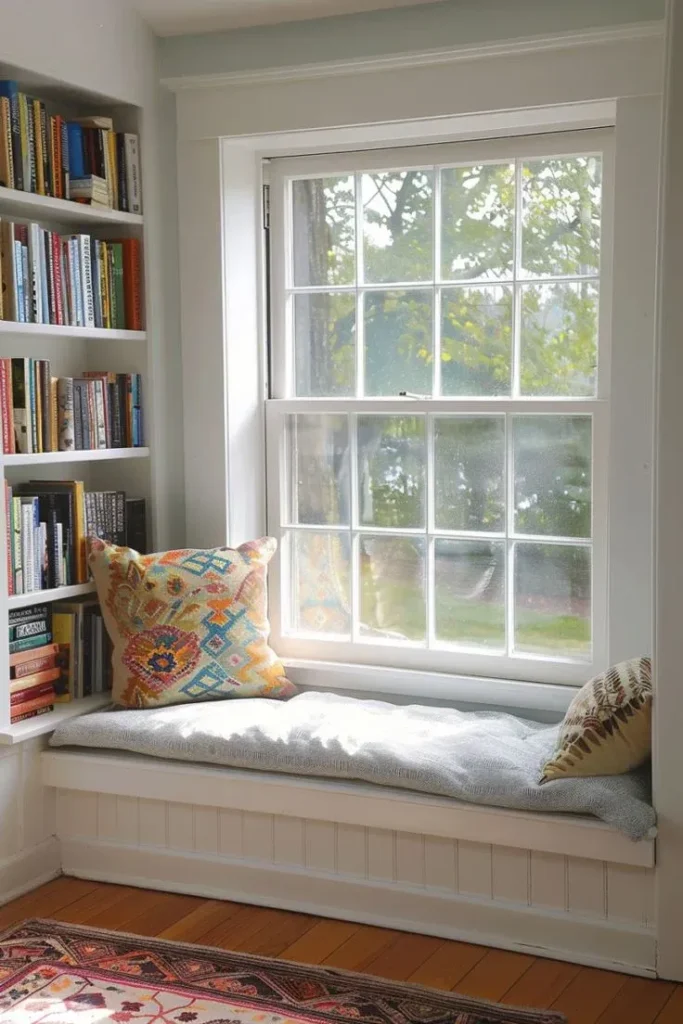
If a bench feels like too much commitment, a simple corner window seat idea can be as basic as a cushioned platform on an existing ledge. Add a throw pillow, maybe a small side table if there’s room, and you’ve got a reading spot without touching a hammer.
What this means is you don’t need a big renovation to make a small corner window work. Sometimes it’s just cushions and the right curtain choice. A lot of the best window corner ideas cost less than a hundred dollars and take an afternoon, not a weekend.
Start with one change, live with it for a week, then decide if you need more. If the corner still feels bare, add a small plant or a stack of books to give it some visual weight. That’s really all window corner ideas come down to — small, low-risk changes that add up to a space you actually want to sit in.
Corner Window Seat Ideas That Actually Get Used
A lot of window seats look great in photos and then never get sat in. Here’s why that happens — the seat is too shallow, too hard, or facing the wrong direction for how people actually move through the room.
For a corner window seat idea to actually get used, aim for a seat depth of at least 45 to 60 centimeters. Anything shallower and people perch instead of relax. Cushion choice matters too — a firm foam base with a removable, washable cover holds up far better over time than a soft decorative pillow that flattens in a month.
If you’re building this into a corner where two windows meet, angle the cushions slightly toward the room rather than straight into the corner. It sounds like a small detail, but it changes whether the spot feels like a nook or a dead end.
Storage underneath is where corner window seat ideas earn their keep. Lift-top benches, drawer units, or even simple baskets tucked below turn a decorative feature into something genuinely useful — books, blankets, kids’ toys, whatever your home actually needs hidden away. This is one of the most practical window corner ideas because it solves two problems with one piece of furniture instead of adding clutter elsewhere in the room.
If you’re working with a tight budget, even a few fabric bins slid under an existing ledge can do the job without any building at all. For a more finished look, choose a lift-top design with hinges rated for daily use, since cheaper hardware tends to wear out fast. Either way, the goal is the same — window corner ideas work best when the space earns its keep instead of just looking nice.
Corner Window Treatment Ideas for Light and Privacy
This is probably the most searched part of the whole topic, and for good reason. Corner windows let in more light, but that also means more glare, more heat, and less privacy from two directions instead of one.
For rooms that get harsh afternoon sun, sheer or light-filtering shades solve the glare problem without blocking the view entirely. They’re one of the more forgiving corner window treatment ideas because they soften light rather than cutting it off completely.
If privacy is the bigger concern — think bedrooms or bathrooms — cellular or honeycomb shades work well because they also help with insulation. Two walls of glass can mean a noticeably colder or hotter corner depending on the season, so shades that trap air do double duty.
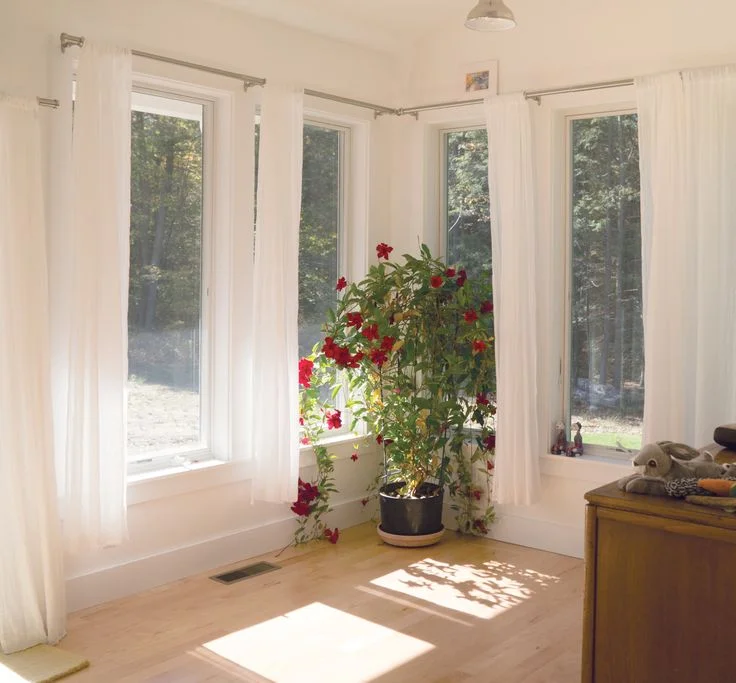
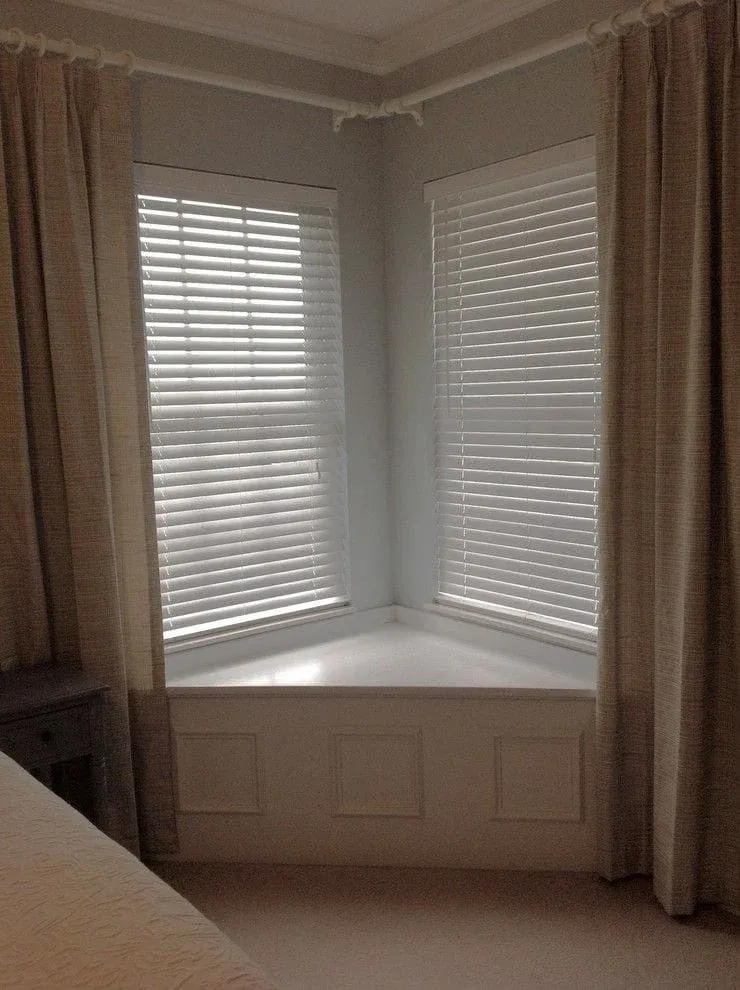
For curtains specifically, corner window curtain ideas usually come down to hardware. A standard straight rod doesn’t wrap a corner cleanly, so look for an L-shaped or flexible track designed for exactly this situation. Without it, you’ll end up with a gap right at the joint where light sneaks through no matter how good the fabric is.
Mixing textures also helps. Pairing a sheer layer with a heavier drape lets you adjust for daytime light and nighttime privacy without swapping anything out. This layered approach is one of the simplest window corner ideas to pull off, since it just means adding a second rod rather than replacing anything you already own.
During the day, push the heavier drape aside and let the sheer layer soften the light without blocking your view. At night, close both layers for full privacy and a bit of extra insulation against the cooler glass. It’s a small change, but it’s one of those window corner ideas that makes a corner feel finished instead of half-decorated.
Living Room Corner Window Design Ideas
In a living room, a corner window is usually the anchor of the whole seating arrangement, whether you plan it that way or not. People naturally orient furniture toward light, so working with the corner instead of around it makes the room feel more intentional.
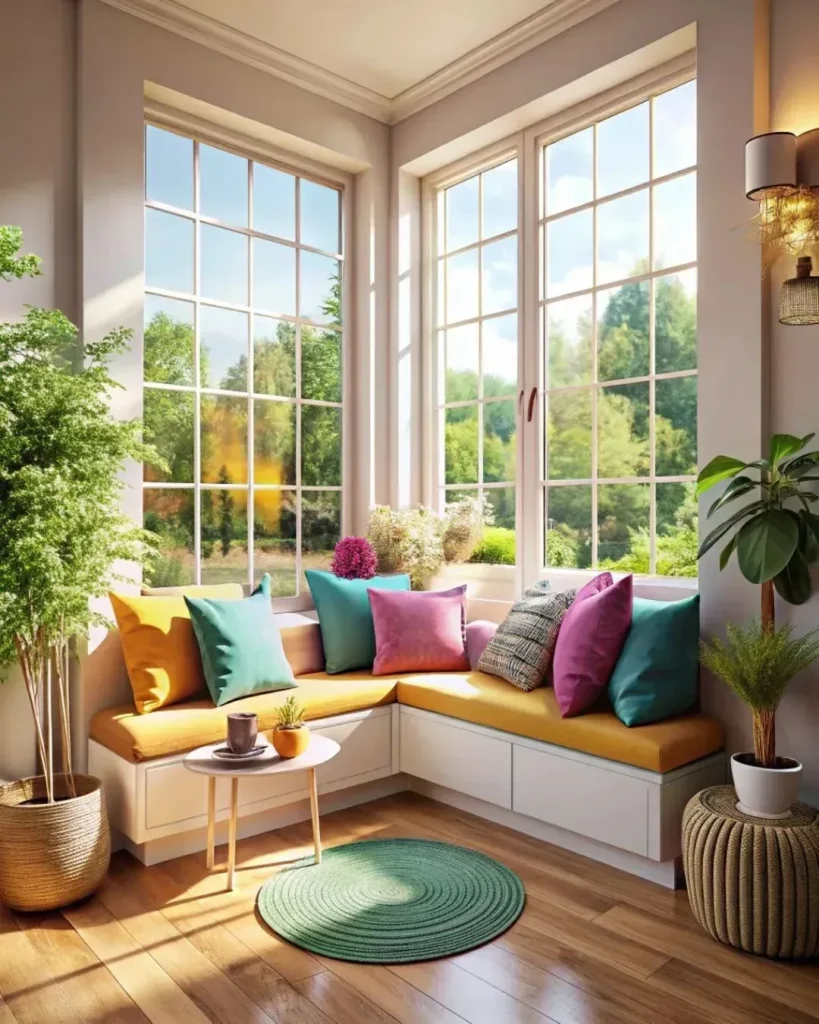
One approach that works well for living room corner window design is treating the corner as a secondary seating zone rather than trying to center everything on it. A single accent chair, a small side table, and a floor lamp can turn an awkward corner into the coziest spot in the room — somewhere people actually choose to sit, not just walk past.
If the living room is larger, a daybed or chaise angled into the corner takes advantage of light from both windows while still leaving the main seating area free for the sofa and TV setup. This is a common fix in homes with bay-style corners, where the window itself juts out slightly and creates a natural nook. Adding a floor lamp beside the daybed makes the spot usable after sunset too, not just during the day.
A few well-chosen window decor ideas, like a woven blind or a single patterned cushion, can tie the corner back into the rest of the room’s palette without overpowering it. If the corner faces a nice view, skip heavy drapery altogether and let the window decor ideas center on framing rather than covering. Even a simple runner rug beneath the daybed helps ground the space so it reads as part of the room, not an afterthought tacked onto the side.
Kitchen Corner Window Ideas
Kitchens have their own set of rules, mostly because water, heat, and grease change what materials make sense near a window.
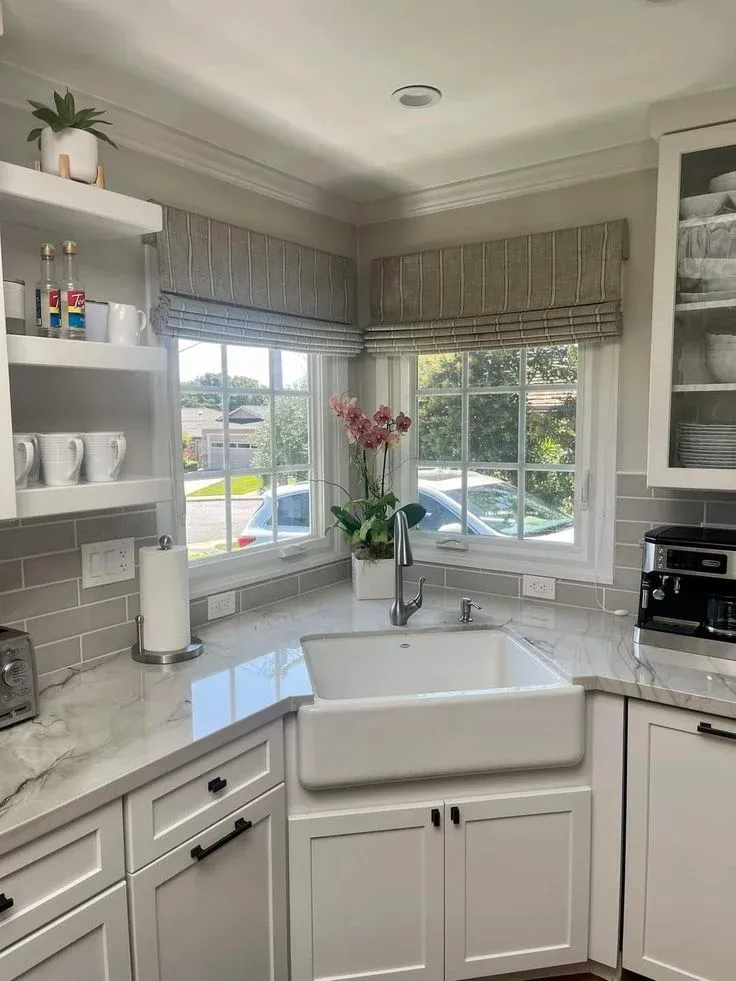
For kitchen corner window ideas, skip heavy fabric treatments altogether. Café-style shutters or simple roller shades are easier to keep clean and don’t trap cooking odors the way curtains can. If the corner window sits above a sink or counter, a floating shelf running along the sill gives you a spot for herbs, small plants, or dish soap without blocking the light.
In eat-in kitchens, a corner window is often the perfect spot for a built-in banquette. Pair it with a round table, and you’ve got a breakfast nook that makes the whole room feel more finished, not just functional. A round table also solves the awkward-corner problem on its own, since there are no sharp edges fighting with the angle of the window.
Add a pendant light overhead to anchor the space, especially if the rest of the kitchen relies on overhead panel lighting. Cushion the banquette in a wipeable fabric, since morning coffee spills are inevitable in a spot everyone wants to linger in.
Bay Window Corner Design Ideas
Bay windows are a step up from a standard corner window — the glass itself projects outward, creating a small recessed area rather than just a meeting point of two walls. This gives you more to work with, but it also means a plain curtain or single chair can look underwhelming against the extra depth.
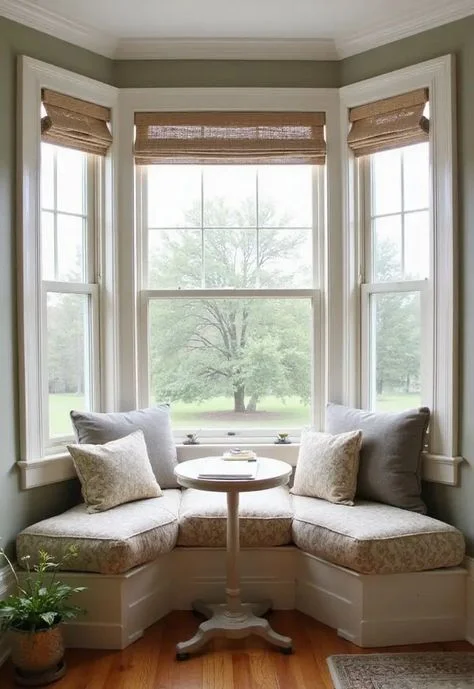
For bay window corner design, built-in seating is almost always the strongest choice. The recess practically asks for a bench, and adding a hinged lid turns unused space beneath into storage. If a full built-in isn’t in the budget, a freestanding bench cut to fit the recess gets you most of the way there.
Layering treatments works particularly well in bay windows too — a fitted shade on each individual pane for light control, plus a single curtain panel across the whole recess for a finished look when the shades are up. This is one of the more flexible window corner ideas because it lets you control light pane by pane, which matters if the sun hits one angle harder than another.
On overcast days, leave everything open and let the full recess flood the room with light from multiple directions. When you want a cleaner look for guests, drop the single curtain panel and let it visually unify the space without touching the individual shades underneath. It’s a small bit of extra planning, but among window corner ideas, this layered setup gives you the most control for the least daily effort.
Corner Window Nook Design Ideas
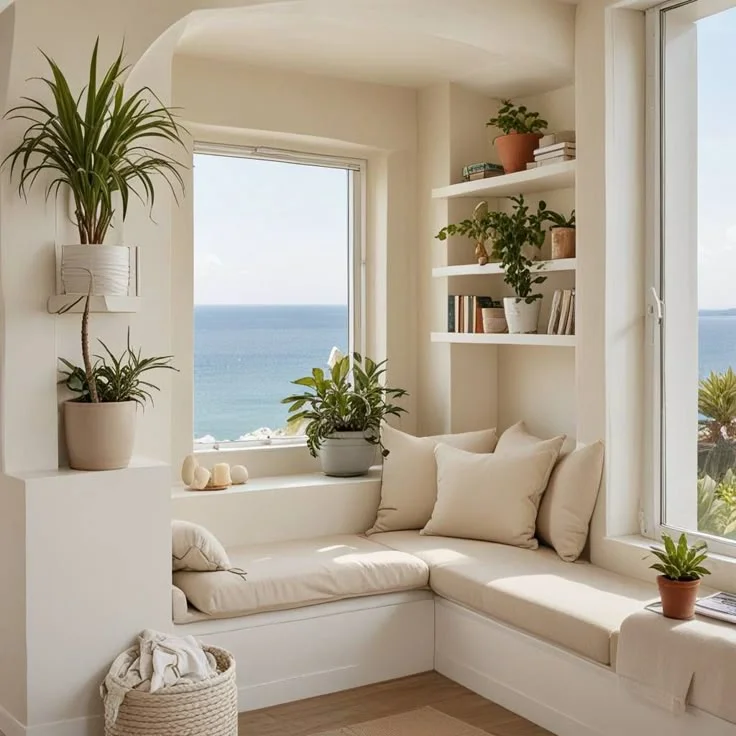
Sometimes a corner doesn’t need a full renovation. It just needs a purpose. A corner window nook design idea can be as simple as a small desk angled into the light for a home office corner, or a low chair and a stack of books for a reading spot.
The key with any nook is restraint. Overfilling a small corner with too much furniture defeats the point of using the space at all. Pick one function — reading, working, or just sitting — and design around that single use rather than trying to make the corner do everything.
If you’re unsure which function fits best, watch how you actually use the space for a week before committing to anything permanent. A single well-chosen chair or desk will always outperform three mismatched pieces crammed into the same few square feet. Keep decor minimal too — one plant or one small lamp says more than a shelf full of knickknacks ever will.
How to Choose the Right Window Corner Idea for Your Space
With so many window corner ideas out there, it helps to narrow the decision down to a few practical questions.
Consider the Room’s Purpose
A bedroom corner window benefits from privacy-focused treatments and soft seating. A kitchen or living room corner window can lean into openness and light since privacy matters less there.
Think About Maintenance
Fabric curtains near cooking areas need more upkeep than shutters or roller shades. If low maintenance matters to you, factor that in before choosing a treatment. Wipeable materials like PVC-coated shutters or vinyl roller shades hold up far better against grease and steam over time. A quick wipe-down beats a full curtain wash any day, especially in a kitchen that sees regular use.
Measure Before You Commit
Corner window ideas that look great in photos often depend on exact window depth and wall length. A bench that fits a wide bay window won’t necessarily fit a tighter standard corner, so measure twice before buying or building anything. Note the sill height too, since a bench that sits too low or too high beneath the window will look off no matter how good the design is.
If you’re ordering custom-cut cushions or shades, get a professional measurement rather than relying on a tape measure alone — small errors add up fast in a corner space. When in doubt, mock up the footprint with painter’s tape on the floor first, so you can see exactly how much room you’ll actually have to work with.
Budget for Hardware, Not Just Fabric
Corner-specific curtain rods and tracks often cost more than standard ones, and they’re not always optional if you want a clean, gap-free look. Build this into your budget from the start. Among all the window corner ideas on this list, hardware is the one cost people most often forget to plan for, since the fabric itself usually gets all the attention.
A flexible or L-shaped track typically costs more than a straight rod of the same length, simply because it’s a more specialized piece of hardware. Factoring this in early saves you from falling in love with a curtain style only to find the rod alone blows past your budget.
FAQs: Window Corner Ideas
What can I put in a dead corner near a window?
A small bench, a single accent chair, or floating shelves all work well. The goal is to give the space one clear purpose — seating, storage, or display — rather than leaving it empty or overcrowded with mismatched furniture.
Do corner windows lose more heat than regular windows?
Yes, often. Two glass surfaces meeting at a corner can lose more heat in winter and let in more heat during summer. Cellular shades or honeycomb blinds help by trapping air and reducing that transfer.
What curtains work best for a corner window?
Curtains on an L-shaped or flexible corner rod work best, since standard straight rods leave a gap at the joint. Pairing a sheer layer with a heavier drape gives you both daytime light control and nighttime privacy.
Can I build a window seat in any corner window?
Most corner windows can support a seat, but depth matters. You’ll want at least 45 to 60 centimeters of seat depth for it to actually be comfortable, so measure the space before planning anything built-in.
Are bay windows and corner windows the same thing?
Not exactly. A bay window projects outward from the wall, creating a recessed nook, while a standard corner window is simply two windows meeting at a wall’s edge without that extra depth.
Conclusion
A corner window doesn’t have to be the spot in your home that nothing works with. Once you understand what the space actually needs — whether that’s seating, a better curtain setup, or just a shelf and a plant — window corner ideas stop feeling like guesswork. Small rooms benefit from built-in seating and light treatments, kitchens do best with easy-to-clean options, and bay windows practically ask for a bench of their own.
The best starting point is simply looking at how you already use the room, then picking one idea from this list that matches it. You don’t need to do everything at once. Start with the treatment or the seating, live with it for a bit, and add from there. That corner has more potential than it looks like it does.